Paranapanema River
The Paranapanema River is a river in southeastern Brazil that originates in the Serra do Paranapiacaba, south of São Paulo. It flows west-northwest for…
What is Paranapanema River?
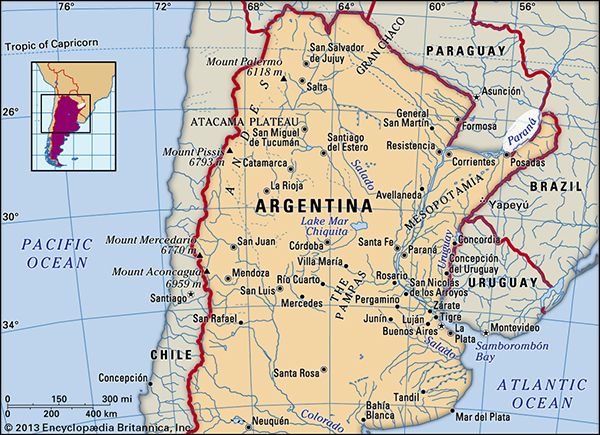
The Paranapanema River is a river in southeastern Brazil that originates in the Serra do Paranapiacaba, south of São Paulo. It flows west-northwest for approximately 560 miles (900 km) before joining the Paraná River at Pôrto São José.1
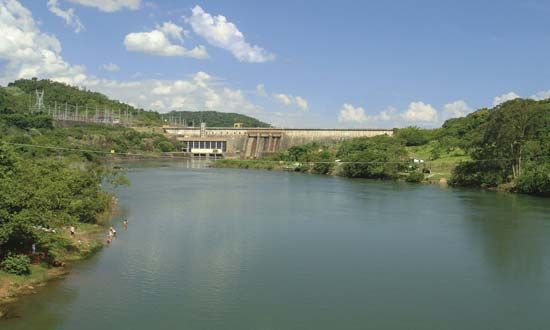
Throughout its course, the river features numerous rapids and is navigable only for its final 50 miles. After merging with the Itararé River, it serves as a border between the states of São Paulo and Paraná. The river basin, situated on the fertile Paraná Plateau, supports the cultivation of coffee and cotton. Key tributaries include the Rio das Cinzas and the Rio Tibagi, the latter of which hosts a significant hydroelectric station near Monte Alegre. Additionally, the river is managed through dam-flood control projects located near Piraju and Jacarezinho.1
The Paranapanema is recognized as one of the three major tributaries of the Alto (Upper) Paraná, alongside the Tietê and Iguaçu rivers.2
How does the Paranapanema River contribute to Brazil’s energy needs?
The Paranapanema River plays a significant role in meeting Brazil’s energy needs by serving as a key site for hydroelectric power generation.1
Because Brazil possesses extensive river systems and consistent rainfall, it maintains one of the world’s largest hydroelectric potentials. The Paranapanema is specifically harnessed as part of a broader strategy to provide electricity to the Southeast and South, which are the regions that consume the vast majority of the country’s power.3
To facilitate this, several hydroelectric complexes and reservoirs have been constructed along the river. Additionally, the river’s tributaries contribute to this energy infrastructure; for example, the Rio Tibagi features an important hydroelectric station near Monte Alegre. These installations, alongside dam-flood control projects near Piraju and Jacarezinho, allow the river to function as a vital component of Brazil’s national energy grid.14
What crops are commonly grown in the Paranapanema River basin?
The Paranapanema River basin is located on the fertile Paraná Plateau, which provides an ideal environment for agricultural production. The region is particularly well-known for the cultivation of two primary crops:
- Coffee: The basin benefits from the presence of terra roxa, a well-drained, dark purple soil formed from weathered basaltic lava that is famous for its productivity in coffee farming.15
- Cotton: This is another major crop grown throughout the river basin.1
Beyond these, the broader region—which encompasses the plateau and the surrounding state of Paraná—supports a diverse range of agricultural products, including corn (maize), beans (feijão), rice, and potatoes.5
How does the Paranapanema River connect to the larger Paraná River system?
The Paranapanema River is a significant tributary of the Paraná River, joining it at Pôrto São José in southeastern Brazil.1
Rising in the Serra do Paranapiacaba, the Paranapanema flows in a west-northwesterly direction for approximately 560 miles (900 km) before its confluence with the Paraná. It is categorized as one of the three primary tributaries of the Alto (Upper) Paraná, alongside the Tietê and Iguaçu rivers. All three of these major tributaries share the characteristic of having their headwaters located near the Atlantic coast of southeastern Brazil before traversing the interior to feed into the larger Paraná system.18
As a vital component of the Paraná’s extensive drainage basin, the Paranapanema helps sustain the flow of the Paraná River, which ultimately travels over 3,000 miles to reach the Río de la Plata estuary.8
Sources
- Paranapanema River — Encyclopædia Britannica
- Paraná River — Encyclopædia Britannica
- Brazil - Rivers of Brazil — Encyclopædia Britannica
- Brazil - Hydroelectric resources — Encyclopædia Britannica
- Paraná — Encyclopædia Britannica
- Paraguay - Soils — Encyclopædia Britannica
- Paraná Plateau — Encyclopædia Britannica
- Río de la Plata - Physical features — Encyclopædia Britannica
- Paranaíba River — Encyclopædia Britannica
Published on · 2 min read