Itapicuru River
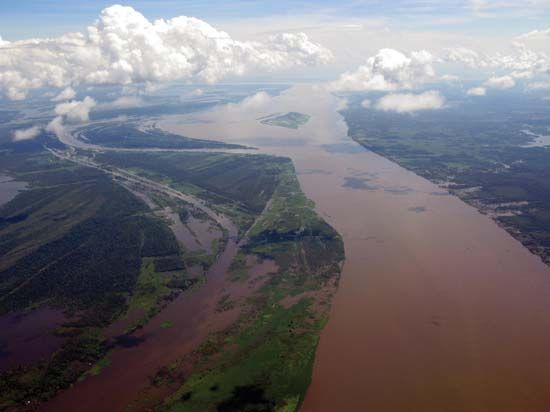
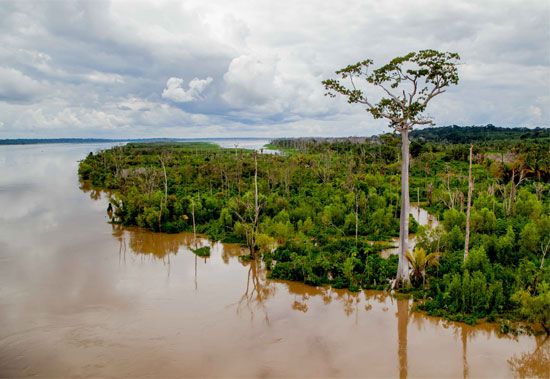
The Itapicuru River is a river located in the state of Maranhão in northeastern Brazil.
What is Itapicuru River?
The Itapicuru River is a river located in the state of Maranhão in northeastern Brazil.1
It originates from several headstreams in the Itapicuru mountain range and follows a northeastward path toward Caxias. From there, it turns northwestward and eventually empties into the Atlantic Ocean via São José Bay, situated southeast of São Luís Island. The river spans a total length of approximately 750 miles (1,200 km), with about 400 miles (640 km) of that distance being navigable.1
What are some other major rivers in Brazil?
Brazil is home to some of the most extensive river systems in the world, which serve as vital resources for transportation, irrigation, and hydroelectric power generation.34
Major River Systems
- Amazon River: The centerpiece of the world’s largest river system, the Amazon flows approximately 4,000 miles to the Atlantic Ocean. It is fed by numerous major tributaries, including the Madeira, Negro, Juruá, Purus, Tapajós, and Xingu rivers.35
- Paraguay-Paraná-Plata: This system drains large parts of southern Brazil and neighboring countries. Key tributaries include the Tietê, Paranapanema, Iguaçu, and Grande rivers.36
- Tocantins-Araguaia: Technically a separate system from the Amazon, it drains nearly one-tenth of Brazil’s territory and is a significant source of hydroelectric power, notably via the Tucuruí Dam.3
- São Francisco River: Known as the “river of national unity,” it is the largest river flowing entirely within Brazil. It is essential for irrigation and power in the country’s eastern and northeastern regions.78
How do rivers like the Itapicuru influence local agriculture?
Rivers like the Itapicuru and the São Francisco are essential to agriculture in Brazil, particularly in regions where water is a scarce resource. While specific agricultural details for the Itapicuru are limited, the São Francisco River serves as a primary model for how such waterways sustain local economies through irrigation and land management.
In arid regions, rivers provide the necessary water to transform dry landscapes into productive farmland. Techniques such as vazante agriculture—where farmers cultivate crops in river sediment left behind after the rainy season—allow for the growth of staples like cassava, corn, beans, and melons. Furthermore, large-scale infrastructure, such as dams and reservoirs, enables consistent irrigation, supporting the production of diverse crops including cotton, rice, sugarcane, and various fruits. These rivers also facilitate the transport of goods, acting as vital communication and trade links between inland agricultural districts and coastal markets.
What is the significance of the Amazon River basin?
The Amazon basin is the world’s largest drainage basin, covering approximately 34 percent of South America and spanning eight countries and one territory. Its significance is multifaceted, serving as a critical component of the Earth’s environmental and biological systems.
Environmental and Biological Importance
- Climate Regulation: The basin acts as a vital control mechanism for the global climate. The Amazon Rainforest is an efficient absorber of carbon dioxide, and its vast evapotranspiration processes are essential to the global hydrologic cycle.910
- Biodiversity: Harboring roughly 10 percent of the planet’s known life forms, the basin serves as a massive genetic repository. It contains an estimated two-thirds of the world’s known organisms, including tens of thousands of plant species and millions of insect species.910
- Water Resources: Approximately one-fifth of all freshwater runoff on Earth passes through this watershed, making it a cornerstone of global freshwater distribution.9
Human and Economic Impact
- Resource and Population Support: The Cerrado region within the basin provides water for 70–90 percent of the Brazilian population.9
- Indigenous Knowledge: The basin is home to indigenous peoples who have developed profound knowledge of its resources, including medicinal applications for plants like the coca tree and the use of curare for treating medical conditions.1110
Conservation Challenges
The basin faces significant threats from deforestation and commercial exploitation. Clearing land for agriculture often leads to rapid soil infertility, while hydroelectric dams threaten to disrupt natural flooding cycles. Protecting this region is a matter of global ecological integrity and ethical responsibility toward the preservation of biodiversity and the survival of indigenous cultures.91210
Sources
- Itapicuru River — Encyclopædia Britannica
- Bahia — Encyclopædia Britannica
- Brazil - Rivers of Brazil — Encyclopædia Britannica
- Río de la Plata - Physiography of the Alto Paraná basin — Encyclopædia Britannica
- Amazon River - Physiography of the river course — Encyclopædia Britannica
- São Francisco River — Encyclopædia Britannica
- Brazil - Shipping of Brazil — Encyclopædia Britannica
- Brazil - Hydroelectric resources — Encyclopædia Britannica
- Amazon basin — Encyclopædia Britannica
- Amazon River - Early settlement patterns — Encyclopædia Britannica
- Amazon River - Development of the Amazon basin — Encyclopædia Britannica
- Amazon River - Ecological concerns — Encyclopædia Britannica
- Amazon River - Climate — Encyclopædia Britannica
Published on · 3 min read