Podkamennaya Tunguska River
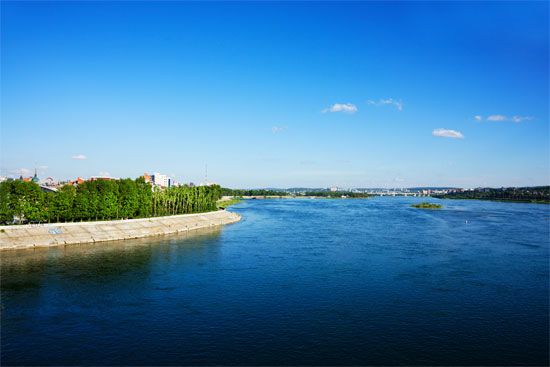
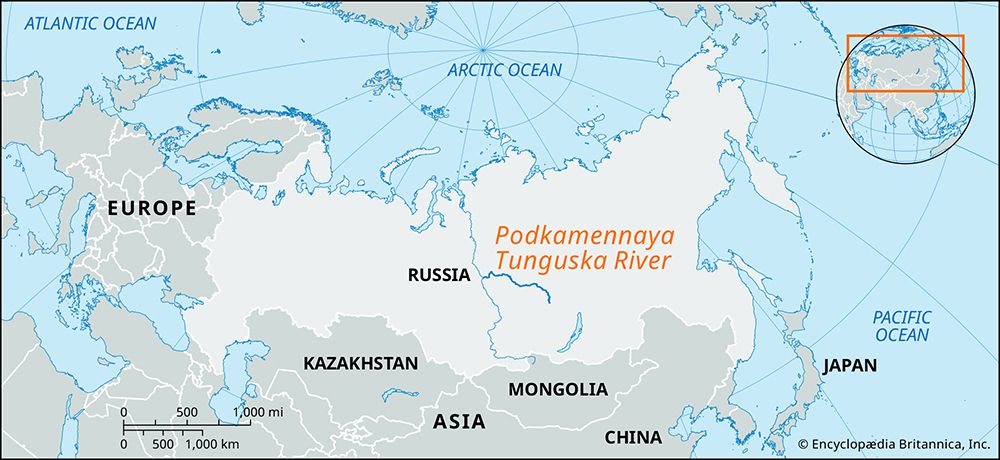
The Podkamennaya Tunguska River is a major tributary of the Yenisey River located in western Siberia, Russia. Spanning 1,159 miles (1,865 km), it originates…
What is Podkamennaya Tunguska River?
The Podkamennaya Tunguska River is a major tributary of the Yenisey River located in western Siberia, Russia. Spanning 1,159 miles (1,865 km), it originates on the Central Siberian Plateau and flows northwestward. The river is characterized by a wide, swampy valley in its upper reaches—where it is known as the Katanga—and features numerous falls and rapids in its lower section. It is navigable for 710 miles up to the village of Vanavara.1
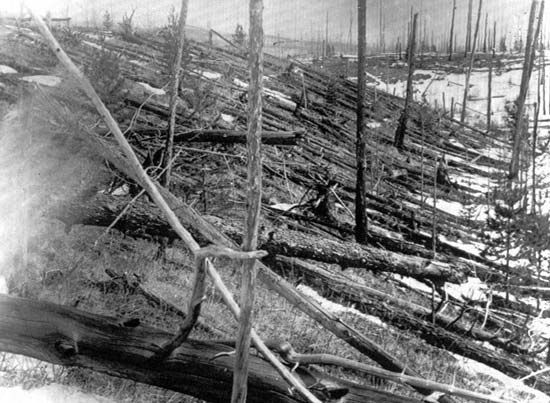
The river is perhaps most famous for its proximity to the Tunguska event, a massive 1908 explosion that flattened approximately 2,000 square kilometers of forest. While the river itself is a significant geographical feature of the region, the area near it became the focus of intense scientific study following this mysterious atmospheric blast, which is widely attributed to the airburst of a comet or asteroid.2
What caused the massive Tunguska explosion in 1908?
The massive explosion that occurred near the Podkamennaya Tunguska River on June 30, 1908, is widely attributed by scientists to the atmospheric airburst of a comet or an asteroid.23
Because the object exploded at an altitude of 5–10 km (15,000–30,000 feet), it did not create an impact crater upon reaching the surface. Instead, the event generated a massive fireball and a blast wave with an estimated energy equivalent to 15 megatons of TNT, which flattened approximately 2,000 square kilometers of forest.23
The debate regarding the object’s composition continues:
- Comet Theory: Some scientists point to the development of noctilucent clouds over Europe following the event as evidence of a comet, suggesting that the vaporization of ice crystals in the upper atmosphere caused the phenomenon.2
- Asteroid Theory: Other researchers maintain that a stony or carbonaceous meteoroid measuring 50–100 meters in diameter is the more likely culprit.23
Why was no impact crater found at the Tunguska site?
No impact crater was found at the Tunguska site because the object—likely a comet or asteroid—did not strike the Earth’s surface. Instead, it underwent a massive atmospheric airburst at an altitude of 5–10 km (15,000–30,000 feet).23
Because the object exploded high above the ground, it generated a powerful fireball and a blast wave that flattened approximately 2,000 square kilometers of forest, but it lacked the physical contact required to produce an impact crater. The intense heat and pressure caused the object to vaporize, dispersing its gases into the atmosphere and leaving behind only a few tiny fragments, each less than a millimeter in size.23
What are the main characteristics of the Yenisey River system?
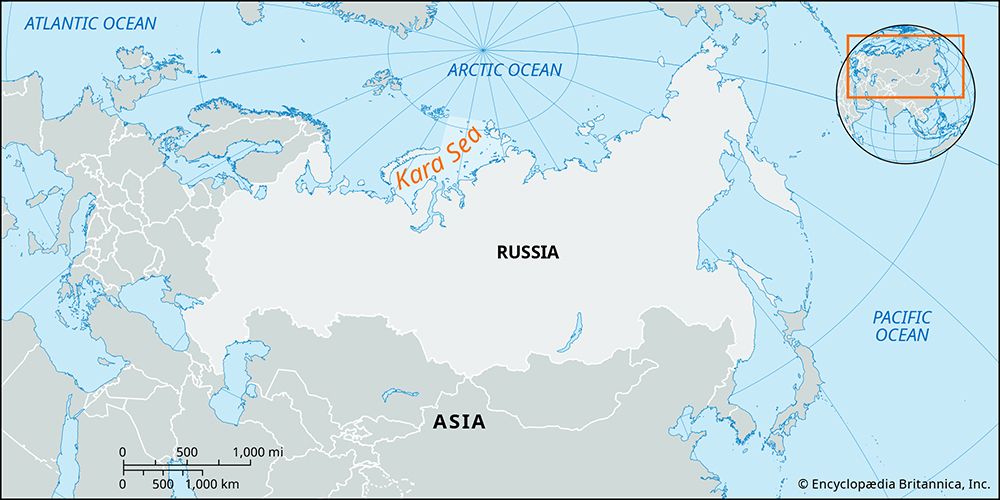
The Yenisey River is a major river system in central Siberia, Russia, and ranks as one of the longest in Asia. It flows from south to north, originating at the confluence of the Great and Little Yenisey rivers in Kyzyl and emptying into the Kara Sea.44
Hydrology and Physical Features
The river system is characterized by a diverse landscape, including mountains, plateaus, and limited lowlands. Its hydrology is dominated by the eastern Siberian regime, featuring violent spring floods caused by snowmelt, followed by summer and autumn rain floods and reduced winter runoff. The river is the largest in Russia by volume of runoff, carrying significant amounts of alluvium and dissolved minerals to the sea.56
The system comprises approximately 20,000 tributaries, with the Angara River—regulated by Lake Baikal—being a major contributor.46
Ecosystems
The basin supports varied environments:
Sources
- Podkamennaya Tunguska River — Encyclopædia Britannica
- Tunguska event — Encyclopædia Britannica
- What Is Known (and Not Known) About the Tunguska Event — Encyclopædia Britannica
- Yenisey River — Encyclopædia Britannica
- Yenisey River - Hydrology of the Yenisey River — Encyclopædia Britannica
- Yenisey River - Physical features — Encyclopædia Britannica
- Yenisey River - Physiography — Encyclopædia Britannica
- Yenisey River: Top Questions — Encyclopædia Britannica
Published on · 3 min read