Náxos
The name Naxos refers to two distinct historical and geographical locations:
What is Náxos?
The name Naxos refers to two distinct historical and geographical locations:
The Island of Naxos
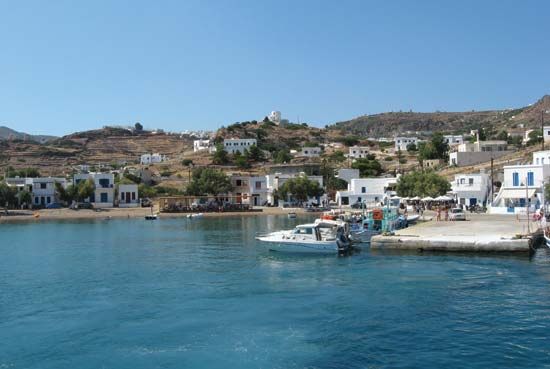
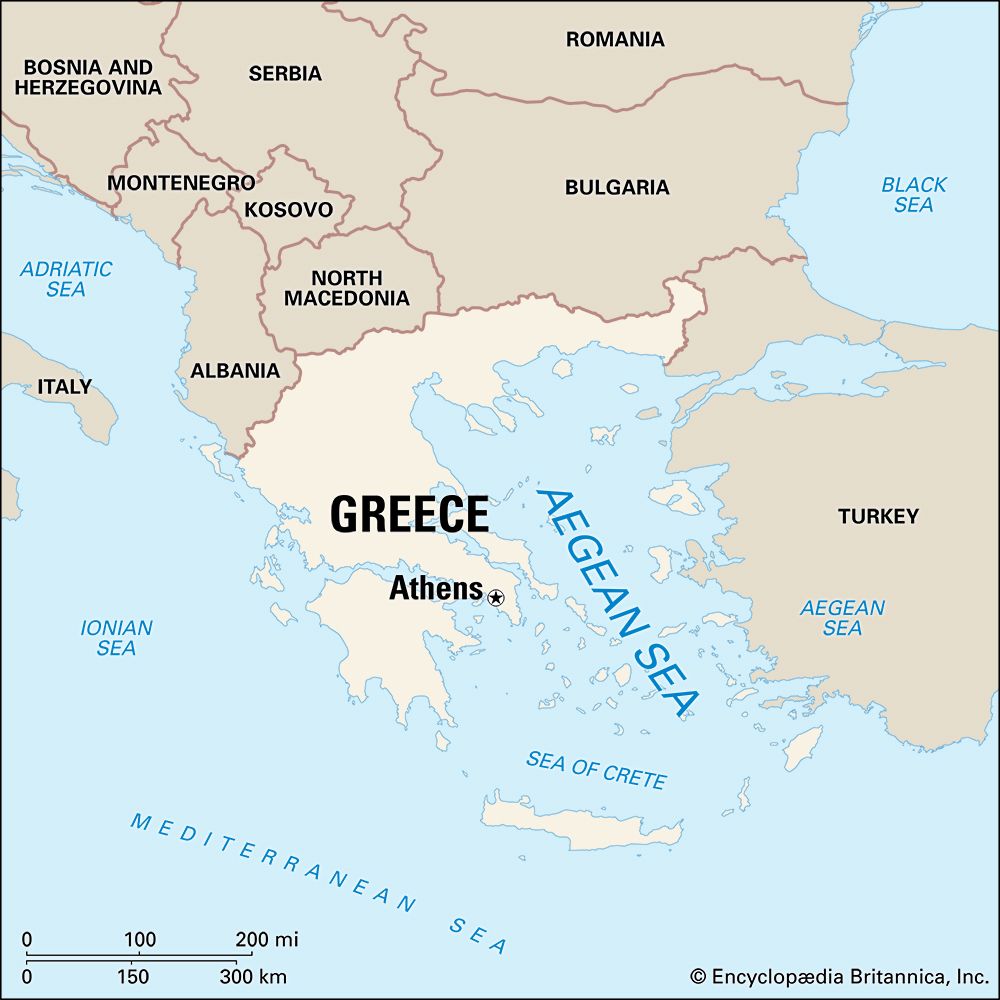
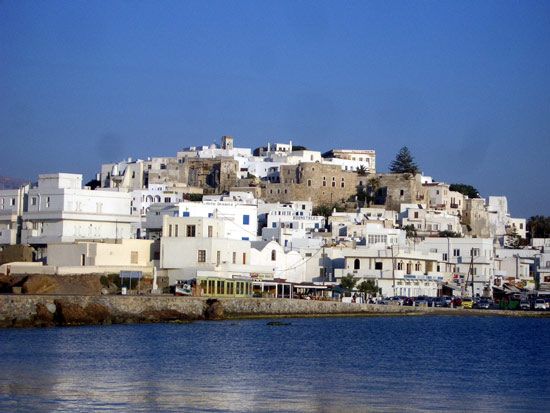
Naxos is the largest and most fertile island in the Cyclades group in the Aegean Sea, Greece. Rising to an elevation of about 3,290 feet at Mount Zeus, the island has been inhabited since the early Bronze Age. Historically, it was renowned for its wine and as a center for the worship of Dionysus. During the 7th and 6th centuries BCE, its high-quality white marble was a major source of prosperity. Throughout its history, the island was controlled by various powers, including Athens, Venice, and the Ottoman Empire, before joining the Greek kingdom in 1830.12
The Ancient Colony
Naxos was also the name of the earliest Greek colony in Sicily, founded by Chalcidians around 734 BCE. Located on the east coast near modern-day Taormina, it was named after the Aegean island. The colony was eventually destroyed in 403 BCE by Dionysius I of Syracuse.3
What role did Dionysus play in the mythology of Naxos?
In Greek mythology, the island of Naxos served as a significant setting for the god Dionysus, who was central to the island’s religious identity. Naxos was widely recognized as a major center for his worship, a status bolstered by the island’s historical fame for its wine production—a fitting tribute to the god of wine and ecstasy.51
The most prominent myth linking Dionysus to Naxos involves the Cretan princess Ariadne. According to legend, after Ariadne helped the hero Theseus escape the Labyrinth in Crete, she was abandoned by him on the shores of Naxos. Dionysus discovered her there, rescued her, and subsequently married her.651
This narrative became a beloved subject for ancient poets and artists, who frequently depicted the god gazing lovingly at the sleeping Ariadne. In artistic representations, Ariadne is often portrayed as the consort of Dionysus, sometimes accompanied by their children, cementing the island’s role as the site of their divine union.6
How did Naxian marble influence ancient Greek sculpture?
Naxian marble played a pivotal role in the evolution of ancient Greek sculpture by enabling the transition from smaller, softer materials to monumental statuary. During the 7th century BCE, Greek artists were inspired by the scale of Egyptian stone monuments and sought to replicate this grandeur at home. They turned to the fine, white, deep-grained marble of the Cyclades, particularly from Naxos and Paros, to execute these larger-than-life works.81
This shift to harder stone allowed for the creation of the first truly monumental Greek sculptures, including the life-size or larger kouroi—freestanding figures of nude youths. The availability and quality of this marble were essential to the island’s prosperity and allowed Naxian artists to become key contributors to the development of Archaic sculpture. By providing a durable and high-quality medium, Naxian marble facilitated the rapid technical and stylistic advancements that moved Greek art away from rigid, traditional forms toward the greater naturalism that would eventually define the classical tradition.81
What are the other major islands in the Cyclades group?
The Cyclades consist of approximately 30 islands in the Aegean Sea, forming a rough circle around the sacred island of Delos. While Naxos is the largest and most fertile of the group, several other major islands are significant for their history and geography:
- Ándros
- Íos
- Kéa
- Kímolos
- Kíthnos
- Melos (Mílos)
- Mýkonos
- Páros
- Tínos
- Thera (Thíra), which is notable for being the remains of a massive volcanic eruption that occurred around 1600 BCE.
These islands are the peaks of submerged mountain ranges and have served as centers of human activity since the Bronze Age, when they were famous for their distinctive white marble idols. Today, they are recognized for their archaeological importance and as popular tourist destinations.4
Sources
- Náxos — Encyclopædia Britannica
- Naxos — Merriam-Webster
- Naxos — Encyclopædia Britannica
- Cyclades — Encyclopædia Britannica
- Ariadne — Encyclopædia Britannica
- Dionysus — Encyclopædia Britannica
- Greek mythology - Myths of the gods — Encyclopædia Britannica
- Western sculpture - The Orientalizing period — Encyclopædia Britannica
- Praxiteles — Encyclopædia Britannica
- Delos — Encyclopædia Britannica
Published on · 3 min read