Peace River
The Peace River holds significant historical importance for both Indigenous peoples and early European explorers.
What is the historical significance of the Peace River for indigenous peoples and early European explorers?
The Peace River holds significant historical importance for both Indigenous peoples and early European explorers.
For Indigenous groups, the river is historically linked to the resolution of conflict. It derives its name from Peace Point, Alberta, the site where the Cree and Beaver peoples gathered to settle a territorial dispute, establishing a lasting peace between the nations.1
For European explorers, the river served as a vital corridor for expansion and commerce. The Scottish explorer Sir Alexander Mackenzie navigated and explored the river between 1792 and 1793. Following his expedition, the Peace River became a crucial route for the fur trade, facilitating the movement of goods and people across the region.1
How has the Peace River region been affected by resource extraction activities like oil and gas development?
The Peace River region, which historically relied on farming as its economic mainstay, has seen its economy diversify to include petroleum and natural gas extraction. While specific localized impacts of these activities in the Peace River valley are not detailed in the provided search results, industrial resource extraction generally poses several environmental and socioeconomic challenges.3
Broadly, the development of oil and gas resources can lead to surface disturbances that affect land integrity, local flora and fauna, and agricultural activities. Industrial operations often require significant water usage for drilling and site remediation, and there is a persistent risk of surface water or groundwater contamination from chemical by-products. Furthermore, industrial facilities, including oil refineries, may discharge heated water into river systems, which can alter local ecology and negatively impact aquatic life. Socioeconomically, such developments can place sudden demands on local infrastructure and services, requiring careful management by local governments.14
What is the geographical location and course of the Peace River in Canada?
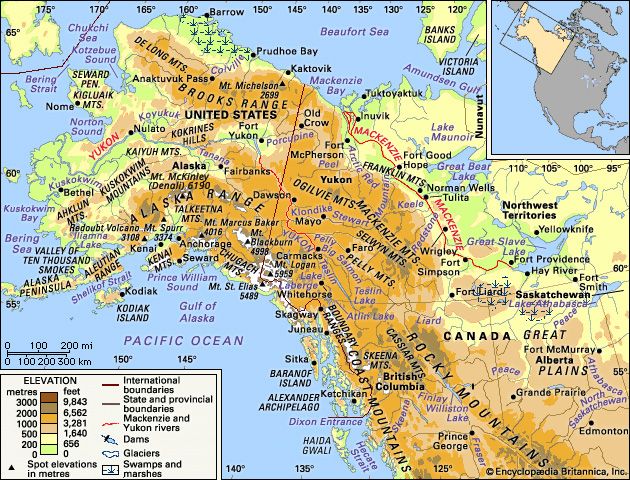
The Peace River is a major waterway in northern British Columbia and Alberta, Canada, serving as the southwestern branch of the Mackenzie River system.1
The river originates from headstreams—the Finlay and Parsnip rivers—located within the Canadian Rockies of British Columbia. It flows through the Rocky Mountain Trench before cutting eastward through the mountains into the Alberta prairies. As it travels northeastward, it is joined by major tributaries, including the Smoky and Wabasca rivers. The river eventually terminates by joining the Slave River in Wood Buffalo National Park, near the Lake Claire–Lake Athabasca complex.15
Spanning a total course of 1,195 miles (1,923 km) from the head of the Finlay, the river is a significant geographical feature of the region, providing essential hydroelectric power through the W.A.C. Bennett Dam.1
What is the origin of the name ‘Peace River’?
The name “Peace River” originates from Peace Point, Alberta, a location where the Cree and Beaver peoples settled a long-standing territorial dispute, establishing a lasting peace between the two groups.1
While the river is now known by this name, it is also historically linked to the Beaver people, an Athabaskan-speaking First Nations group. Their own name for the river was Tsades, which translates to “River of Beavers,” reflecting the region’s significance to their traditional way of life before the name “Peace River” became the standard designation following European exploration.6
Sources
- Peace River — Encyclopædia Britannica
- Mackenzie Mountains — Encyclopædia Britannica
- oil shale - Environmental issues — Encyclopædia Britannica
- river - Environmental problems attendant on river use — Encyclopædia Britannica
- British Columbia - Drainage — Encyclopædia Britannica
- Peace — Merriam-Webster
- Beaver — Encyclopædia Britannica
Published on · 2 min read