Peru Current
The Peru Current, also known as the Humboldt Current, is a cold, nutrient-rich ocean current that is fundamental to the high biological productivity of the…
What role does the Peru Current play in marine biodiversity and fisheries?
The Peru Current, also known as the Humboldt Current, is a cold, nutrient-rich ocean current that is fundamental to the high biological productivity of the eastern Pacific marine ecosystem.
Marine Biodiversity
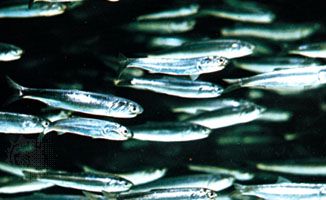
The current’s influence is driven by upwelling, a process where surface winds and Earth’s rotation pull deep, nutrient-laden water to the surface. This influx of nutrients supports massive growth of phytoplankton, which forms the base of a complex food web. These waters support a vast array of life, including anchovies, sea lions, and millions of seabirds, such as cormorants and boobies, whose droppings create guano, a valuable natural fertilizer create guano, a valuable natural fertilizer.1
Fisheries and Economic Impact
This productivity makes the region one of the world’s most significant fisheries. However, this ecosystem is sensitive to El Niño events, which temporarily displace the cold current with warmer water, suppressing upwelling and causing sharp declines in fish and bird populations. The collapse of the Peruvian anchovy industry in the 1970s highlighted the vulnerability of these stocks to both environmental shifts and overfishing.2345
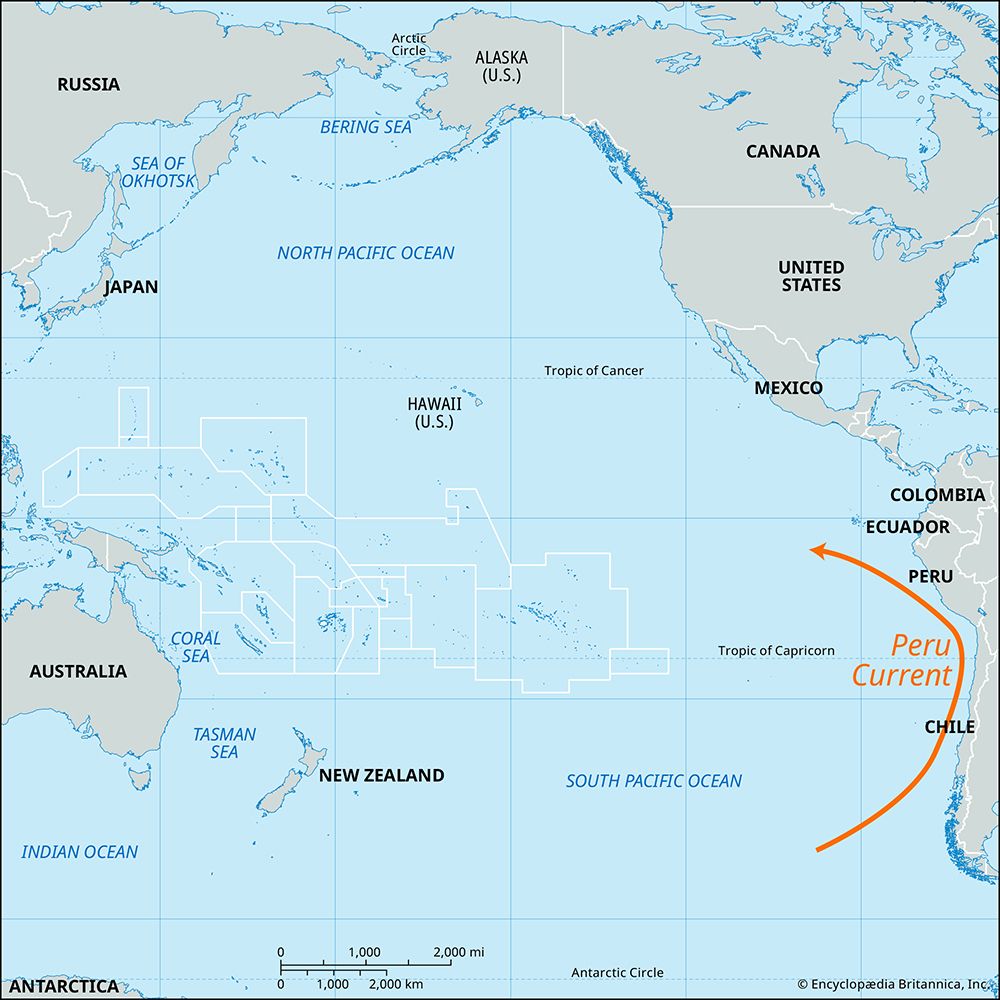
How does the upwelling process associated with the Peru Current contribute to its ecological importance?
The upwelling process is the primary driver of the Peru Current’s exceptional ecological importance. This phenomenon occurs when the combined effects of surface trade winds and Earth’s rotation pull deep, nutrient-rich water toward the surface.1
This process is critical for the following reasons:
- Biological Productivity: The influx of nutrients creates ideal conditions for the rapid growth of phytoplankton. This microscopic life serves as the foundation for a highly productive food web, supporting vast populations of anchovies and the larger predators, such as tuna, that consume them.13
- Economic and Ecological Support: The abundance of fish sustains massive flocks of seabirds, which deposit guano—a valuable natural fertilizer—along the coast. Furthermore, these nutrient-rich waters support some of the world’s most significant fisheries.13
- System Sensitivity: The ecosystem is highly dependent on this cycle. When El Niño conditions disrupt upwelling, the resulting lack of nutrients can lead to the collapse of fish populations and the industries that rely on them.13
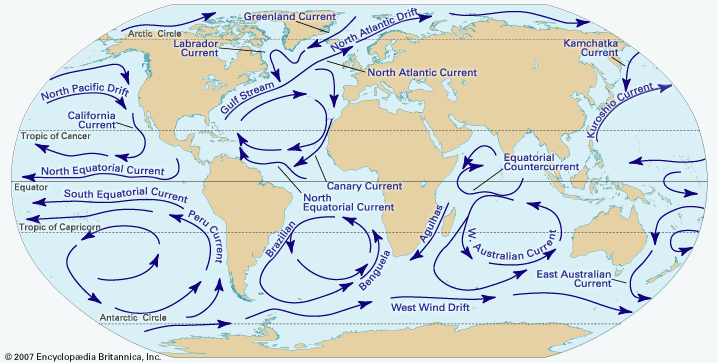
How does the Peru Current interact with other ocean currents in the Pacific?
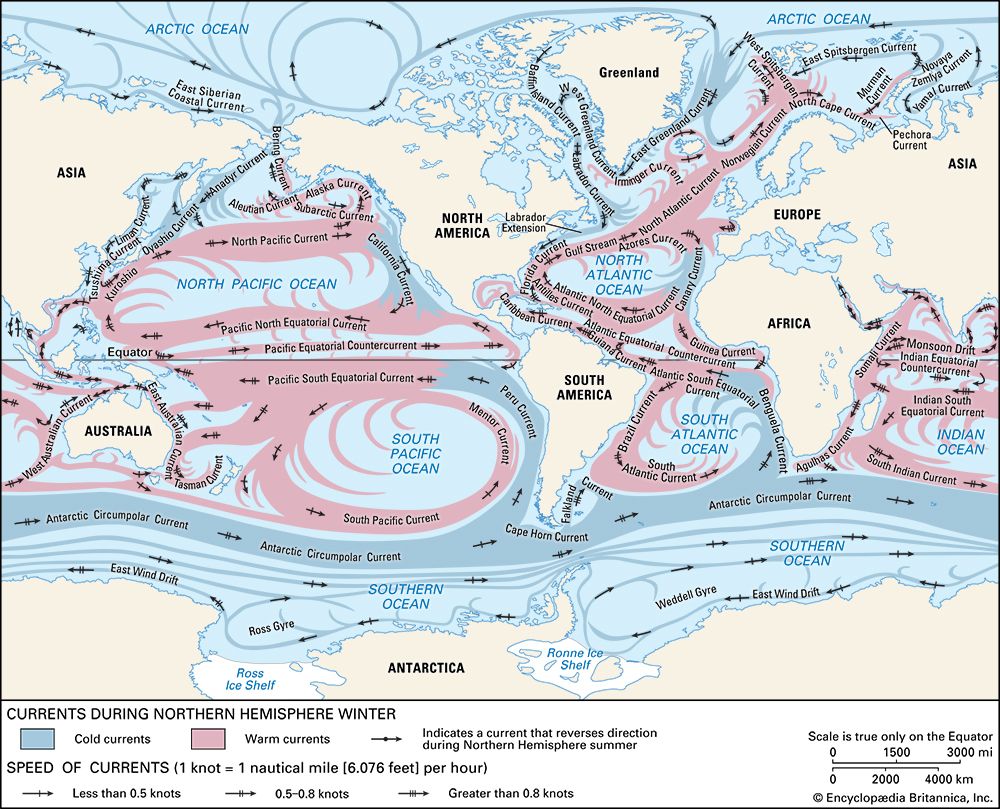
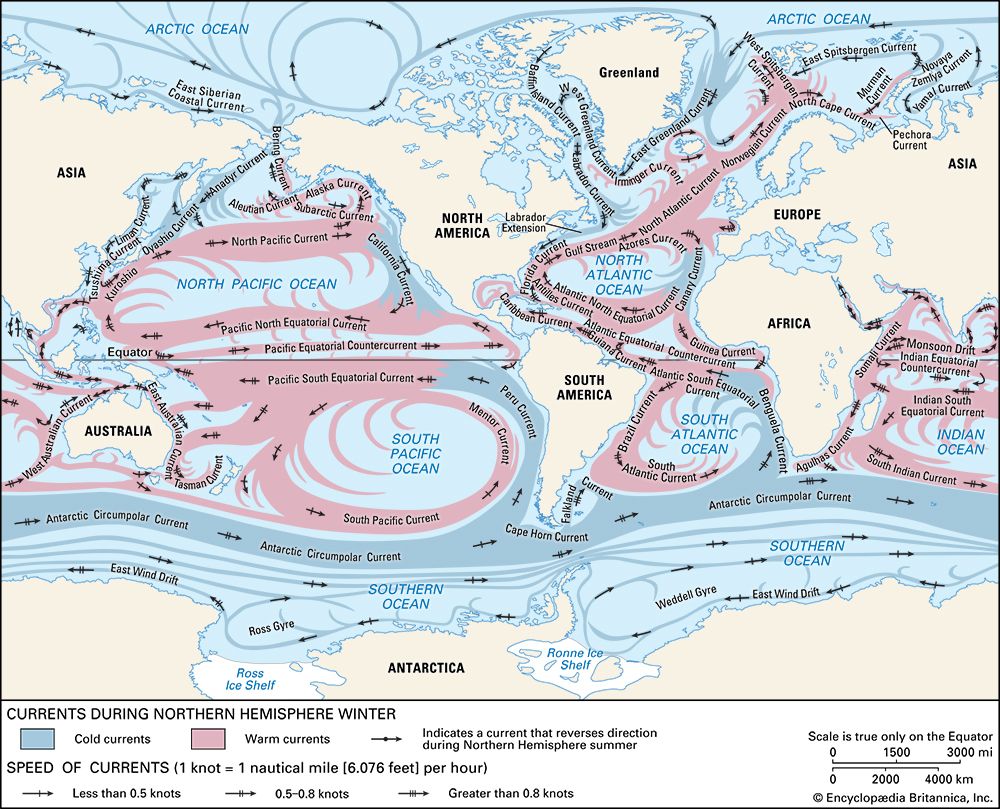
The Peru Current—also known as the Humboldt Current—is a vital component of the South Pacific’s circulation system, interacting with several major currents to maintain its cold, nutrient-rich flow.
Key Interactions
- Antarctic Circumpolar Current: The Peru Current originates as a northward-flowing branch of the Antarctic Circumpolar Current (also called the West Wind Drift). As this cold, eastward-moving current reaches the South American coast near 45° S, it splits; one portion continues through the Drake Passage, while the other turns north to form the Peru Current.16
- South Equatorial Current: The Peru Current flows northward along the coast of South America until it reaches approximately 4° S. At this point, it turns westward to join and feed the South Equatorial Current, completing a major loop in the Pacific circulation.17
- El Niño Disruptions: The current’s interaction with the broader Pacific system is periodically altered by El Niño. During these events, the cold, northward flow is suppressed by the appearance of unusually warm water, which disrupts the typical upwelling process and affects regional climate and marine life.16
What other names is the Peru Current known by, and why?
The Peru Current is also widely known as the Humboldt Current.
This alternative name honors the German scientist Alexander von Humboldt. In 1802, Humboldt conducted scientific measurements that demonstrated the current’s significantly lower temperature compared to both the surrounding sea and the air above it. His work helped characterize the nature of this cold-water flow and its influence on the region’s climate and marine environment.1
Sources
- Peru Current — Encyclopædia Britannica
- Climate - The El Niño phenomenon — Encyclopædia Britannica
- Marine ecosystem - Upwelling — Encyclopædia Britannica
- Peru - Agriculture, forestry, and fishing — Encyclopædia Britannica
- South America - The arid west coast — Encyclopædia Britannica
- Pacific Ocean - Surface currents — Encyclopædia Britannica
- Equatorial current — Encyclopædia Britannica
Published on · 3 min read