Oya Current
The Oya Current (often referred to as the Oyashio Current) is a cold, surface oceanic current that flows in a southwesterly direction along the Kamchatka…
What is Oya Current?
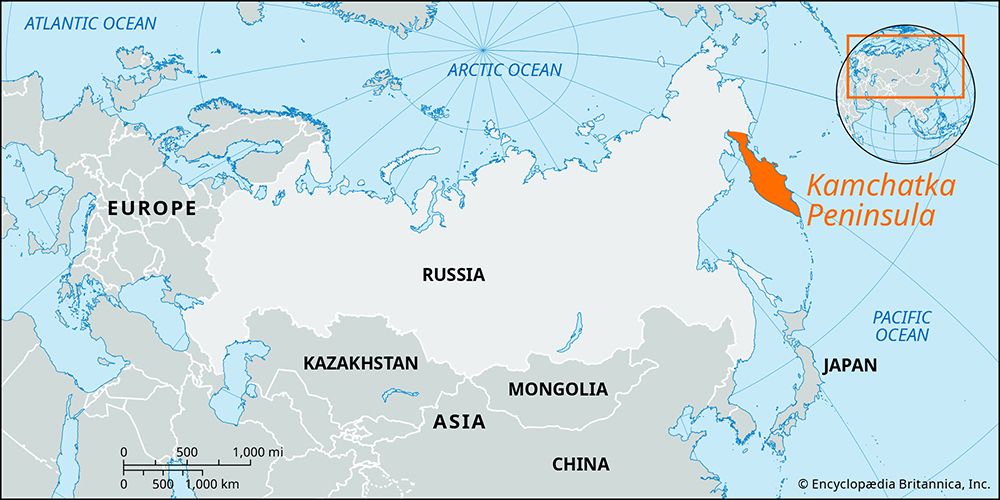
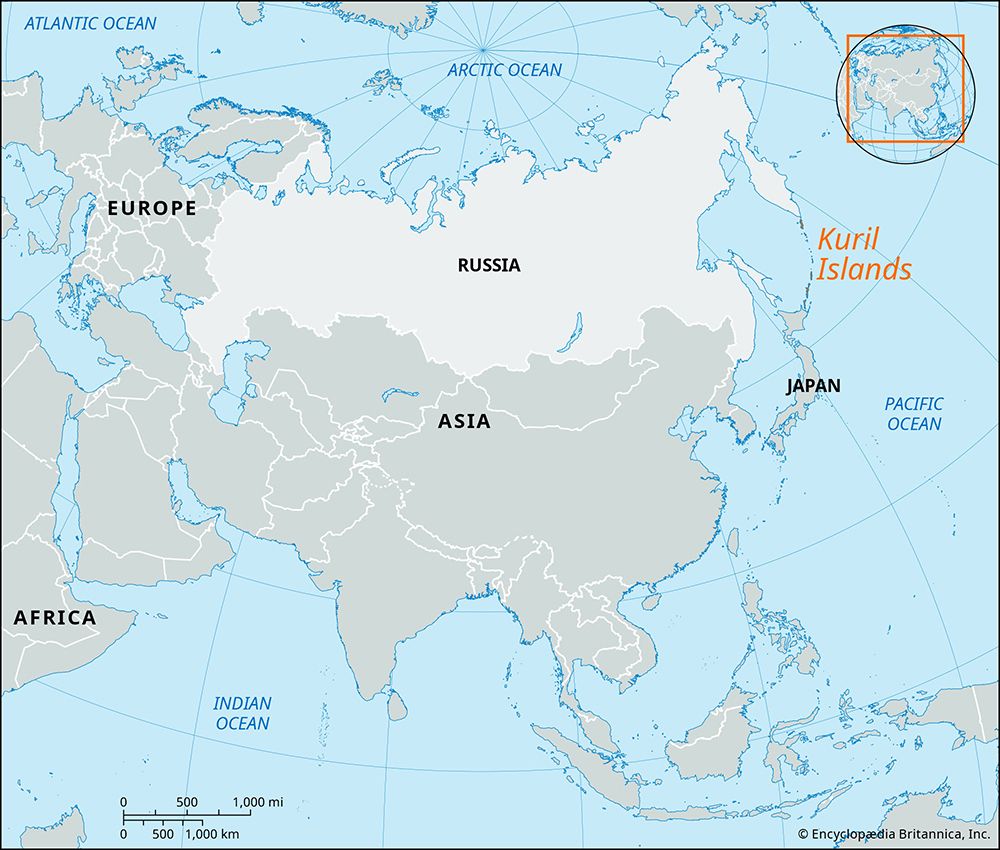
The Oya Current (often referred to as the Oyashio Current) is a cold, surface oceanic current that flows in a southwesterly direction along the Kamchatka Peninsula and the Kuril Islands.1
Characterized by its cold, less saline water, the current transports approximately 530,000,000 cubic feet of water per second. When it meets the warm Kuroshio (or Kuro Current) extension east of Japan, the denser, colder water of the Oya Current sinks below the warmer current and continues to flow southward. This confluence of contrasting water masses is frequently marked by the formation of dense fogbanks.12
How does the Kuroshio Current differ from the Oya Current?
The Kuroshio and Oya (Oyashio) currents are distinct oceanic systems that significantly influence the climate and marine environment of the North Pacific. Their primary differences lie in their temperature, salinity, and directional flow:
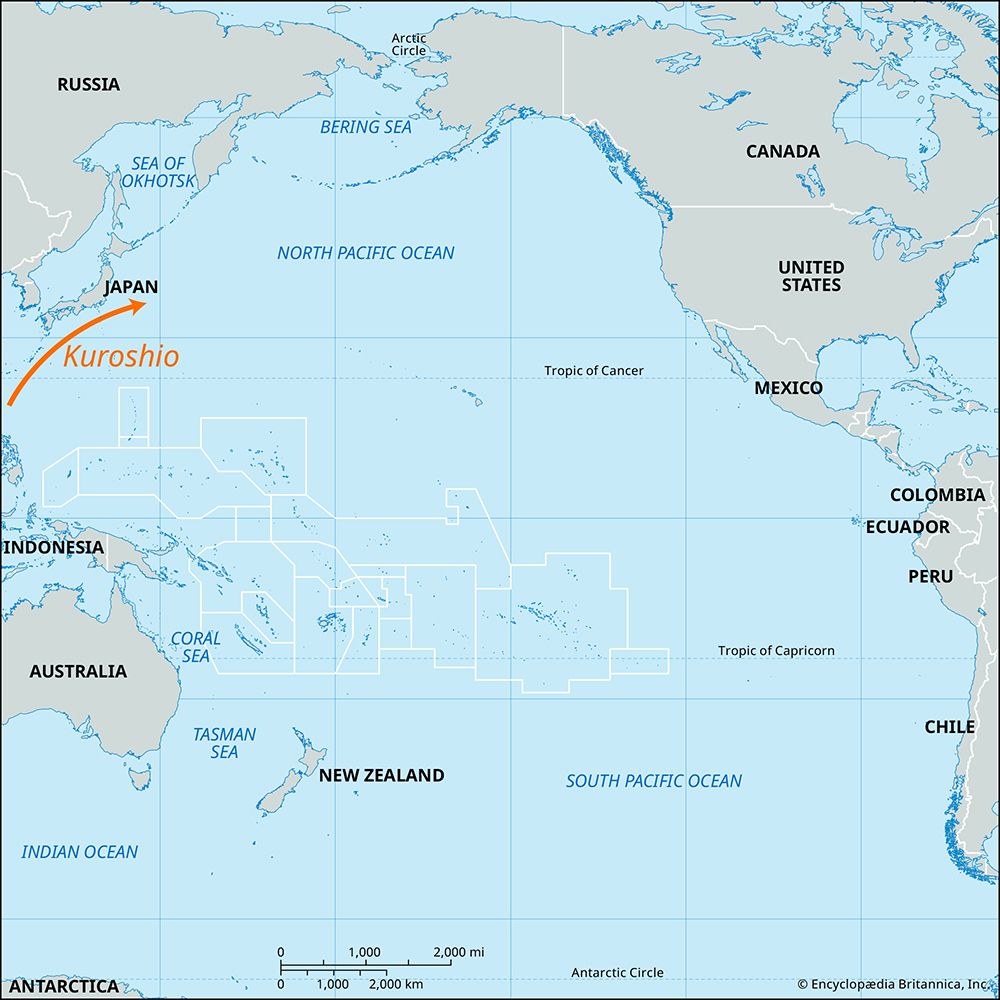
- Temperature and Salinity: The Kuroshio is a warm, saline current, with temperatures typically around 68 °F (20 °C) and a salinity of 34.5 parts per thousand. In contrast, the Oya Current is characterized by cold, less saline water.123
- Direction and Origin: The Kuroshio flows northeasterly from the Philippines along the east coast of Japan. The Oya Current flows southwesterly from the Bering Sea along the Kamchatka Peninsula, the Kuril Islands, and the east coast of Hokkaido and northeastern Honshu.123
- Interaction: When these currents meet east of Japan, the denser, colder water of the Oya Current sinks beneath the warmer Kuroshio. This confluence often results in the formation of dense sea fogs.23
While the Kuroshio has a warming effect on Japan’s coastal regions, the Oya Current serves as the Pacific counterpart to the Atlantic’s Labrador Current.13
Why do fogbanks form where these two currents meet?
Fogbanks form where the Oya Current and the Kuroshio meet primarily due to the mixing of two humid airstreams with significantly different temperatures.16
When warm, moist air associated with the Kuroshio moves over the colder surface waters of the Oya Current, the air is chilled to its dew point. This cooling process causes the water vapor in the air to condense into tiny water droplets, forming advection fog. Because these currents are in such close proximity, the resulting temperature contrast is sharp, frequently leading to the development of dense, persistent fogbanks in the region. This process is similar to the formation of fog off the Grand Banks of Newfoundland, where warm air from the Gulf Stream encounters the cold Labrador Current.6712
What impact do cold ocean currents have on local marine ecosystems?
Cold ocean currents play a vital role in shaping marine ecosystems, primarily by influencing the availability of nutrients and the productivity of plankton.
- Nutrient Enrichment: Cold currents, such as the California Current, the Benguela Current, and the Peru Current, are often associated with upwelling. These currents transport nutrient-rich water from the depths to the surface, which fuels the growth of phytoplankton.10
- Biological Productivity: Because phytoplankton are responsible for the vast majority of primary production in the ocean, these nutrient-rich environments become highly productive, supporting diverse populations of zooplankton, fish, and other marine life.10
- Species Distribution: Ocean currents act as pathways that determine the range of various species. While warm currents often transport larvae to higher latitudes, cold currents help define the specific environmental conditions—such as temperature and salinity—required by cold-adapted organisms.1112
- Environmental Regulation: By moving water and heat, these currents help maintain the physical and chemical properties of seawater, which are essential for the stability of marine habitats.1112
Sources
- Oya Current — Encyclopædia Britannica
- Kuroshio — Encyclopædia Britannica
- Japan - Climate — Encyclopædia Britannica
- Aleutian Current — Encyclopædia Britannica
- Sea of Japan / East Sea - Hydrology — Encyclopædia Britannica
- How does fog form? — Encyclopædia Britannica
- Fog — Encyclopædia Britannica
- Fog: Top Questions — Encyclopædia Britannica
- Climate - Humidity and climate — Encyclopædia Britannica
- Marine ecosystem - Ocean currents — Encyclopædia Britannica
- Atlantic Meridional Overturning Circulation — Encyclopædia Britannica
- How Do Ocean Currents Affect the Biosphere? — Encyclopædia Britannica
- plankton - Plankton and biological productivity — Encyclopædia Britannica
- Marine ecosystem - Seasonal cycles of production — Encyclopædia Britannica
Published on · 3 min read