Phantom Midge
A phantom midge is any insect belonging to the family Chaoboridae (order Diptera). While they are similar in appearance to the mosquito, they are distinct in…
What is phantom midge?
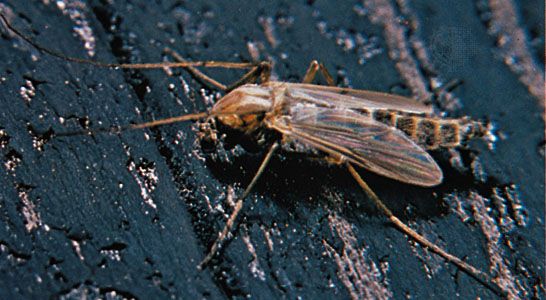
A phantom midge is any insect belonging to the family Chaoboridae (order Diptera). While they are similar in appearance to the mosquito, they are distinct in that the adults do not bite.12
The common name “phantom midge” is derived from the fact that their larvae are almost transparent. These larvae are aquatic and predaceous, often feeding on the larvae of other insects, such as mosquitoes. Their antennae are uniquely modified into grasping organs used for hunting.12
How do phantom midge larvae hunt their prey?
Phantom midge larvae hunt their prey using specialized, modified antennae that function as grasping organs. These aquatic larvae, which are nearly transparent, inhabit pools and actively hunt other small organisms, such as mosquito larvae, by using these appendages to capture them.1
What are the main differences between phantom midges and mosquitoes?
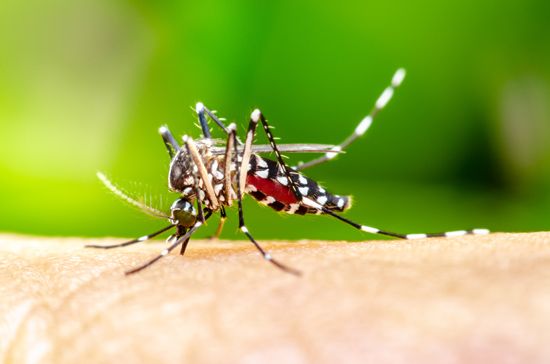
While phantom midges (family Chaoboridae) and mosquitoes (family Culicidae) share a similar appearance, they are distinct insects with key differences in their behavior and biology:
- Biting Habits: The most significant difference for humans is that adult phantom midges do not bite, whereas many female mosquitoes are well-known for their blood-feeding habits.1
- Larval Appearance: The name “phantom midge” comes from the unique, almost transparent appearance of their larvae. In contrast, mosquito larvae are typically more opaque and possess different structural characteristics adapted for their aquatic environments.15
- Larval Behavior: Phantom midge larvae are predaceous and actively hunt other small organisms, including mosquito larvae, using specialized, modified antennae that function as grasping organs.1
While both groups are members of the order Diptera and spend their larval stages in water, these behavioral and physical distinctions clearly separate the two families.15
Why are phantom midge larvae often called glassworms?
Phantom midge larvae are commonly referred to as “glassworms” because of their nearly transparent bodies, which make them appear almost invisible in their aquatic environments.1
Sources
- phantom midge — Encyclopædia Britannica
- Diptera - General features — Encyclopædia Britannica
- Chaoboridae — Merriam-Webster
- midge — Encyclopædia Britannica
- heteropteran - Annotated classification — Encyclopædia Britannica
- Diptera - Larvae — Encyclopædia Britannica
Published on · 1 min read