Midge
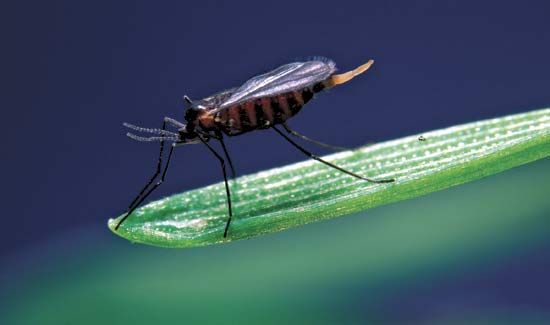
Midges are a diverse group of tiny flies categorized into several families, each with distinct habitats and behaviors.
What are some common species of midges and where are they typically found?
Midges are a diverse group of tiny flies categorized into several families, each with distinct habitats and behaviors.
Common Midge Families and Species
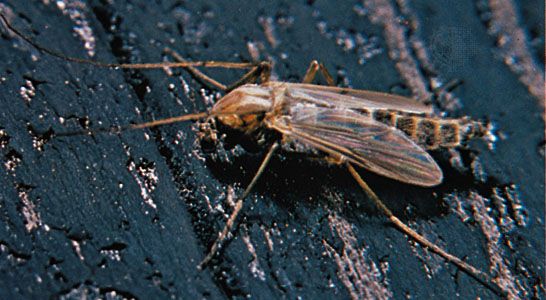
- Chironomidae (Nonbiting Midges): These harmless flies often swarm near ponds or streams during the late afternoon and evening. Their aquatic larvae, known as bloodworms, are a vital food source for trout and salmon.1
- Ceratopogonidae (Biting Midges): Also known as “no-see-ums” or punkies, these bloodsucking insects are common pests near seashores, rivers, and lakes. Notable genera include Culicoides and Leptoconops, which are sometimes referred to as sand flies.2
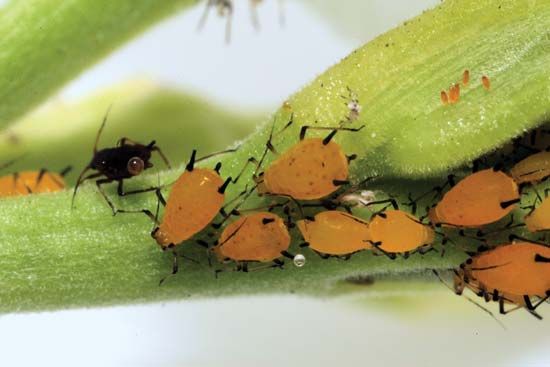
- Cecidomyiidae (Gall Midges): These insects are known for causing galls on plants. Significant species include:3
While some gall midges are pests, others are beneficial predators of aphids and mites.3
How do midges reproduce and what is their life cycle like?
Midges undergo a life cycle consisting of four distinct stages: egg, larva, pupa, and adult. For many species, such as the nonbiting midges (Chironomidae), the majority of this cycle is spent as aquatic, wormlike larvae. These larvae often inhabit stagnant water or mud, where some species use hemoglobin to survive in oxygen-poor environments.4
Adult midges are typically short-lived, often surviving less than a day, with their primary purpose being to mate and lay eggs. To attract mates, males of certain species form large, humming swarms that serve as visual signals for females.451
Reproduction in midges is generally sexual, though some species exhibit unique variations:
- Paedogenesis: In certain gall midges, such as those in the genus Miastor, larvae can reproduce parthenogenetically. In this process, daughter larvae develop within the mother larva, eventually consuming her body to escape. This cycle may repeat for several generations before the insects finally pupate.53
- Habitat Diversity: While many larvae are aquatic, others develop in manure, under tree bark, or within plant tissues, where they often cause the formation of galls1.3
What is the difference between midges and mosquitoes?
While midges and mosquitoes both belong to the order Diptera and share a fragile appearance, they are distinct in several ways:
- Mouthparts: Nonbiting midges have small mouthparts that are not elongated, meaning they cannot pierce skin to feed on blood. In contrast, female mosquitoes possess specialized mouthparts designed for blood feeding.
- Physical Characteristics: Midges lack the scales found on the wings and bodies of mosquitoes. Additionally, the pattern of wing veins differs between the two groups. Male midges are often distinguished by their feathery antennae.
- Feeding Habits: While nonbiting midges are harmless, some families, such as the biting midge (Ceratopogonidae), are bloodsuckers. However, unlike mosquitoes, biting midges are not known to transmit diseases to humans.
- Behavior: Midges are frequently observed in large, humming swarms near water during the late afternoon and evening, whereas mosquitoes are often solitary or less swarm-oriented in their adult behavior.
How do midges serve as indicators of water quality?
Midges, specifically those in the family Chironomidae, serve as important biological indicators for assessing the health of aquatic ecosystems.
In environmental monitoring, scientists use biotic indexes to evaluate water quality based on the presence or absence of specific insect groups. The presence of midges is often used as a signal of environmental stress: when sensitive organisms such as mayflies (Ephemeroptera), stone flies (Plecoptera), and caddis flies (Trichoptera) are rare or entirely absent, the dominance of midge populations generally indicates poor water quality.
Because certain midge larvae possess hemoglobin, they are uniquely adapted to survive in environments with low oxygen levels, which are often characteristic of polluted or stagnant water. Their ability to thrive where other species cannot makes them a reliable tool for researchers tracking ecological degradation.
Sources
- midge — Encyclopædia Britannica
- biting midge — Encyclopædia Britannica
- gall midge — Encyclopædia Britannica
- Diptera - General features — Encyclopædia Britannica
- insect - Reproduction — Encyclopædia Britannica
- Diptera - General features — Encyclopædia Britannica
Published on · 3 min read