Pheasant
Pheasants are members of the family Phasianidae and are generally characterized as long-tailed birds adapted for a terrestrial existence. They possess large…
What are the physical characteristics and appearance of pheasants?
Pheasants are members of the family Phasianidae and are generally characterized as long-tailed birds adapted for a terrestrial existence. They possess large feet and claws suited for scratching and digging, along with short, rounded wings designed for rapid, short bursts of flight rather than sustained travel.12
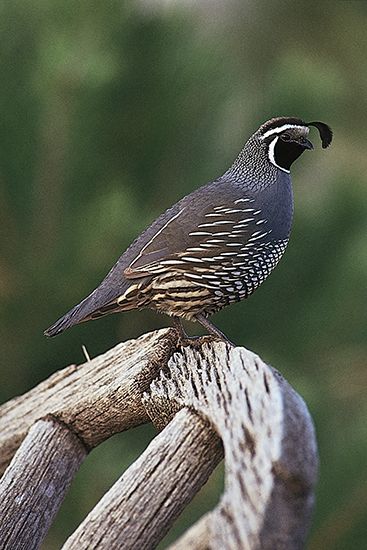
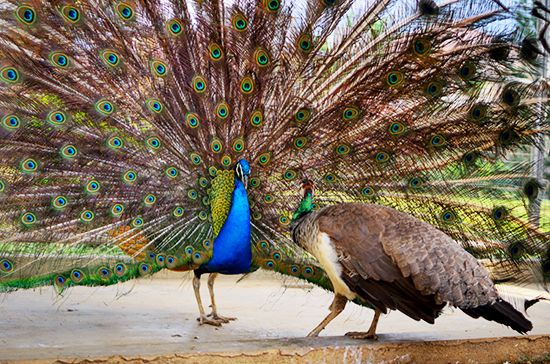
A defining feature of most pheasant species is sexual dimorphism, where males and females differ significantly in appearance.13
- Males: Typically larger and strikingly colored, males often feature iridescent plumage in shades of green, purple, orange, yellow, or white. Many species exhibit specialized ornaments, such as fleshy wattles on the face, small ear tufts, or crests of modified plumes. Males also possess one or more leg spurs.12
- Females: In contrast, females are generally smaller, inconspicuously colored in shades of brown, and have relatively shorter tails.1
Tail length varies significantly across the family; in many males, the tail can account for more than two-thirds of the bird’s total length, sometimes reaching up to 2 meters in species like the great argus.12
Where are pheasants naturally found, and how have they been introduced to other regions?
The original distribution of pheasants centers on a region extending from China to Malaysia. Within this native range, various species have adapted to diverse environments, such as the open woodlands and fields favored by many members of the subfamily Phasianinae.1
The spread of pheasants to other parts of the world has occurred primarily through human intervention, often for the purposes of sport hunting, ornamental display in private collections, or exhibition in zoos. Notable examples of these introductions include:14
- Europe and Anatolia: Certain species were naturalized in these regions approximately two thousand years ago.1
- North America: The common pheasant (Phasianus colchicus), also known as the ring-necked pheasant, was introduced in the 1890s. It has since become widely established, representing a rare success story among many failed attempts to introduce nonnative game birds to the continent.54
While these introductions have been successful in some instances, many historical efforts to establish nonnative game bird populations have failed, highlighting the complexities of species translocation.5
What are the different species of pheasants, and how do they vary?
The pheasant family, Phasianidae, comprises approximately 50 species within the subfamily Phasianinae. These birds exhibit significant diversity in size, coloration, and specialized physical features, though they generally share a terrestrial lifestyle and a tendency for sexual dimorphism.61
Key species and variations include:
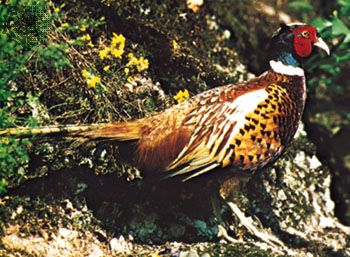
- Common Pheasant (Phasianus colchicus): The most widespread species, featuring 20–30 races. Males are characterized by a brown back, coppery breast, and a long, cross-barred tail.6
- Green Pheasant (P. versicolor): Native to Japan, this species is primarily metallic green and is noted for its sensitivity to seismic activity.6
- Argus Pheasants: These birds are known for their extraordinary tail feathers covered in “eyes.” The great argus can reach lengths of up to 2 meters (6.5 feet).6
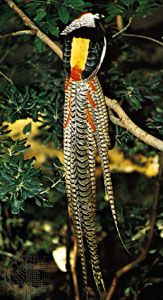
- Ruffed Pheasants: Including the golden pheasant and Lady Amherst’s pheasant, these are highly prized as ornamentals for their vibrant plumage.6
- Monals (Impeyan pheasants): These birds display exceptional, iridescent coloration, such as the Himalayan Impeyan’s metallic-green head and white back.6
- Tragopans (Horned pheasants): These species are distinguished by fleshy horns and a bright, colorful apron of skin under the bill used during courtship.6
How have pheasants been depicted in art and literature throughout history?
The provided search results do not contain information regarding the depiction of pheasants in art and literature throughout history. While the records confirm that pheasants have been kept for centuries as ornamental birds in collections worldwide and raised for sport, they do not offer details on their cultural, artistic, or literary significance.1
Sorry, the Britannica knowledge base does not contain this information.
Sources
- Pheasant — Encyclopædia Britannica
- Did you know? — Merriam-Webster
- Galliform - Form and function — Encyclopædia Britannica
- conservation - Introducing species — Encyclopædia Britannica
- Galliform - Importance to humans — Encyclopædia Britannica
- Phasianidae — Encyclopædia Britannica
- Galliform - Annotated classification — Encyclopædia Britannica
- Chinese pheasant — Merriam-Webster
- silver pheasant — Merriam-Webster
- pheasant — Merriam-Webster
Published on · 3 min read