Quail
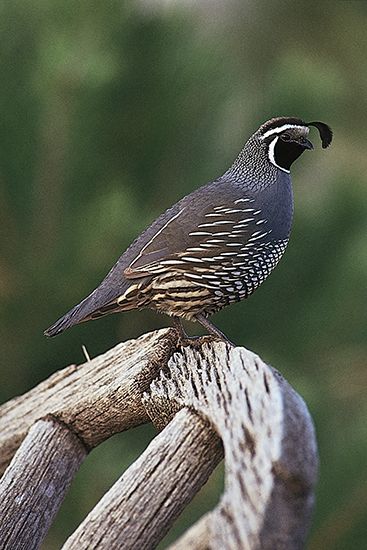
Quail are small, short-tailed game birds belonging to the order Galliformes. There are approximately 130 species, which are divided into two main groups:
What is Quail?
Quail are small, short-tailed game birds belonging to the order Galliformes. There are approximately 130 species, which are divided into two main groups:
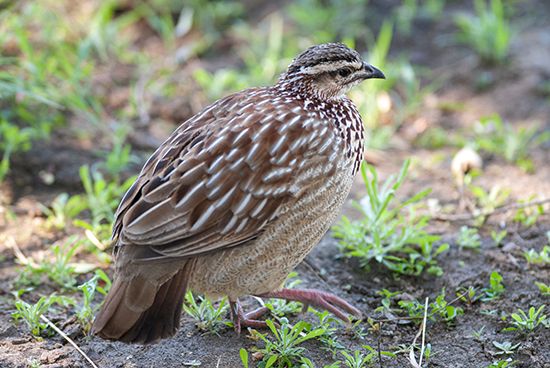
- Old World quail: Classified within the family Phasianidae, these are generally smaller, stockier birds with smooth bill edges and often spurred legs. The common quail is the only migratory species in the group.
- New World quail: These belong to the family Odontophoridae and more closely resemble partridges. They possess stronger bills than their Old World counterparts and lack leg spurs. Well-known examples include the bobwhite and the California quail.1
Quail typically inhabit open country and brushy areas, feeding primarily on seeds, berries, leaves, and roots. Because their flesh and eggs are considered delicacies, they are popular as game birds.12
What is the difference between Old World and New World quail?
The distinction between Old World and New World quail is primarily based on their biological classification and physical characteristics.
Taxonomic Classification
- Old World Quail: These 95 species are classified within the family Phasianidae and are further divided into the subfamilies Phasianinae or Perdicinae.1
- New World Quail: These 32 species constitute the distinct family Odontophoridae.1
Physical and Behavioral Differences
The two groups exhibit several notable physical differences:
- Body Structure: Old World quail are generally smaller, shorter, and stockier than their New World counterparts.1
- Bills: New World quail possess stronger bills compared to the Old World forms.1
- Legs: Many Old World species have spurred legs, whereas none of the New World species have leg spurs.1
- Bill Edges: Old World quail have smooth bill edges.1
- Migration: The common quail of the Old World is unique as the only migratory species among all galliform birds.1
While they differ in these specific traits, both groups generally prefer open country and brushy habitats and share similar diets consisting of seeds, berries, leaves, and roots.1
How do quail protect themselves from predators?
Quail employ several strategies to protect themselves and their offspring from predators. Because many species nest on the ground, they rely on specific behaviors to minimize detection and ensure survival:
- Nest Placement and Concealment: Birds that nest on the ground often choose sites that offer natural protection, such as placing nests near those of social wasps or stinging ants to deter predators.1
- Eggshell Removal: A critical antipredatory measure for ground-nesting birds is the removal of conspicuous eggshells from the nest area immediately after the eggs hatch, as these shells can attract unwanted attention.1
- Adaptive Vocalization and Behavior: While newly hatched chicks may initially gape for food in response to any mechanical disturbance, they quickly learn to restrict this behavior to their parents. This prevents nestlings from inadvertently signaling their presence to predators through unnecessary movement or vocalization.1
- Physical Speed: Some species, such as the scaled, or blue, quail, utilize their agility to escape danger, with running speeds recorded as high as 24 km (15 miles) per hour.4
What makes the common quail unique among other galliform birds?
The common quail (Coturnix coturnix) is unique among all galliform birds because it is the only species in the order that is migratory.1
While other members of the order Galliformes—such as chickens, turkeys, and pheasants—are generally adapted for a terrestrial existence and are not known for long-distance migration, the common quail regularly travels between its breeding and wintering grounds across Europe, Asia, and Africa.11011
Sources
- Quail — Encyclopædia Britannica
- quail — Merriam-Webster
- Galliform - Care of the young — Encyclopædia Britannica
- Gruiform - Nesting — Encyclopædia Britannica
- quails — Merriam-Webster
- quail — Merriam-Webster
- Avoidance behaviour - Fleeing and escape — Encyclopædia Britannica
- Reproductive behaviour - Parental care — Encyclopædia Britannica
- Did you know? — Merriam-Webster
- Galliform — Encyclopædia Britannica
- Galliform - Form and function — Encyclopædia Britannica
- Phasianidae — Encyclopædia Britannica
- Migration - Modes of migration — Encyclopædia Britannica
Published on · 3 min read