Scimitar-babbler
A scimitar-babbler is any of approximately 12 species of songbirds belonging to the family Timaliidae (order Passeriformes). These birds are characterized by…
What is Scimitar-babbler?
A scimitar-babbler is any of approximately 12 species of songbirds belonging to the family Timaliidae (order Passeriformes). These birds are characterized by their long, curved bills, which they use to forage for insects within ground litter.1
Typically measuring between 18 and 28 cm (7 to 11 inches) in length, these birds possess fairly long tails and predominantly brown plumage. Their geographic range extends across southern Asia to Australia and the Philippines. Examples include the slaty-headed scimitar-babbler (Pomatorhinus schisticeps), found from India to Indochina, and the gray-crowned scimitar-babbler (Pomatostomus temporalis) of eastern Australia, which is distinguished by a black mask. While sometimes associated with the family Pomatorhinidae, they are classified within the babbler family (Timaliidae) in this encyclopedia.12
How do birds use their beaks to adapt to different environments?
Birds have evolved an extraordinary diversity of beaks (or bills) that are highly adapted to their specific feeding habits and environments. While bill shape was once used primarily to determine taxonomic relationships, it is now understood that these structures are evolutionarily plastic, changing in response to selective pressures related to food sources.3
Functional Adaptations
Bird bills are generally classified into several morphological types based on their function:
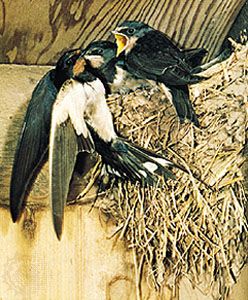
- Insectivorous: Ranging from straight and pointed for gleaning to wide-gaped for catching insects in flight (e.g., swallows).34
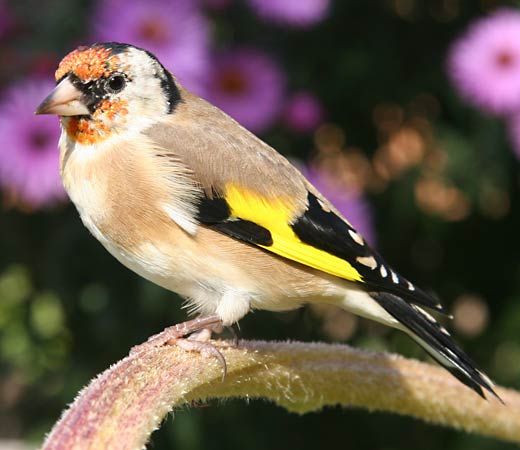
- Conical: Stout and blunt for cracking hard seeds, or smaller and pointed for finer extraction.3
- Probing: Often long and slender for reaching nectar or insects in flowers, or more robust for digging into wood and bark.3
- Tearing and Toothed: Hooked tips, sometimes with a “tooth” or notch, allow raptors and shrikes to tear apart prey.35
- Specialized: Includes the serrated bills of plantcutters for vegetation, the pouched bills of pelicans for netting fish, and the chisel-like bills of woodpeckers for excavating wood.367
Evolutionary Context
Adaptive radiation, such as that seen in Darwin’s finches and Hawaiian honeycreepers, demonstrates how a single ancestral group can diversify into many species with specialized bills to exploit different ecological niches. Furthermore, some species exhibit sexual dimorphism in bill structure, allowing males and females to utilize different food sources and reduce competition.37
While these adaptations are highly efficient, most birds remain opportunistic, often supplementing their primary diet with seasonally available food.3
What are some other unique bird species found in southern Asia?
Southern Asia is home to a remarkable diversity of bird life, accounting for a significant portion of the world’s avian species. Beyond the scimitar-babbler, the region hosts several unique and notable birds:
- Hornbills: These birds are highly developed in the Oriental region. They are known for their large, prominent bills, often topped with a bony casque or helmet. Species range from the massive great hornbill to smaller varieties like the bushy-crested hornbill found in Southeast Asia.910
- Jungle Fowl: Unique to the Oriental region, these birds are the wild ancestors of all domesticated chickens.9
- Asian Hawk Cuckoo: Often called the “brain-fever bird,” it is well known for its distinct, repetitious cry.9
- Great Indian Bustard: An endangered species now confined to the grasslands of central and western India.11
- Sarus Crane: A large, striking gray bird with crimson legs that can stand as tall as a human.11
- Coppersmith Barbet: A well-known member of the barbet family, which are characterized as loud-voiced tropical birds.9
The region also supports a wide variety of other birds, including numerous species of pheasants, kingfishers, drongos, and peacocks, the latter being the national bird of India.911
What is the role of babblers in their ecosystems?
Babblers, which belong to the family Timaliidae, play a functional role in their ecosystems primarily as insectivores. These songbirds are equipped with specialized bills—such as the long, curved bills of the scimitar-babbler or the slender, hook-tipped bills of the jungle babbler—which allow them to forage effectively for insects within ground litter and forest undergrowth. By consuming these insects, babblers help regulate insect populations within their respective habitats across Asia, Africa, and the Philippines.114
While the provided search results highlight the role of various birds in seed dispersal (such as thrushes, hornbills, and nutcrackers), they do not explicitly detail a role for babblers in this process. Instead, the ecological significance of babblers is defined by their foraging behavior and their presence as insectivorous members of the forest community.114
Sources
- Scimitar-babbler — Encyclopædia Britannica
- Pomatorhinidae — Encyclopædia Britannica
- Passeriform - Bill — Encyclopædia Britannica
- Beak — Encyclopædia Britannica
- Charadriiform - Adaptations for feeding — Encyclopædia Britannica
- Bird - Feeding habits — Encyclopædia Britannica
- Piciform - Form and function — Encyclopædia Britannica
- Falconiform - Feet and beak — Encyclopædia Britannica
- Asia - Birds — Encyclopædia Britannica
- Hornbill — Encyclopædia Britannica
- India - Birds — Encyclopædia Britannica
- Bird-of-paradise — Encyclopædia Britannica
- Bird - General features — Encyclopædia Britannica
- Jungle babbler — Encyclopædia Britannica
- Fruit - Animal dispersal — Encyclopædia Britannica
- Seed dispersal - Birds — Encyclopædia Britannica
Published on · 3 min read