Philippines
The Philippine economy is supported by three primary sectors: services, agriculture, and manufacturing.
What are some of the key economic sectors and industries in the Philippines?
The Philippine economy is supported by three primary sectors: services, agriculture, and manufacturing.
Services
The service sector is the largest component of the economy, contributing over two-fifths of the GDP and employing more than one-third of the workforce. Trade and hospitality are the leading employers, while tourism continues to grow, with popular destinations including Metro Manila, Cebu, and Boracay Island.1
Agriculture, Forestry, and Fishing
Although it accounts for about one-seventh of the GDP, this sector employs nearly one-third of the labor force.2
- Crops: Key products include rice, coconuts, sugarcane, bananas, corn, and pineapples. The Philippines is also a major global producer of coconuts.2
- Fisheries: A vital source of protein, with canned tuna serving as a primary export.2
- Forestry: Despite historical logging, the industry provides materials for furniture, plywood, and paper, alongside products like rattan and bamboo.2
Manufacturing
Contributing roughly one-fourth of the GDP, the manufacturing sector focuses on both domestic consumption and exports. Key industries include electronics, garments, textiles, processed foods, and chemicals.34
How did the Philippines gain independence and what is its current form of government?
The Philippines gained independence through a structured transition following decades of colonial administration. While the nation first declared independence in 1898 during the Philippine Revolution, this was superseded by U.S. rule following the Spanish-American War. The path to modern sovereignty was formally established by the Tydings-McDuffie Act of 1934, which mandated a 10-year Commonwealth period, ultimately leading to full independence on July 4, 1946.56
Current Form of Government
The Philippines currently operates under a constitution ratified in 1987, which established a presidential system with a separation of powers.7
- Executive Branch: The president serves as the head of state and is limited to a single six-year term. The president appoints a cabinet to manage government ministries, subject to the approval of a Commission of Appointments.7
- Legislative Branch: The Congress of the Philippines is a bicameral body consisting of a House of Representatives and a Senate. Senators are elected at large for six-year terms, while House members are elected from districts for three-year terms.7
- Judiciary: The government maintains an independent judiciary to uphold the rule of law.7
What are the major languages and cultural influences in the Philippines?
The Philippines possesses a rich cultural tapestry shaped by its indigenous roots and centuries of colonial influence.
Languages
The Philippines is home to approximately 150 native languages and dialects, most of which belong to the Austronesian family.8
- Official Languages: Filipino (based on Tagalog) and English serve as the official languages and primary media of instruction.89
- Major Regional Languages: Cebuano is widely spoken in the Visayas and Mindanao, while Ilocano is the dominant language of Northern Luzon. Other prominent languages include Hiligaynon, Waray-Waray, and various Bicol dialects.810
Cultural Influences
The nation’s culture is a synthesis of indigenous traditions and external influences, primarily from Spain and the United States.111213
- Spanish Influence: Beginning in the 16th century, Spanish colonization introduced Roman Catholicism, which remains a central pillar of Filipino society. Spanish rule also influenced social structures, architecture, and the arts, though many indigenous beliefs persisted under Catholic traditions.1314
- American Influence: The period of U.S. occupation (early 20th century) significantly impacted the educational system and promoted the widespread use of English. This era also introduced Western political institutions and democratic values.12
- Indigenous Heritage: Despite colonial impacts, indigenous traditions remain vibrant. This is evident in local performing arts, such as the kulintang ensemble, and in rich oral traditions, including epics like the Darangen and Biag ni Lam-ang.11
How does the Philippines’ location affect its climate and weather patterns?
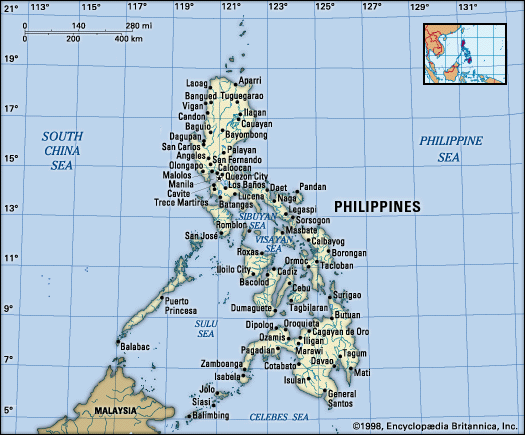
The Philippines’ climate is defined by its tropical, monsoonal nature, heavily influenced by its position in the western Pacific. The archipelago experiences two primary seasonal patterns driven by prevailing air currents: the southwest monsoon (wet season) from May to October and the northeast monsoon (dry season) from November to February.1516
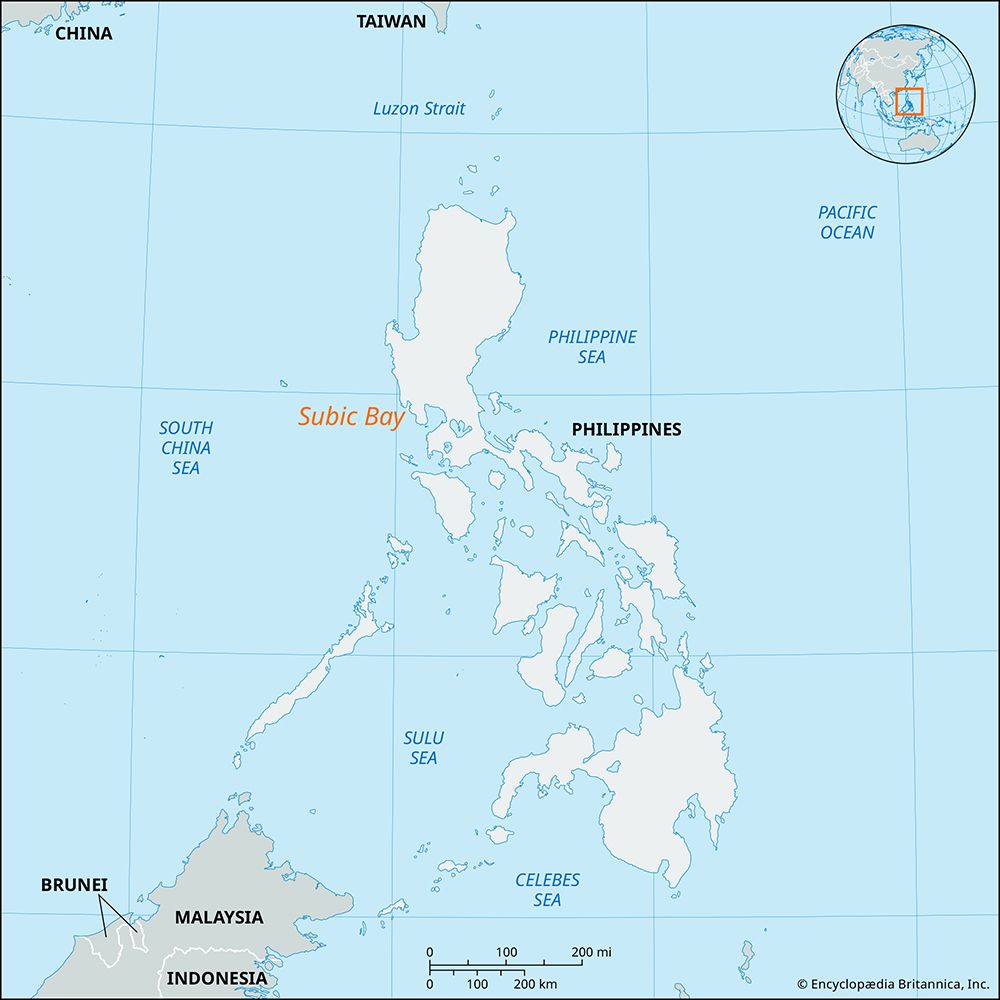
Precipitation varies significantly based on geography. The eastern shores, which face the Pacific Ocean, receive the heaviest rainfall, particularly during the northeast monsoon as moisture-laden air encounters the landmass. Conversely, western regions facing the South China Sea experience more distinct wet and dry seasons.1516
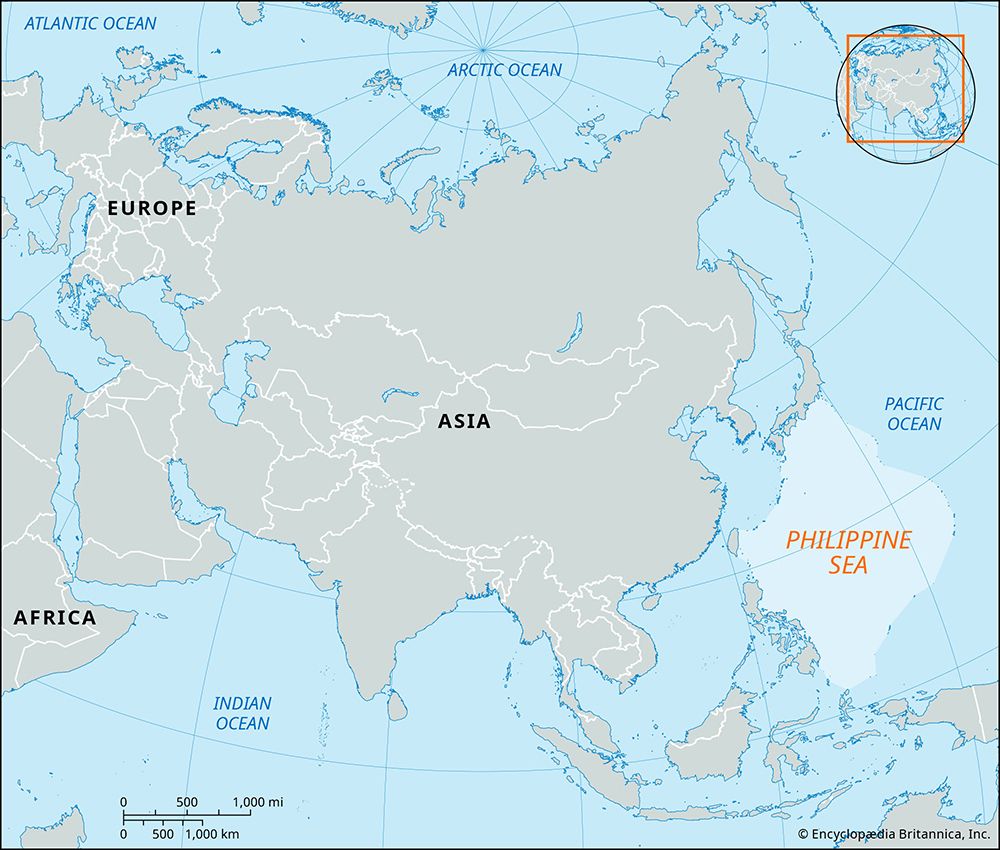
The nation’s location also makes it highly susceptible to tropical cyclones, known as typhoons in the Pacific. These storms frequently originate in the western Pacific and the Philippine Sea, often striking the Philippines between June and December. While these storms can cause severe flooding and destruction, their frequency generally increases from south to north, leaving Mindanao largely unaffected. Additionally, while lowland temperatures remain consistently high, the country’s varied topography allows for cooler, more temperate climates in higher elevations.151718
Sources
- Philippines - Services — Encyclopædia Britannica
- Philippines - Agriculture, forestry, and fishing — Encyclopædia Britannica
- Philippines - Manufacturing — Encyclopædia Britannica
- Manila - Manufacturing — Encyclopædia Britannica
- Tydings-McDuffie Act — Encyclopædia Britannica
- Philippines - Constitutional framework — Encyclopædia Britannica
- Philippines - The Philippine Revolution — Encyclopædia Britannica
- Philippines - Languages — Encyclopædia Britannica
- Philippine languages — Encyclopædia Britannica
- Philippines - The arts — Encyclopædia Britannica
- history of the Philippines - The period of U.S. influence — Encyclopædia Britannica
- history of the Philippines - The Spanish period in the Philippines — Encyclopædia Britannica
- Philippines: Country Facts — Encyclopædia Britannica
- Philippines - The Spanish period — Encyclopædia Britannica
- Philippines - Climate — Encyclopædia Britannica
- Philippine Sea — Encyclopædia Britannica
- Southeast Asia - Precipitation — Encyclopædia Britannica
- Pacific Ocean - Tropical storms — Encyclopædia Britannica
Published on · 4 min read