Pinworm
A pinworm is a type of nematode belonging to the family Oxyuridae. These small, intestinal parasites are characterized by their pinlike appearance, with…
What are pinworms and how do they differ from other nematodes?
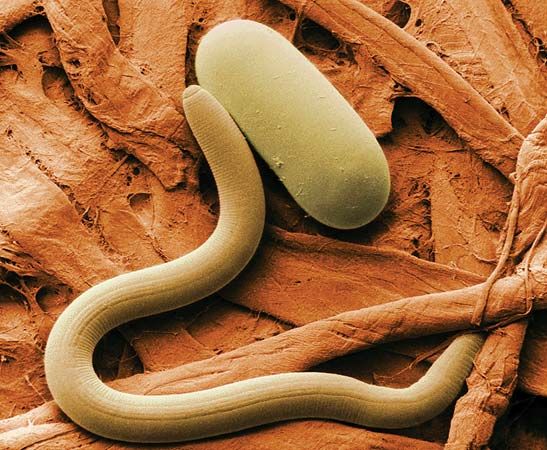
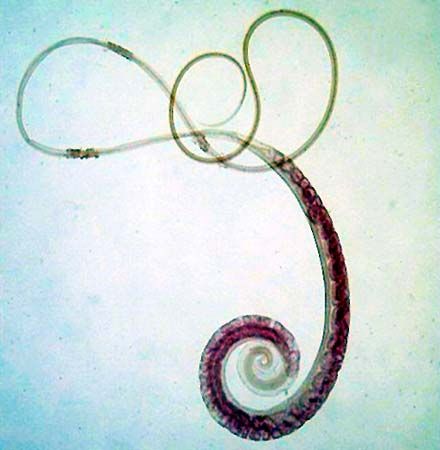
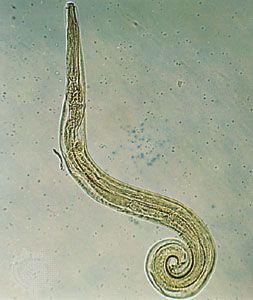
A pinworm is a type of nematode belonging to the family Oxyuridae. These small, intestinal parasites are characterized by their pinlike appearance, with females ranging from 8 to 13 mm in length. They primarily inhabit the large intestine or cecum of vertebrates, including humans.123
Pinworms differ from other nematodes in several ways:
- Habitat and Behavior: While many nematodes are free-living in soil or water, pinworms are specialized parasites. Unlike some other parasitic nematodes that may migrate through the circulatory or respiratory systems, pinworms typically remain within the gastrointestinal tract.14
- Reproduction: The female pinworm exhibits a unique behavior of migrating to the anus at night to deposit eggs on the surrounding skin, which causes itching.13
- Transmission: Pinworms are transmitted via the fecal-oral route, often through the transfer of eggs from the skin to the mouth via fingernails after scratching.13
In contrast, the phylum Nematoda is vast, containing approximately 20,000 named species that occupy diverse environments, ranging from deep-sea crusts to internal organs of various hosts.4
How do pinworms infect humans and what are the common symptoms?
Pinworms (Enterobius vermicularis) are common intestinal parasites that primarily infect humans through the fecal-oral route. The infection cycle typically begins when a person ingests eggs, which then travel to the intestine to mature.16
The most notable symptom of a pinworm infection is intense anal itching. This occurs because adult female pinworms migrate from the large intestine or cecum to the anus, usually at night, to deposit their eggs on the surrounding skin. This movement and the presence of the eggs cause significant irritation.176
Transmission often occurs through a cycle of reinfection:
- Scratching: The itching leads the host to scratch the affected area, causing eggs to become trapped beneath the fingernails.17
- Ingestion: These eggs are then accidentally transferred to the mouth—often by children—and swallowed, allowing the cycle to repeat.17
Because eggs can be easily transferred, pinworm infections frequently affect entire families. If you suspect an infection, it is important to consult a healthcare professional for appropriate treatment, such as anthelmintic medications like pyrantel pamoate or mebendazole.65
What is the life cycle of a pinworm?
The life cycle of the pinworm (Enterobius vermicularis) is a process that typically spans 15 to 43 days and occurs primarily within the human gastrointestinal tract.1
The cycle follows these stages:
- Maturation: Adult worms reside mainly in the cecum or large intestine, where mating occurs.15
- Egg Deposition: After fertilization, the female worm migrates to the anus, typically at night, to deposit eggs on the perianal skin before dying.15
- Transmission: The presence of the worm and its eggs causes itching. When an individual scratches the area, eggs are transferred to the fingernails.15
- Ingestion: Through the fecal-oral route, the eggs are transferred to the mouth and swallowed.15
- Development: Once ingested, the eggs or larvae travel to the intestine, where they mature into adults to begin the cycle again.1
Because this cycle is easily sustained through contact, infections often spread among family members.5
What is the scientific classification of pinworms?
The scientific classification of the pinworm (Enterobius vermicularis) places it within the following taxonomic hierarchy:
Pinworms are characterized as small, slender nematode worms that function as intestinal parasites in humans and various other vertebrates. While the term pinworm is sometimes colloquially applied to certain insect larvae that burrow into plant tissue, the parasitic organism most commonly associated with human infection belongs to the family Oxyuridae.14
Sources
- pinworm — Encyclopædia Britannica
- nematode — Encyclopædia Britannica
- parasitic disease - Major disease-causing parasites — Encyclopædia Britannica
- pinworm — Merriam-Webster
- digestive system disease - Pinworms — Encyclopædia Britannica
- anthelmintic — Encyclopædia Britannica
- Uninvited Guests: The 7 Worst Parasitic Worms — Encyclopædia Britannica
Published on · 3 min read