Whipworm
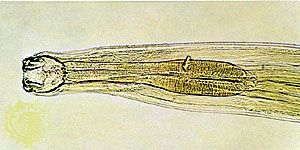
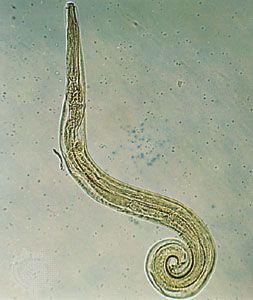
A whipworm is a parasitic nematode belonging to the genus Trichuris, most notably the species T. trichiura which infects humans. The name is derived from the…
What is whipworm?
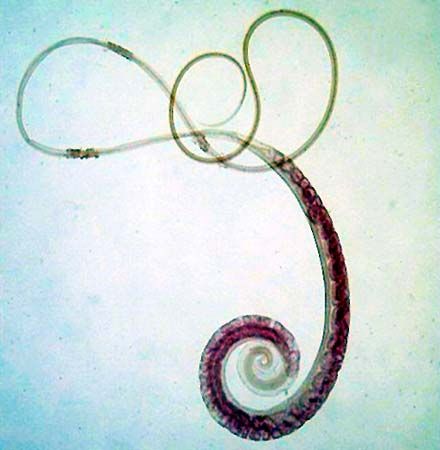
A whipworm is a parasitic nematode belonging to the genus Trichuris, most notably the species T. trichiura which infects humans. The name is derived from the worm’s distinct whiplike body shape, which is long and slender anteriorly and thickened posteriorly.12
These parasites typically inhabit the large intestine of humans and other mammals1. Infestation occurs through the ingestion of eggs found in contaminated soil. Once inside the host, the adult worm attaches to the intestinal wall, where it injects fluid into the tissues and consumes the resulting dissolved matter. While some infections may be asymptomatic, they can lead to chronic diarrhea.31
Fortunately, these infections are easily diagnosed and effectively treated with antihelminthic drugs, such as mebendazole or albendazole, which interfere with the parasite’s metabolism. Maintaining proper sanitation and hygiene is essential for preventing the spread of these parasites.34
What are some other common types of parasitic worms?
Beyond the whipworm, there are several other common types of parasitic worms that affect humans and animals. These are generally categorized into two main groups: nematodes (roundworms) and platyhelminths (flatworms).
Common Roundworms (Nematodes)
- Ascaris: These large intestinal roundworms are among the most common human parasites worldwide, with infections often occurring through the ingestion of contaminated food or soil.56
- Hookworms: These bloodsucking worms attach to the lining of the small intestine. Infection typically occurs when larvae in contaminated soil penetrate human skin, often through the feet.7
- Pinworms: Highly common in children, these small worms reside in the large intestine. The female migrates to the anus to lay eggs, which causes intense itching and facilitates transmission via the fecal-oral route.89
- Heartworms: Primarily affecting dogs and cats, these worms are transmitted by mosquitoes and can cause severe cardiovascular blockages.6
Common Flatworms (Platyhelminthes)
- Tapeworms: These internal parasites lack a digestive tract and absorb nutrients directly through their skin. Humans can become infected by consuming raw or undercooked meat—such as pork, beef, or fish—containing larval cysts.1011
- Flukes: These parasites often have complex life cycles involving intermediate hosts like mollusks. They can infect various organs, including the liver, lungs, and blood vessels (e.g., Schistosomiasis).11
How do doctors diagnose a parasitic infection?
Doctors diagnose a parasitic infection primarily by examining stool samples under a microscope to identify the presence of eggs or cysts from parasites, such as pinworms or roundworms.14
When a patient presents with severe symptoms like diarrhea, medical professionals may also order stool cultures to rule out or confirm the presence of specific bacteria or protozoans like Giardia. These diagnostic methods are critical because parasitic diseases are a significant global health burden, affecting billions of people worldwide.1415
What hygiene practices help prevent soil-transmitted diseases?
Preventing soil-transmitted diseases, such as those caused by hookworms, relies heavily on breaking the cycle of transmission between contaminated soil and human hosts. Because these parasites often thrive in areas with poor sanitation, adopting consistent hygiene practices is essential for public health.1664
Key preventive measures include:
- Sanitary Waste Disposal: The most critical step is ensuring the proper disposal of human excreta to prevent soil contamination. This includes the construction and use of sanitary toilets and avoiding open defecation.166
- Protective Footwear: Since many soil-transmitted larvae, such as hookworms, penetrate the skin upon contact, wearing shoes is a vital barrier against infection, especially in endemic tropical and subtropical regions.166
- Hand Hygiene: Regularly washing hands, particularly after using the restroom or before handling food, helps prevent the accidental ingestion of parasite eggs or larvae.4
- Environmental Management: Maintaining clean living areas and keeping human waste separate from food supplies, pets, and livestock reduces the risk of environmental contamination.4
- Public Education: Promoting awareness regarding the principles of sanitation and the importance of hygiene is fundamental to long-term control and preventing the recurrence of infection in a community.164
Sources
- whipworm — Encyclopædia Britannica
- infectious disease - Parasites — Encyclopædia Britannica
- whipworm — Merriam-Webster
- parasitic disease - Prevention and treatment — Encyclopædia Britannica
- flatworm — Encyclopædia Britannica
- hookworm disease — Encyclopædia Britannica
- tapeworm — Encyclopædia Britannica
- ascariasis — Encyclopædia Britannica
- Uninvited Guests: The 7 Worst Parasitic Worms — Encyclopædia Britannica
- pinworm — Encyclopædia Britannica
- digestive system disease - Pinworms — Encyclopædia Britannica
- flatworm - Importance — Encyclopædia Britannica
- Integument - Flukes and roundworms — Encyclopædia Britannica
- fecal occult blood test — Encyclopædia Britannica
- parasitic disease — Encyclopædia Britannica
- hookworm — Encyclopædia Britannica
Published on · 3 min read