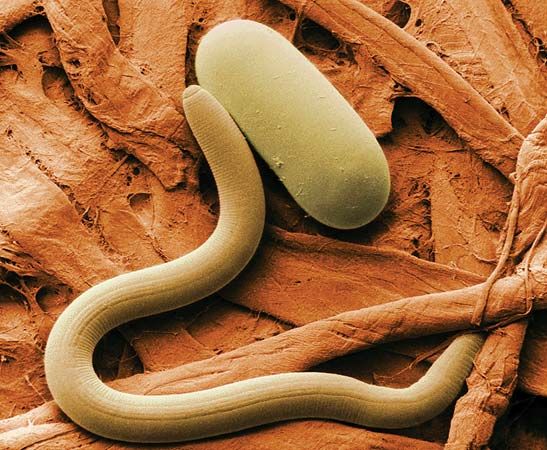
Trichinella Spiralis
Trichinella spiralis is a parasitic nematode responsible for trichinosis, a serious disease affecting humans and various mammals, including pigs, cats, and…
What is Trichinella spiralis?
Trichinella spiralis is a parasitic nematode responsible for trichinosis, a serious disease affecting humans and various mammals, including pigs, cats, and dogs.12
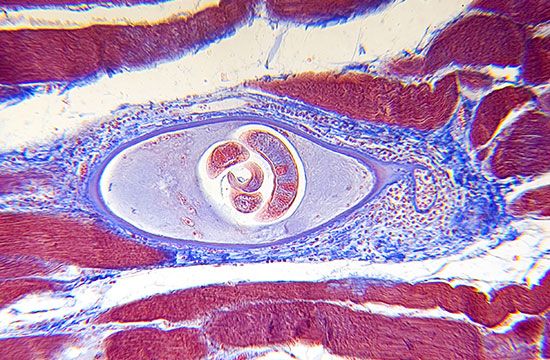
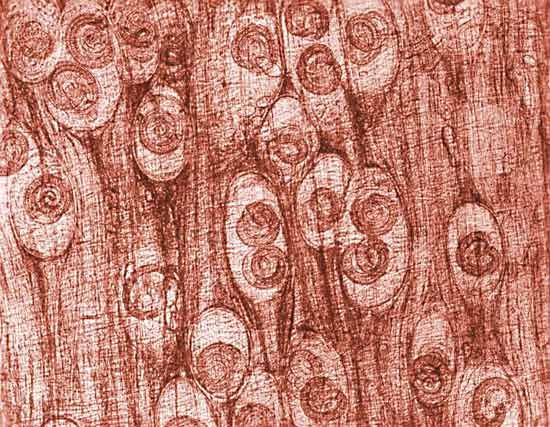
Measuring between 1.5 and 4 mm, these worms reproduce in the host’s small intestine. Fertilized females release larvae that travel through the bloodstream to settle in muscle tissue, where they form protective cysts. Infection in humans typically occurs through the consumption of undercooked pork containing these encysted larvae.12
Symptoms of trichinosis include fever, gastrointestinal distress, facial swelling, and severe muscle pain as the larvae invade tissues like the diaphragm. While anti-parasitic medications can treat the infection, the most effective prevention is ensuring that meat is thoroughly cooked.2
What are other common types of parasitic roundworms?
Beyond Trichinella spiralis, there are several other common types of parasitic roundworms (nematodes) that infect humans and animals:
- Ascaris: These large intestinal worms, particularly Ascaris lumbricoides, infect over a billion people worldwide. They are typically transmitted through the ingestion of eggs from soil contaminated by feces. Heavy infestations can lead to intestinal obstruction and a condition known as ascariasis, which may cause fever and lung inflammation.345
- Pinworms: Known as Enterobius vermicularis, these are the most common roundworm infection in the United States, frequently affecting children. Adult females migrate to the anus at night to lay eggs, causing intense itching.36
- Hookworms: These bloodsucking parasites, such as Necator americanus and Ancylostoma duodenale, attach to the small intestine lining. Larvae typically enter the body by penetrating human skin, often through the feet. Chronic infection can result in secondary anemia and fatigue.7
- Whipworms: These small, highly fecund worms infect nearly a billion people, residing in the colon where they lay thousands of eggs daily.3
- Filarial Nematodes: Species such as Wuchereria bancrofti cause filariasis by blocking lymphatic ducts, which can lead to severe swelling.8
- Toxocara: These parasites are commonly found in dogs and cats and can be transmitted to humans through contact with contaminated soil.3
How does food safety preparation prevent foodborne illnesses?
Food safety preparation is essential for preventing foodborne illness, which is often caused by bacteria, viruses, or parasites that contaminate food and water. Key strategies to mitigate these risks include:1112
- Thorough Cooking: Heating food to a sufficient temperature is critical, as it kills many microbes and parasites that cause disease.1113
- Preventing Cross-Contamination: This involves avoiding the transfer of contaminants from raw foods (such as meat, poultry, or eggs) to cooked or ready-to-eat foods. It is vital to use separate utensils, cutting boards, and surfaces for raw items and to clean them thoroughly before reuse.1413
- Proper Storage: Most bacteria multiply rapidly at room temperature. Refrigeration or freezing slows or prevents this growth, though it does not destroy the bacteria. Cooked foods should be refrigerated promptly to maintain safety.111315
- Hygiene: Handwashing after handling animals or raw food is a fundamental practice to reduce the spread of pathogens.13
What is the difference between a parasite and a host?
In biology, the relationship between a parasite and a host is defined by a specific interaction where one organism relies on another for survival.
- Parasite: An organism that lives in, on, or with another organism to obtain nutrients, grow, or multiply. This process often results in direct or indirect harm to the host. Parasites exhibit varying degrees of dependence; some are obligate parasites that cannot survive or reproduce without a host, while others may have more complex life cycles.1718
- Host: A living organism that provides the environment, nutrients, or facilities required by a parasite. Hosts are categorized based on their role in the parasite’s life cycle:19
This relationship is dynamic, as parasites often evolve to exploit their hosts, while hosts develop mechanisms to modulate or evade parasitic attack.1819
Sources
- Trichinella spiralis — Encyclopædia Britannica
- trichinosis — Encyclopædia Britannica
- Uninvited Guests: The 7 Worst Parasitic Worms — Encyclopædia Britannica
- Ascaris — Encyclopædia Britannica
- digestive system disease - Pinworms — Encyclopædia Britannica
- hookworm disease — Encyclopædia Britannica
- parasitic disease - Major disease-causing parasites — Encyclopædia Britannica
- parasitic disease - Prevention and treatment — Encyclopædia Britannica
- digestive system disease - Roundworms — Encyclopædia Britannica
- digestive system disease - Parasitic infections — Encyclopædia Britannica
- cross contamination — Merriam-Webster
- foodborne illness — Encyclopædia Britannica
- Salmonella — Encyclopædia Britannica
- foodborne illness: Top Questions — Encyclopædia Britannica
- food preservation - Refrigeration — Encyclopædia Britannica
- meat processing - Cold storage — Encyclopædia Britannica
- community ecology - Alternation among hosts — Encyclopædia Britannica
- disease - Host-parasite relationships — Encyclopædia Britannica
- host — Merriam-Webster
- parasite — Merriam-Webster
- intermediate host — Merriam-Webster
- definitive host — Merriam-Webster
Published on · 3 min read