Uninvited Guests: The 7 Worst Parasitic Worms
"Uninvited Guests: The 7 Worst Parasitic Worms" is a list featured by Britannica that highlights several significant helminth parasites known for their…
What is Uninvited Guests: The 7 Worst Parasitic Worms?
“Uninvited Guests: The 7 Worst Parasitic Worms” is a list featured by Britannica that highlights several significant helminth parasites known for their impact on human and animal health. These “tubular terrors” are identified as follows:1
- Guinea worm: Transmitted through contaminated water, these worms cause severe pain when emerging from the host to lay eggs.1
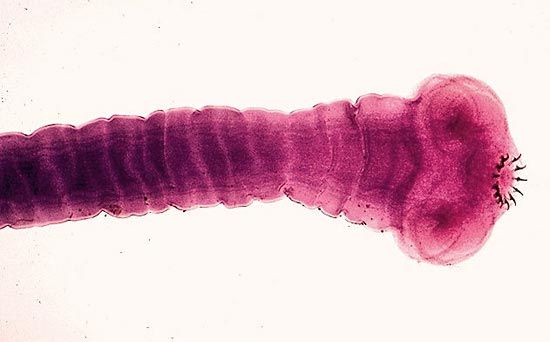
- Tapeworm: These intestinal parasites can attach to the intestinal wall, and in some cases, their larvae may migrate to tissues like the brain or eyes.12
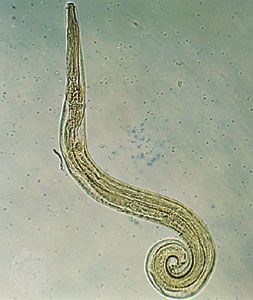
- Pinworm: Highly common, especially among children, these worms migrate to the anal opening to lay eggs, causing intense itching.1
- Heartworm: Primarily affecting dogs and cats, these worms can cause cardiovascular blockages and have been found in various human organs.1
- Ascaris: A large nematode that infects over a billion people globally, typically through soil contaminated with feces.1
- Whipworm: These tiny, highly fecund worms infect nearly a billion people, with females laying thousands of eggs daily in the colon.1
- Toxocara: Parasites of dogs and cats that can infect humans through the consumption of eggs found in soil.1
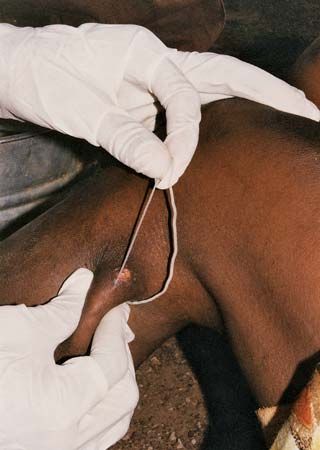
How do scientists work to eradicate parasitic diseases like the Guinea worm?
Scientists and global health organizations work to eradicate parasitic diseases like Guinea worm disease through a multifaceted approach that prioritizes prevention, as there is no specific drug treatment for the infection. Because the disease is transmitted by drinking water contaminated with infected water fleas, eradication efforts focus on breaking the parasite’s life cycle.5
Key strategies include:
- Surveillance and Early Detection: Identifying cases early is critical to preventing the spread of larvae into water sources.5
- Health Education: Teaching communities about the disease helps individuals understand how to avoid infection and why it is important to keep infected persons away from water sources.5
- Water Management: Providing access to clean drinking water is the most effective long-term solution. Other methods include filtering water to remove infected fleas and treating contaminated water supplies with pesticides.5
- Collaborative Campaigns: Organizations such as the World Health Organization, UNICEF, and The Carter Center have led massive, coordinated efforts to monitor and eliminate the disease at the village level.51
These efforts have been remarkably successful, reducing the number of annual cases from millions in the 1980s to a small fraction of that today.51
What is the difference between endoparasites and ectoparasites?
The primary difference between endoparasites and ectoparasites lies in their location relative to the host’s body:
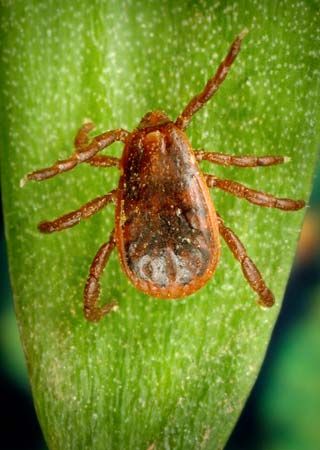
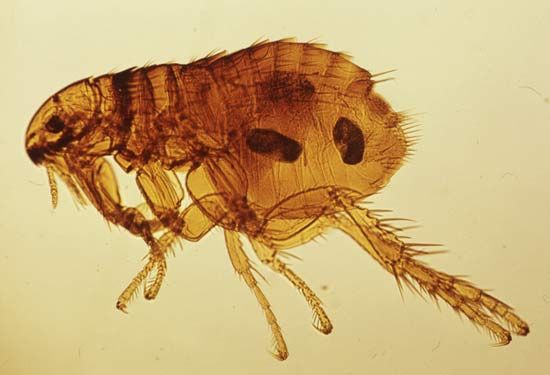
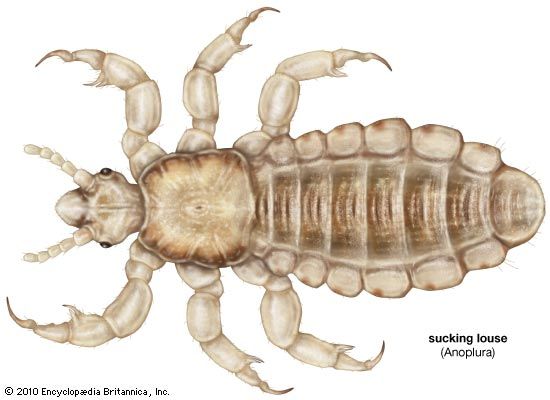
- Ectoparasites live on the exterior surface of their host. Common examples include ticks, fleas, lice, and leeches. These organisms often attach to the skin to feed on blood, though some, such as mites, may burrow into the skin’s layers.11123
- Endoparasites live within the internal organs or tissues of their host. They can be categorized as intercellular, inhabiting the spaces within the host’s body, or intracellular, inhabiting the host’s cells. Examples include various helminths (such as tapeworms and flukes) and protozoans like those that cause malaria.1312314
While ectoparasites are often associated with the transmission of disease-causing organisms to the host, endoparasites frequently interfere with internal tissue function and can cause significant health complications depending on where they lodge within the body.314
How can proper hygiene and sanitation prevent the spread of parasitic worms?
Proper hygiene and sanitation are fundamental to preventing the spread of parasitic worms, as many of these organisms rely on unsanitary conditions to complete their life cycles. Because many parasitic infections are transmitted through contact with contaminated soil or water containing human waste, breaking this cycle is essential for disease control.17
Key sanitation and hygiene practices include:
- Proper Waste Disposal: Keeping human waste separate from food supplies, pets, livestock, and living areas is critical. The construction and use of sanitary toilets prevent the contamination of soil and water with parasite eggs found in feces.17
- Personal Hygiene: Simple habits such as washing hands thoroughly can significantly reduce the risk of ingesting parasite eggs or larvae.1
- Environmental Management: In areas where hookworms are prevalent, avoiding direct skin contact with contaminated soil—such as by wearing shoes—prevents larvae from penetrating the skin.7
- Food Safety: Cooking meat thoroughly helps eliminate parasites that may be present in food supplies.1
While these measures are highly effective, their implementation can be challenging in regions lacking the administrative or financial resources to provide clean water and adequate sanitation infrastructure.15
Sources
- parasitic disease - Prevention and treatment — Encyclopædia Britannica
- Uninvited Guests: The 7 Worst Parasitic Worms — Encyclopædia Britannica
- parasitic disease - Major disease-causing parasites — Encyclopædia Britannica
- hookworm disease — Encyclopædia Britannica
- Guinea worm disease — Encyclopædia Britannica
- An Interview with Jimmy Carter: Global Challenges to the United States in a New Millennium — Encyclopædia Britannica
- parasitic disease - Challenges in the reduction of parasitic disease — Encyclopædia Britannica
- tropical disease — Encyclopædia Britannica
- animal disease - Disease prevention, control, and eradication — Encyclopædia Britannica
- public health - Infectious disease control — Encyclopædia Britannica
- ectoparasite — Merriam-Webster
- endoparasite — Merriam-Webster
- flatworm - Importance — Encyclopædia Britannica
- parasitism — Encyclopædia Britannica
- hookworm — Encyclopædia Britannica
Published on · 4 min read