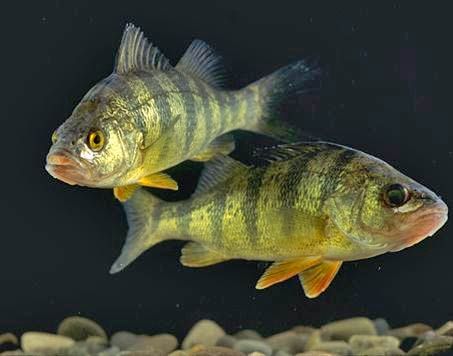
Pirate Perch
The pirate perch (Aphredoderus sayanus) is a small, greenish freshwater fish native to weedy or muddy creeks, rivers, and lakes across eastern North America.…
What is pirate perch?
The pirate perch (Aphredoderus sayanus) is a small, greenish freshwater fish native to weedy or muddy creeks, rivers, and lakes across eastern North America. It is the only member of the family Aphredoderidae.1
The species is most notable for the unique position of its anus. While the vent is located near the anal fin in young fish, it gradually migrates forward to the throat as the fish matures. Typically reaching lengths of 10 to 12.5 cm (4 to 5 inches), the pirate perch is of no economic significance.12
Why does the pirate perch’s anus move to its throat as it matures?
The migration of the pirate perch’s anus to its throat is a unique biological development, but it is important to clarify that while this phenomenon is well-documented in the species’ life cycle, the specific evolutionary “why” or functional advantage remains a subject of ongoing scientific study rather than a settled fact in current literature.1
In the pirate perch, the vent is positioned near the anal fin during its juvenile stage. As the fish matures, this opening gradually shifts forward until it is located near the throat, specifically in front of the pelvic fins. This anatomical trait is the defining characteristic of the family Aphredoderidae, distinguishing it from other freshwater species.12
What kind of environment does the pirate perch prefer to live in?
The pirate perch (Aphredoderus sayanus) thrives in specific freshwater habitats across eastern North America. It prefers environments characterized by the presence of vegetation or soft, muddy substrates, typically inhabiting:
- Creeks: Slow-moving or sheltered stream environments.
- Rivers: Areas with sufficient cover and sediment.
- Lakes: Still-water bodies that provide weedy or muddy conditions suitable for its lifestyle.1
These environments provide the necessary cover for this small, greenish fish to navigate and survive.
How does the pirate perch compare to other freshwater fish in North America?
The pirate perch (Aphredoderus sayanus) is distinct among North American freshwater fish primarily because it is the sole member of the family Aphredoderidae. While many other species belong to larger, more diverse families, the pirate perch stands alone in its taxonomic classification, though it is grouped with the trout-perches within the order Salmopercae.12
Compared to other common freshwater fish, the pirate perch exhibits several unique characteristics:
- Anatomical Uniqueness: Its most defining feature is the migration of its anus from near the anal fin to the throat as it matures, a trait not found in other typical North American freshwater species.1
- Physical Size: It is a relatively small fish, reaching lengths of only 10 to 12.5 cm (4 to 5 inches).1
- Economic Status: Unlike many other freshwater fish that are sought after for sport or food, the pirate perch holds no economic significance.1
- Habitat Preference: It is specifically adapted to sluggish, weedy, or muddy environments, ranging from New Jersey and Minnesota southward.12
Sources
- pirate perch — Encyclopædia Britannica
- pirate perch — Merriam-Webster
- perciform - Annotated classification — Encyclopædia Britannica
Published on · 2 min read