Trout-perch
The trout-perch refers to either of two species of small, dark-spotted freshwater fishes belonging to the genus Percopsis (family Percopsidae), native to…
What is trout-perch?
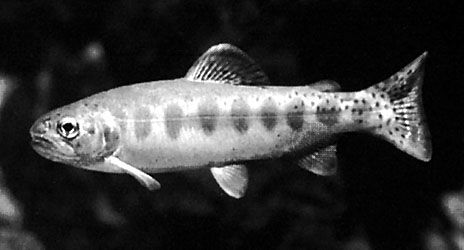
The trout-perch refers to either of two species of small, dark-spotted freshwater fishes belonging to the genus Percopsis (family Percopsidae), native to North America.1
These fish are notable for their structural characteristics, which are considered intermediate between primitive soft-rayed fishes, such as trout, and more advanced spiny-rayed fishes, such as perch. The two recognized species are:1
- Percopsis omiscomaycus: The larger of the two, reaching about 15 cm (6 inches) in length, and found throughout central North America. It is characterized by a scaleless head and large eyes.12
- Percopsis transmontana: A smaller species, measuring about 10 cm in length, which inhabits the Columbia River system.1
What are the main differences between soft-rayed and spiny-rayed fish?
The primary distinction between soft-rayed and spiny-rayed fishes lies in the structural composition and flexibility of their fin supports, which are derived from the fish’s external skeleton.67
Soft-Rayed Fishes
Soft-rayed fishes possess fins supported by flexible, segmented, and branched rays. These rays are composed of jointed segments of bone. This trait is generally considered a more primitive characteristic found in many teleost groups, such as herrings, trouts, and catfishes. In some of these species, a small, fleshy structure known as an adipose fin may also be present on the back, which lacks any ray supports.867
Spiny-Rayed Fishes
Spiny-rayed fishes, which belong to the superorder Acanthopterygii, are characterized by fins containing one or more stiff, solid, unbranched, and continuous bony spines. These spines are often found in the dorsal, anal, and pelvic fins. The development of these spiny rays is associated with more advanced evolutionary trends, providing increased maneuverability and structural support.691011
Why is the trout-perch considered an evolutionary link between different fish groups?
The trout-perch is considered an evolutionary link because its physical structure is intermediate between two distinct groups of bony fishes: the more primitive soft-rayed fishes and the more advanced spiny-rayed fishes.1
- Soft-rayed fishes: These represent a more primitive evolutionary state, characterized by fins supported by flexible, segmented, and branched rays, such as those found in trout. and branched rays, such as those found in trout.1
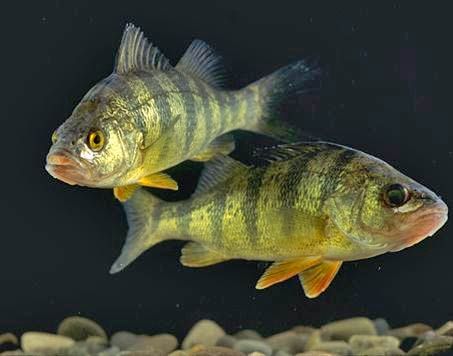
- Spiny-rayed fishes: These are considered more advanced, possessing fins with stiff, unbranched, and continuous bony spines, as seen in perch.1
By exhibiting anatomical features that bridge these two groups, the trout-perch (genus Percopsis) provides insight into the evolutionary transition between these different levels of specialization in teleost fishes. Furthermore, scientists often classify trout-perches within the superorder Paracanthopterygii, noting their close relationship to cods, which helps researchers study the complex interrelationships within the evolution of modern bony fishes.13
What other types of freshwater fish are native to North America?
North America is home to a diverse array of native freshwater fish, with approximately 950 species inhabiting its lakes, rivers, and wetlands. These species represent various evolutionary groups, ranging from primitive soft-rayed fishes to more advanced spiny-rayed varieties.17
Native Freshwater Groups
- Salmonidae (Trout, Salmon, and Char): These fishes are dominant in the cooler, recently glaciated freshwater environments of the Northern Hemisphere. Species such as the rainbow trout and Arctic char are well-adapted to these northern regions.18
- Esocidae (Pikes): The northern pike is a prominent native species with a broad distribution across North American freshwater systems.18
- Centrarchidae (Sunfishes, Crappies, and Black Basses): This family contains about 30 species native to North America, primarily found east of the Rocky Mountains. These include the bluegill, the black bass, and the rock bass.3
- Osmeridae (Smelts): While many smelts are marine or anadromous, some species are permanent residents of North American fresh waters.18
Conservation Status
The continent’s freshwater fish face significant threats from human activity. Habitat alteration—such as damming and pollution—and the introduction of non-native species have contributed to the extinction of approximately 57 species since 1898. The southeastern United States is a particular area of concern, as it holds over half of the continent’s fish species, many of which have very limited geographic ranges and are highly vulnerable to environmental changes.17
Sources
- trout-perch — Encyclopædia Britannica
- trout-perch — Merriam-Webster
- perciform - Annotated classification — Encyclopædia Britannica
- protacanthopterygian - Digestive system — Encyclopædia Britannica
- trout — Encyclopædia Britannica
- ostariophysan - Fin spines and adipose fin — Encyclopædia Britannica
- fish - Actinopterygii: ray-finned fishes — Encyclopædia Britannica
- soft-rayed — Merriam-Webster
- spiny-rayed — Merriam-Webster
- atheriniform - Form and function — Encyclopædia Britannica
- spiny-finned fish — Encyclopædia Britannica
- fish - Body plan — Encyclopædia Britannica
- clupeiform - Distinguishing characteristics — Encyclopædia Britannica
- paracanthopterygian - Critical appraisal — Encyclopædia Britannica
- protacanthopterygian - Evolutionary importance of the superorder — Encyclopædia Britannica
- teleost — Encyclopædia Britannica
- protacanthopterygian - Distribution and abundance — Encyclopædia Britannica
- sunfish — Encyclopædia Britannica
- conservation - Freshwater fish — Encyclopædia Britannica
Published on · 3 min read