Plains Wanderer
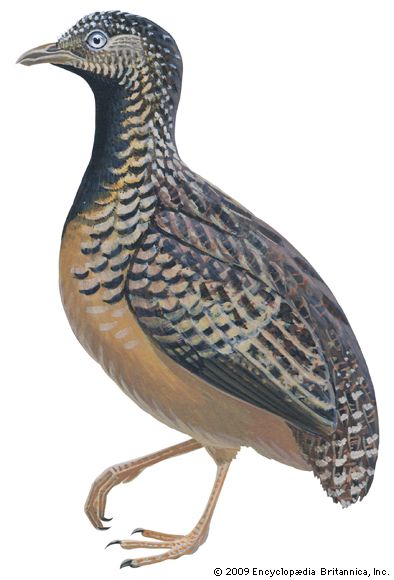
The plains wanderer (Pedionomus torquatus) is an Australian bird that physically resembles a tiny quail. It is characterized by a mottled reddish-brown body…
What is Plains wanderer?
The plains wanderer (Pedionomus torquatus) is an Australian bird that physically resembles a tiny quail. It is characterized by a mottled reddish-brown body and a distinctive collar of black spots set against a white throat.1
While the species constitutes its own family, Pedionomidae, some authorities classify it within the button quail family (Turnicidae). Found primarily in dry grasslands, the plains wanderer is notable for its upright stance, which distinguishes it from other hemipodes that typically maintain a crouching posture.1
Why is the Plains-wanderer considered an endangered species?
Sorry, the Britannica knowledge base does not contain information regarding why the Plains-wanderer is considered an endangered species. The provided search results only offer a physical description of the bird and historical information concerning the Indigenous peoples of the North American Great Plains.
How does the Plains-wanderer differ from a common quail?
While the plains-wanderer (Pedionomus torquatus) is often compared to a quail due to its physical appearance, it differs from other quail-like birds in several key ways:
- Posture: Unlike other hemipodes, which typically maintain a crouching posture, the plains-wanderer is known for its upright stance.1
- Habitat: The plains-wanderer is strictly found on open, grassy levels. It is distinct from other quail-like birds, which are commonly found in scrub, stubble, or swampy environments.3
- Taxonomy: While it is sometimes grouped with the button quail family (Turnicidae), it is unique enough that it is classified by some authorities as its own distinct family, Pedionomidae.1
What specific habitats in Australia do they prefer?
The Plains-wanderer (Pedionomus torquatus) is a specialized Australian bird that inhabits dry grasslands.1
It is important to note that while the term “plains” is often associated with the vast grasslands of North America, the habitat of the Plains-wanderer is specific to the Australian continent. Unlike the diverse prairie ecosystems of North America—which range from tallgrass to shortgrass regions and support a wide variety of mammals like bison and prairie dogs—the Plains-wanderer is uniquely adapted to the arid, open grassy levels found within its native Australian range.156
Sources
- Plains wanderer — Encyclopædia Britannica
- Indigenous peoples of the Great Plains - The Plains Wars — Encyclopædia Britannica
- Even More Bird Names that Sound Like Insults (and Sometimes Are) | Plain wanderer — Merriam-Webster
- Pedionomus — Merriam-Webster
- North America - Temperate grasslands — Encyclopædia Britannica
- Prairie — Encyclopædia Britannica
- Native American - The Plains — Encyclopædia Britannica
- Great Plains - Plant and animal life — Encyclopædia Britannica
Published on · 2 min read