Plastic Disaster: How Your Bags, Bottles, and Body Wash Pollute the Oceans
"Plastic Disaster: How Your Bags, Bottles, and Body Wash Pollute the Oceans" is an article detailing the severe environmental impact of plastic pollution on…
What is Plastic Disaster: How Your Bags, Bottles, and Body Wash Pollute the Oceans?
“Plastic Disaster: How Your Bags, Bottles, and Body Wash Pollute the Oceans” is an article detailing the severe environmental impact of plastic pollution on marine ecosystems.1
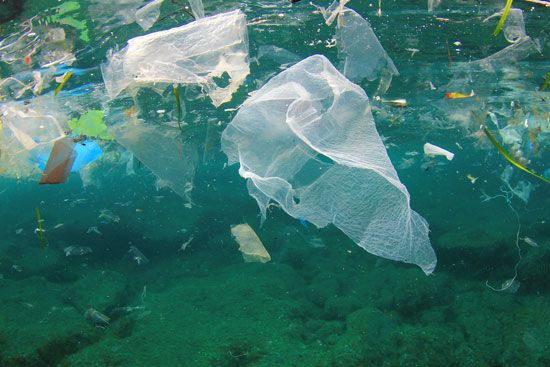
The article highlights that approximately 19 billion pounds of plastic waste enter the oceans annually, largely driven by single-use items like soda bottles, produce bags, and straws. This debris poses a lethal threat to wildlife through entanglement and ingestion, as animals often mistake plastic for food.12
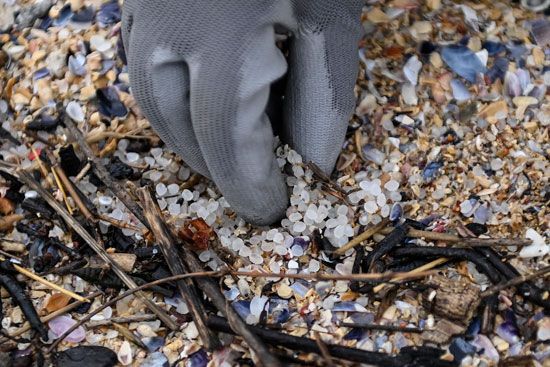
A significant portion of this pollution consists of microplastics—particles smaller than 5 mm—which originate from cosmetics, synthetic clothing fibers, and the breakdown of larger plastic items. Because these materials are not biodegradable, they persist in the environment, potentially bioaccumulating toxic chemicals up the food chain and contaminating human food sources.132
The article emphasizes that individual actions, such as reducing single-use consumption, choosing reusable alternatives, and supporting environmental legislation, are essential to mitigating this growing crisis.1
What are the five major subtropical gyres and how do they trap plastic?
The five major subtropical gyres are vast, circular systems of ocean currents that rotate around central points in the world’s oceans. These gyres are located at Earth’s midlatitudes and include:
- North Pacific Subtropical Gyre
- South Pacific Subtropical Gyre
- North Atlantic Subtropical Gyre
- South Atlantic Subtropical Gyre
- Indian Ocean Subtropical Gyre4
These systems act as massive traps for marine debris. Because subtropical gyres are characterized by anticyclonic circulation, their rotation draws in and concentrates floating solid matter, such as plastic waste, toward their centers.54
Once trapped, this debris—which often originates from land-based sources like rivers and runoff—is subjected to photodegradation. Over time, sunlight and seawater embrittle the plastic, breaking larger items down into microplastics. This process creates a persistent “soup” of plastic particles that circulate within the gyre, posing significant risks to marine life through ingestion and the concentration of toxic pollutants.54
How do microplastics move up the food chain to reach humans?
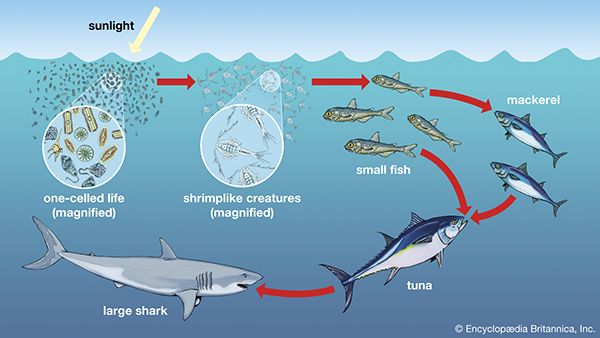
Microplastics enter the human food chain through a process of ingestion and accumulation that begins in aquatic environments. Because microplastics (particles smaller than 5 mm) are pervasive in oceans and freshwater systems, they are readily consumed by a wide range of organisms, including zooplankton, crustaceans, and fish, which often mistake the debris for food.23
The movement of these plastics up the food chain occurs through two primary mechanisms:
- Bioaccumulation: This is the process by which an individual organism absorbs and retains contaminants—such as the chemical additives found in plastics—in its tissues over time because it cannot break them down or excrete them efficiently.89
- Biomagnification: As predators consume contaminated prey, the concentration of these substances can increase at successively higher trophic levels within a food web. Consequently, top-level predators may end up with significantly higher levels of plastic-associated pollutants than the organisms at the base of the chain.210
Humans are exposed to these contaminants through the consumption of seafood, as well as through drinking water, salt, and other food products. Once ingested, these plastics and their associated chemical additives—such as phthalates and bisphenol A—can potentially disrupt the endocrine system and cause other health issues.31112
What is the difference between primary and secondary microplastics?
Microplastics are categorized into two distinct types based on their origin: primary and secondary.3
- Primary microplastics are intentionally manufactured to be small. Examples include microbeads used in personal care products, plastic pellets (nurdles) utilized in industrial manufacturing, and synthetic fibers found in textiles like nylon. These enter the environment directly through product use, such as washing synthetic clothing, or through accidental spills during transport and manufacturing.3
- Secondary microplastics are not manufactured as small particles. Instead, they form when larger plastic items break down over time. This degradation occurs through exposure to environmental stressors, including ultraviolet radiation from sunlight, wind abrasion, and wave action.3
Because conventional plastics are not biodegradable, both types of microplastics persist in the environment, accumulating in ecosystems ranging from oceans to freshwater systems and even the air.313
Sources
- Plastic Disaster: How Your Bags, Bottles, and Body Wash Pollute the Oceans — Encyclopædia Britannica
- plastic pollution - Plastic pollution in oceans and on land — Encyclopædia Britannica
- microplastics — Encyclopædia Britannica
- ocean current - The subtropical gyres — Encyclopædia Britannica
- gyre — Encyclopædia Britannica
- Great Pacific Garbage Patch — Encyclopædia Britannica
- subtropical gyre — Encyclopædia Britannica
- plastic pollution: Top Questions — Encyclopædia Britannica
- Bioaccumulation - Effects of bioaccumulation: Examples from history — Encyclopædia Britannica
- plastic pollution - Pollution by plastics additives — Encyclopædia Britannica
- Bioaccumulation: Top Questions — Encyclopædia Britannica
- Bioaccumulation - Routes of exposure and fate within living systems — Encyclopædia Britannica
- biodegradability — Encyclopædia Britannica
Published on · 3 min read