Trophic Level
Decomposers, often referred to as transformers, serve as a vital final link in the food chain and food web of an ecosystem. While producers and consumers…
What is the role of decomposers in the trophic level system?
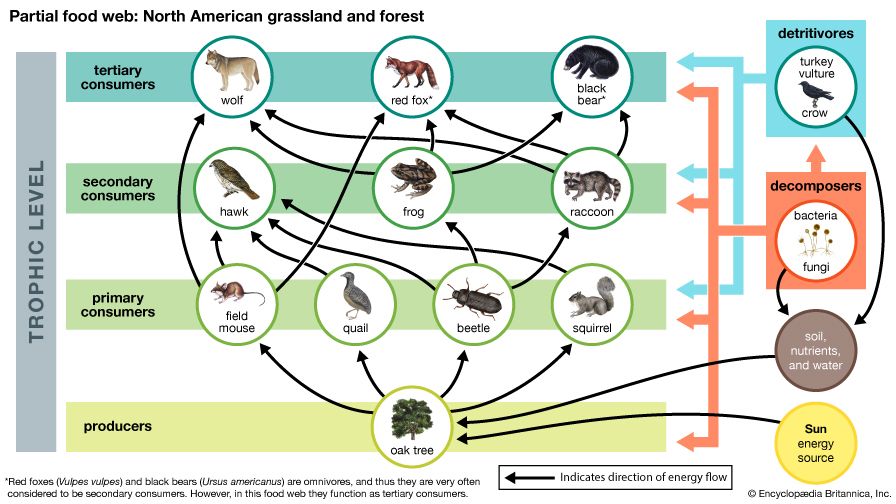
Decomposers, often referred to as transformers, serve as a vital final link in the food chain and food web of an ecosystem. While producers and consumers transfer energy through feeding, decomposers—primarily bacteria and fungi—perform the essential task of breaking down dead organisms and organic waste materials.123
Their role is fundamental to nutrient cycling. By decomposing complex organic matter into simpler inorganic compounds and basic elements like nitrogen, carbon, and phosphorus, they transform waste into nutrients that producers can reuse for growth. This process ensures that essential elements are recycled back into the environment, sustaining the biogeochemical cycles necessary for life. Without the activity of these organisms, ecosystems would be unable to rejuvenate, as vital nutrients would remain trapped in dead tissues.13425
How do trophic levels impact the biomass and energy distribution in an ecosystem?
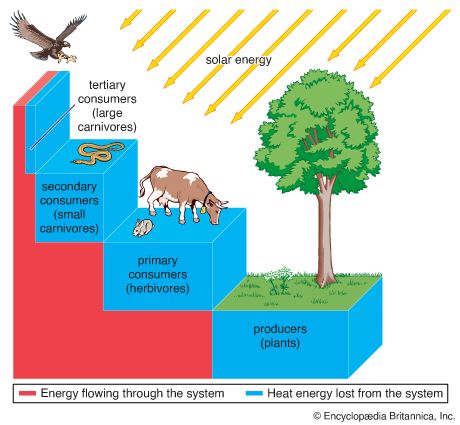
Trophic levels structure the flow of energy and the distribution of biomass within an ecosystem through a hierarchical arrangement known as a trophic pyramid. This structure dictates how energy is transferred and how much living matter, or biomass, can be supported at each stage of the food chain.78
Energy Distribution
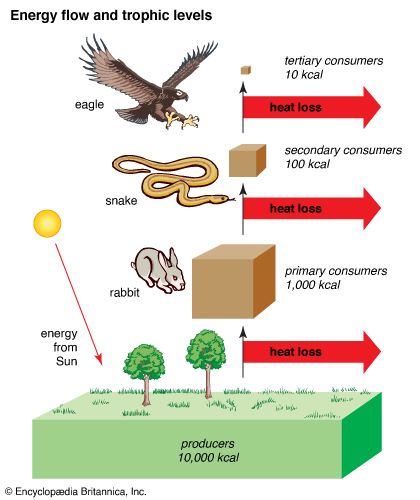
Energy flow is highly inefficient, with only about 10 percent of energy typically transferred from one trophic level to the next. The majority of energy—roughly 80 to 90 percent—is lost as heat during metabolic processes, such as digestion and maintaining body temperature. Because of this significant loss, the amount of available energy decreases as one moves up the pyramid:978
- Primary Producers: Autotrophs at the base capture solar energy or chemical energy, forming the foundation of the ecosystem’s energy supply.78
- Consumers: Heterotrophs, including herbivores and carnivores, receive progressively less energy, limiting the number of trophic levels an ecosystem can support.78
Biomass and Trophic Cascades
Biomass is similarly constrained by these energy limitations. Herbivores are restricted by the total biomass of the plants they consume, and carnivores are limited by the biomass of the herbivores. Furthermore, trophic cascades demonstrate that changes at the top of the food chain—such as the removal or addition of top predators—can trigger reciprocal changes in the biomass and population levels of species at lower levels, ultimately influencing nutrient cycling and primary production.810
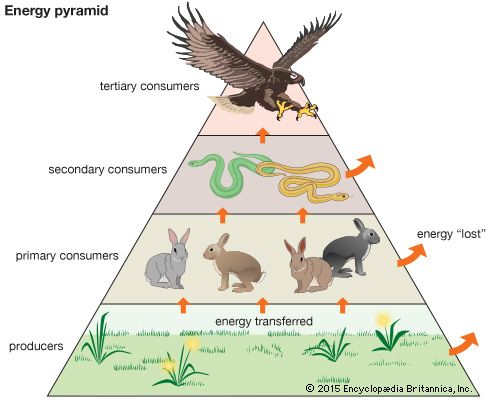
How does energy transfer occur between different trophic levels?
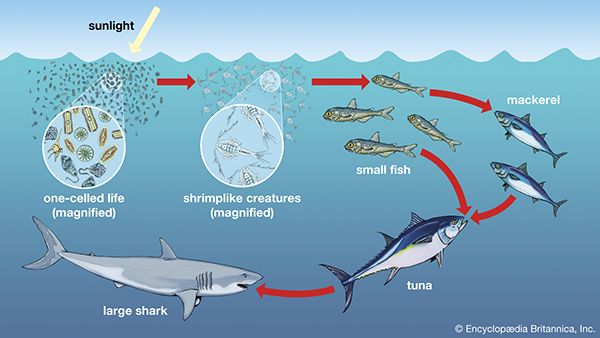
Energy transfer between trophic levels occurs as organisms consume one another, forming a hierarchical structure known as a trophic pyramid. This process is governed by the following principles:107
- Energy Source: The base of the pyramid consists of autotrophs, which harness solar energy via photosynthesis or chemical energy through oxidation to create organic matter.107
- Transfer Efficiency: Energy transfer is highly inefficient. On average, only about 10 percent of the energy from one level is converted into the biomass of the next level10. This is known as ecological efficiency.11
- Energy Loss: As energy moves up the food chain, 80 to 90 percent is lost as heat due to metabolic processes like digestion and maintaining body temperature. Additionally, much plant tissue remains uneaten, diverting energy into the detritus food chain.10711
- Consumer Constraints: Because of these losses, higher trophic levels—such as secondary and tertiary carnivores—have significantly less energy available to them than primary producers.107
What is the difference between autotrophs and heterotrophs in terms of trophic levels?
The primary difference between autotrophs and heterotrophs lies in their role within the trophic pyramid and how they acquire energy and nutrients.128
Autotrophs
Autotrophs serve as the foundation of the ecosystem, occupying the first trophic level as primary producers. They do not consume other organisms; instead, they synthesize organic substances from inorganic materials.11128
- Energy Source: They harness solar energy through photosynthesis (photoautotrophs) or chemical energy through oxidation (chemoautotrophs).117
- Carbon Source: They derive essential carbon from carbon dioxide.7
Heterotrophs
Heterotrophs occupy all subsequent trophic levels as consumers. They depend directly or indirectly on autotrophs for their food energy.128
- Energy Source: They acquire energy through the controlled breakdown of pre-existing organic molecules (food).7
- Carbon Source: They use preformed organic compounds as their source of carbon.7
Because energy is lost as heat at each transfer, heterotrophs at higher levels have significantly less energy available to them than the autotrophs at the base.128
Sources
- trophic level — Encyclopædia Britannica
- food web — Encyclopædia Britannica
- ecosystem — Encyclopædia Britannica
- saprotroph — Encyclopædia Britannica
- soil organism — Encyclopædia Britannica
- detritus — Encyclopædia Britannica
- community ecology - Autotrophs and heterotrophs — Encyclopædia Britannica
- trophic pyramid — Encyclopædia Britannica
- trophic cascade — Encyclopædia Britannica
- Biosphere - Energy transfers and pyramids — Encyclopædia Britannica
- life - Energy , carbon, and electrons — Encyclopædia Britannica
- autotroph — Encyclopædia Britannica
Published on · 4 min read