Platy
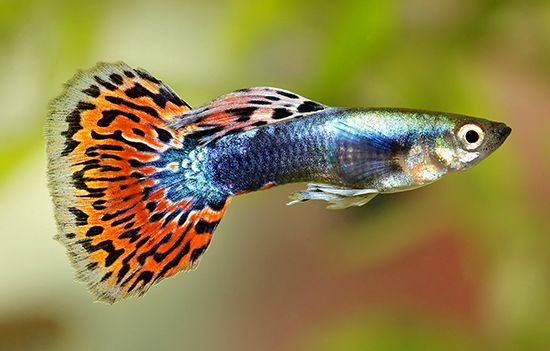
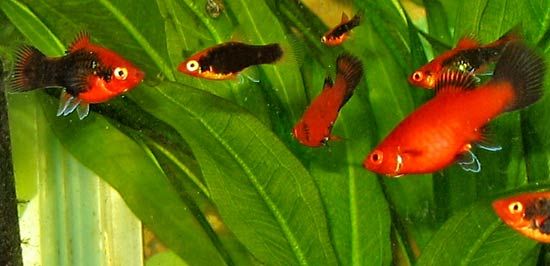
The platy (species Xiphophorus maculatus and X. variatus) is a popular tropical freshwater fish belonging to the live-bearer family, Poeciliidae.
What is platy?
The platy (species Xiphophorus maculatus and X. variatus) is a popular tropical freshwater fish belonging to the live-bearer family, Poeciliidae.12
These fish are known for being compact, typically reaching about 5 cm (2 inches) in length, and are highly valued by aquarium enthusiasts for their brilliant and extremely variable colors. Because they are closely related to the swordtail, they have been crossbred frequently and are often utilized in various genetic and medical research studies. The name is derived from Platypoecilus, which was the fish’s former genus name.12
What does it mean for a fish to be a live-bearer?
For a fish, being a live-bearer means that it gives birth to living young rather than laying eggs. While most bony fishes are oviparous (egg-laying) and rely on external fertilization, live-bearing species utilize internal fertilization, where males use specialized organs—such as the gonopodium in the family Poeciliidae—to transfer sperm into the female’s body.3456
Once fertilized, the development of the embryos occurs within the female’s body through one of two primary methods:
- Ovoviviparous: The embryos develop inside eggs that remain within the female’s body, where they are nourished by the egg yolk until they hatch.467
- Viviparous: The embryos develop within the female and receive nourishment directly from her body tissues.46
Because the young are born at a larger size and in smaller numbers compared to egg-laying species, this reproductive strategy provides a survival advantage by reducing the vulnerability of the offspring to predators.46
How are platy fish related to swordtails?
Platy fish and swordtails are closely related species within the same genus, Xiphophorus, and belong to the same live-bearer family, Poeciliidae.101
Their relationship is defined by several key factors:
- Genetic Compatibility: Because they are closely related, platy fish and swordtails can be crossbred with one another.1
- Scientific Utility: Both species have been used extensively in genetic and medical research due to their biological similarities.101
- Taxonomic Classification: Both are members of the order Atheriniformes and share similar reproductive strategies as live-bearing fish.101
While they share these fundamental traits, they differ in physical appearance; the platy is a compact fish reaching about 5 cm (2 inches) in length, whereas the swordtail is more elongated, growing up to 13 cm (5 inches) and featuring a distinctive swordlike extension on the lower lobe of the male’s tail fin.101
What makes platy fish popular for genetic research?
Platy fish (Xiphophorus maculatus) are highly valued in scientific research primarily due to their biological characteristics and their close relationship with other species in the genus Xiphophorus, such as the swordtail.
Their utility in genetic and medical studies stems from several factors:
- Hybridization Potential: Because they can be successfully crossed with related species like the swordtail, researchers can study the inheritance of specific traits and the effects of genetic recombination across different, yet compatible, lineages.1
- Genetic Variability: The species exhibits extreme variability in color and other physical traits, which provides a diverse genetic foundation for observing how specific genes influence phenotypic expression.1
- Established Models: As members of the live-bearer family, they have been used for decades as model organisms, allowing scientists to build upon a long history of documented genetic data and experimental protocols.1
These attributes make them effective subjects for investigating complex biological processes and hereditary patterns in a controlled laboratory setting.1
Sources
- platy — Encyclopædia Britannica
- platy — Merriam-Webster
- How do fish reproduce? — Encyclopædia Britannica
- live-bearer — Encyclopædia Britannica
- fish - Reproduction — Encyclopædia Britannica
- live-bearer — Merriam-Webster
- ovoviviparous — Merriam-Webster
- Oviparity — Encyclopædia Britannica
- perciform - Aquarium fishes — Encyclopædia Britannica
- swordtail — Encyclopædia Britannica
Published on · 3 min read