Why Do Zebras Have Stripes?
The question of why zebras possess stripes has long intrigued scientists, who have proposed several primary theories for this distinctive trait:
Why do zebras have stripes?
The question of why zebras possess stripes has long intrigued scientists, who have proposed several primary theories for this distinctive trait:
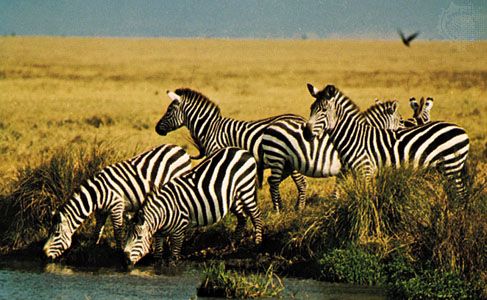
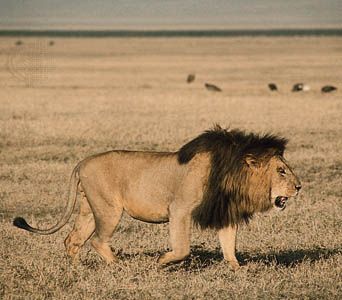
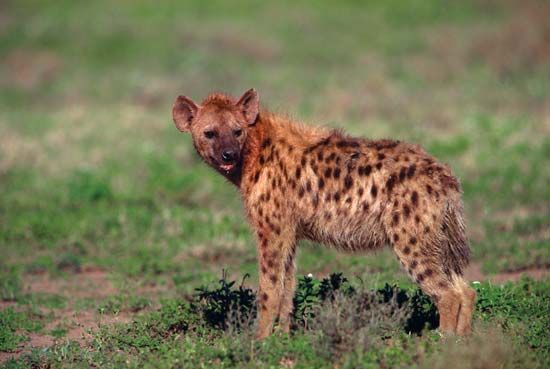
- Predator Confusion: The stripes provide camouflage coloration that creates a visual illusion. When zebras move in a group, this “dazzling” effect makes it difficult for predators like lions and hyenas to single out an individual.1
- Insect Deterrence: Research indicates that striped patterns disrupt the polarized light that attracts biting insects such as horse flies. By reducing the frequency of bites, stripes serve as a natural defense against diseases transmitted by these pests.1
- Thermoregulation: Some scientists suggest the stripes assist in thermoregulation. The black stripes may absorb heat to warm the animal in the morning, while white stripes reflect light to provide cooling during the heat of the day.1
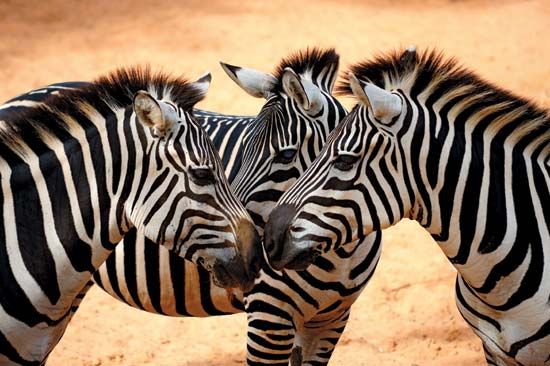
- Social Identification: Much like a human fingerprint, each zebra’s stripe pattern is unique, which may help individuals recognize one another and maintain herd bonds.1
How do zebras recognize individual members of their herd?
Each zebra possesses a unique pattern of stripes, which functions much like a human fingerprint. This individual distinctiveness is believed to allow zebras to recognize one another, which helps maintain social bonds within their herds.12
In addition to visual recognition through their unique coat patterns, zebras engage in specific social behaviors to interact with herd members:
- Greeting: Zebras greet one another through simple nose-to-nose contact. Adult stallions perform a more elaborate ceremony that includes nose-to-genital contact.3
- Mutual Grooming: Similar to other members of the horse family, zebras engage in mutual grooming, where two animals stand facing in opposite directions and nibble at the base of the neck and the root of the tail.3
While these social behaviors facilitate interaction, it is the unique, individual-specific stripe patterns that provide the primary visual mechanism for identification among members of the herd.12
What other animals use camouflage to hide from predators?
Many animals utilize camouflage, or crypsis, to avoid detection by predators. This survival strategy involves blending into the environment through coloration, pattern, or shape.4
Common methods and examples include:
- Background Matching: Many organisms resemble their surroundings to remain hidden. For example, flatfishes can match the patterns of the seafloor, while certain lizards (such as Anolis) move to backgrounds that match their specific coloration. Some nudibranchs ingest the pigments of the coral they live on to mirror its appearance.5
- Environmental Attachment: Some animals actively modify their appearance by attaching external materials. Decorator crabs and masked hunter bugs cover themselves with algae, sponges, or debris from their habitat.56
- Active Color Change: Certain animals can rapidly alter their appearance. Cephalopods exhibit spectacular, rapid color displays, while horned lizards and various fish can adjust their pigmentation over minutes or hours in response to environmental stimuli.7
- Disruptive Coloration and Countershading: These techniques break up an animal’s outline or reduce the appearance of depth, making them harder to distinguish from their background.6
How do biting insects transmit diseases to wild animals?
Biting insects transmit diseases to wild animals primarily by acting as vectors that carry and transfer pathogens between hosts. This process typically occurs when an insect, such as a mosquito or flea, feeds on an infected animal and subsequently bites a healthy one, passing the disease-causing organism along in the process.101112
The transmission mechanism often involves the following steps:
- Pathogen Acquisition: The insect ingests blood containing pathogens (such as viruses, bacteria, or protozoa) from an infected host.11
- Pathogen Development: In many cases, the pathogen undergoes part of its developmental cycle within the insect, as seen with the protozoan Plasmodium in Anopheles mosquitoes.10
- Transmission: When the insect bites a new host, it injects saliva—which may contain the pathogen—into the animal to facilitate feeding, such as by using anticoagulants to prevent blood clotting.11
These diseases are often maintained in nature within animal reservoirs, where they exist in a stable, enzootic state. Ecological imbalances, such as habitat destruction, can force wild animals into closer contact with these vectors, leading to increased disease transmission.1013
Sources
- Why do zebras have stripes? — Encyclopædia Britannica
- zebra — Encyclopædia Britannica
- perissodactyl - Amicable behaviour — Encyclopædia Britannica
- coloration - Background matching — Encyclopædia Britannica
- concealing coloration — Encyclopædia Britannica
- aggressive mimicry — Encyclopædia Britannica
- crypsis — Merriam-Webster
- coloration - Short-term changes — Encyclopædia Britannica
- How Do Chameleons Change Colour? — Encyclopædia Britannica
- insect - Medical significance — Encyclopædia Britannica
- Why do mosquitoes drink blood? — Encyclopædia Britannica
- Aedes — Encyclopædia Britannica
- animal disease - Role of ecology — Encyclopædia Britannica
- mosquito: Top Questions — Encyclopædia Britannica
- animal disease - Zoonoses — Encyclopædia Britannica
Published on · 3 min read