Poison Frog
Poison frogs (family Dendrobatidae) produce toxic skin secretions, though the exact origin of these substances is not fully understood. Evidence suggests…
How do poison frogs produce and use their toxins?
Poison frogs (family Dendrobatidae) produce toxic skin secretions, though the exact origin of these substances is not fully understood. Evidence suggests that many species derive their toxicity from their diet, specifically by consuming beetles. When these frogs are kept in captivity and fed a diet that excludes these insects, their skin secretions lose their highly toxic alkaloid content.1
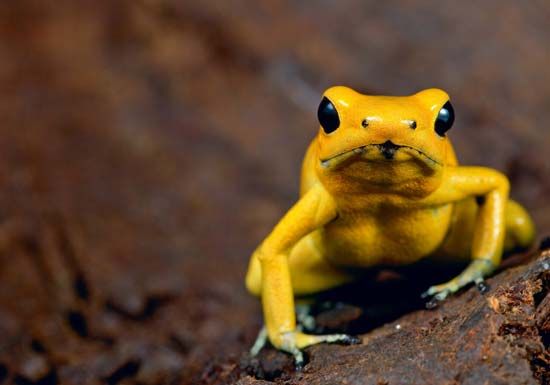
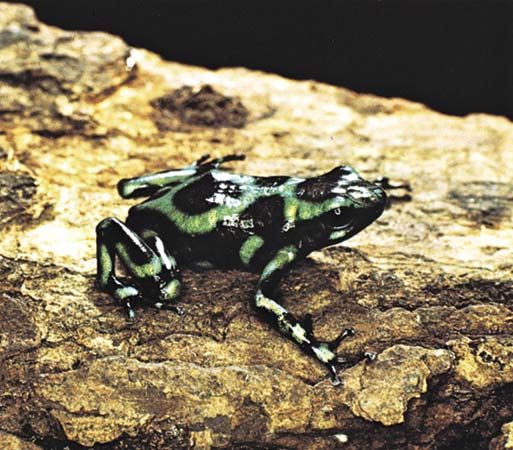
These frogs use their toxins as a chemical defense mechanism against predators. Many species exhibit aposematic coloration—vibrant patterns of red, orange, yellow, blue, or green—which serves as a visual warning to potential threats that they are distasteful or dangerous. For instance, the golden poison frog (Phyllobates terribilis) produces a lethal substance called batrachotoxin, which is potent enough to kill a human in minute quantities. While these secretions are a natural defense, some South American tribes have historically utilized them to coat the tips of darts and arrows for hunting.123
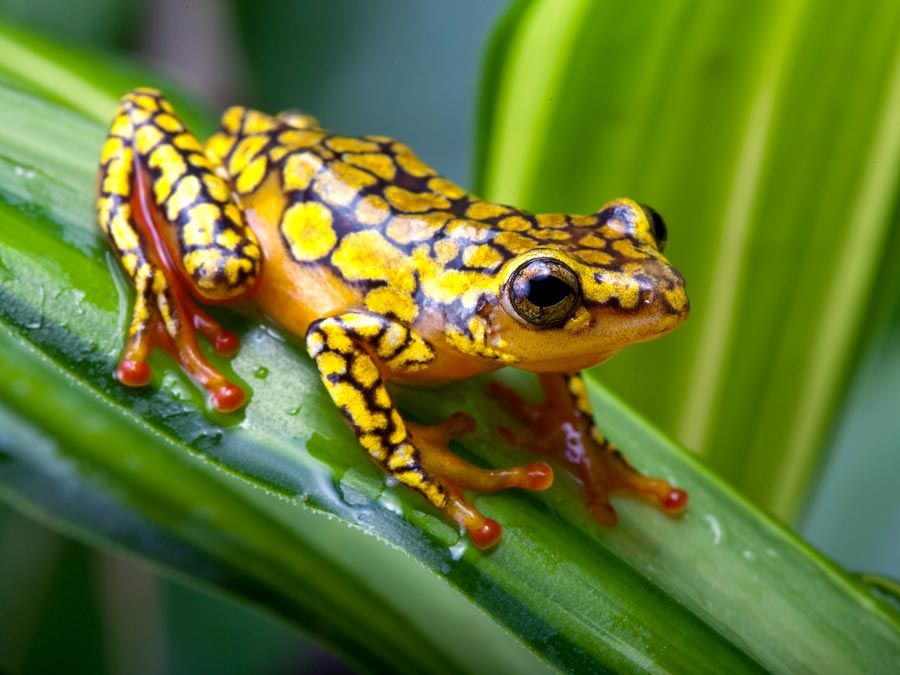
What are some of the most poisonous frog species, and how dangerous are they to humans?
Several species within the family Dendrobatidae, commonly known as poison frogs, possess potent skin secretions that can be dangerous to humans. While all frogs produce some form of skin toxin, the dendrobatids—particularly those in the genera Dendrobates and Phyllobates—are notable for their high toxicity.12
Highly Toxic Species
- Golden Poison Frog (Phyllobates terribilis): This is widely considered the most dangerous species. Its skin is coated with a lethal neurotoxin called batrachotoxin. A typical wild individual carries 700 to 1,900 micrograms of this toxin, and as little as 200 micrograms is sufficient to kill a human.3
- Blue Poison Dart Frog (Dendrobates tinctorius “azureus”): Known for its striking sapphire coloration, this species also secretes toxic substances through its skin as a defense mechanism.3
Danger to Humans
The danger to humans arises when these alkaloid secretions are absorbed through mucous membranes or enter the body through a cut in the skin. While these frogs are not aggressive, handling them requires extreme caution. Historically, the potency of these toxins has been exploited by indigenous South American tribes, who used the secretions to coat the tips of darts and arrows for hunting.14
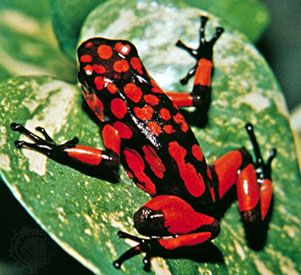
How do captive-bred poison frogs differ from their wild counterparts in terms of toxicity?
Captive-bred poison frogs differ significantly from their wild counterparts because their toxicity is largely dependent on their environment and diet. While wild poison frogs (family Dendrobatidae) are famous for their lethal skin secretions, this toxicity is not necessarily innate.
Research indicates that the highly toxic alkaloid compounds found in the skin of wild frogs are derived from their consumption of specific prey, particularly beetles. When these frogs are raised in captivity and provided with a diet that does not include these beetles, their skin secretions lack the toxic properties that make their wild relatives dangerous. Consequently, captive-bred individuals are generally nontoxic and do not pose the same threat to humans as those found in the wild.1
What are some examples of aposematic coloration in poison frogs?
Aposematic coloration, or warning coloration, is a biological strategy used by many poisonous species to advertise their toxicity to potential predators, thereby discouraging attacks. In the family Dendrobatidae, this often manifests as vibrant, high-contrast patterns that stand out against the environment.52
Examples of Aposematic Coloration
- Blue Poison Dart Frog (Dendrobates tinctorius “azureus”): This species is famous for its striking, sapphire-blue coloration, which serves as a clear warning of its toxic skin secretions.1
- Golden Poison Frog (Phyllobates terribilis): While commonly yellow, these frogs can range from orange to pale green. Their vivid, solid-colored skin acts as a warning signal to predators that they possess lethal batrachotoxin.15
- Mimic Poison Frog (Ranitomeya imitator): This species exhibits a wide variety of color patterns. Through a process called mimetic radiation, it has evolved to resemble other toxic species in its environment, effectively “borrowing” their aposematic signals to deter predators.1
The coloration of these frogs typically involves reds, oranges, yellows, and bright blues or greens, often set against a dark or black background. It is important to note that not all dendrobatids are toxic; many species are camouflaged in shades of brown and lack these warning colors.5
Sources
- poison frog — Encyclopædia Britannica
- 7 Awesome Frog Species of the Tropics — Encyclopædia Britannica
- poison dart frog — Merriam-Webster
- frog and toad - Skin toxins — Encyclopædia Britannica
- frog and toad - Coloration — Encyclopædia Britannica
- aposematism — Encyclopædia Britannica
Published on · 3 min read