Tree Frog
Tropical forests are home to a stunning variety of tree frogs that exhibit remarkable colors and unique survival strategies. Here are some of the most…
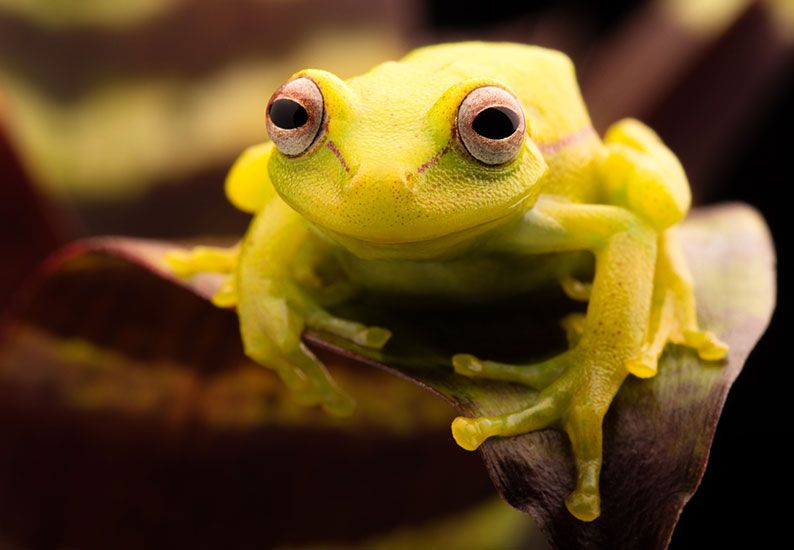
What are some of the most colorful or unique tree frog species?
Tropical forests are home to a stunning variety of tree frogs that exhibit remarkable colors and unique survival strategies. Here are some of the most distinctive species:
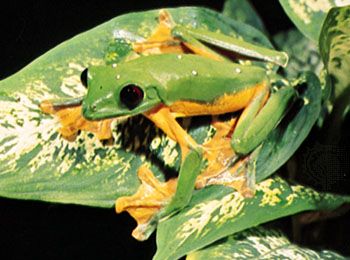
- Red-Eyed Tree Frog (Agalychnis callidryas): Famous for its bulging red eyes, this frog features a neon-green body accented with vertical blue and yellow stripes and bright orange or reddish feet. It uses these vivid colors to startle and confuse predators.1
- Amazon Milk Frog (Trachycephalus resinifictrix): This species is uniquely colored with alternating bands of dark brown and light gray to blue. It is also known as the “mission golden-eyed tree frog” due to the striking gold-and-black cross pattern in its iris.1
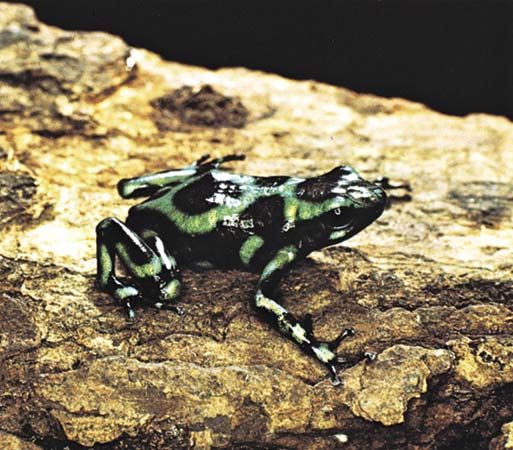
- Mimic Poison Frog (Ranitomeya imitator): This frog is celebrated for its wide variation in color patterns. Through a process called mimetic radiation, it has evolved to resemble other local poison frog species, resulting in unique hybrids with vibrant, diverse hues.1
While these species are visually striking, their coloration often serves as a warning of toxicity or a means of camouflage within their arboreal habitats.1
Which regions of the world are tree frogs commonly found in?
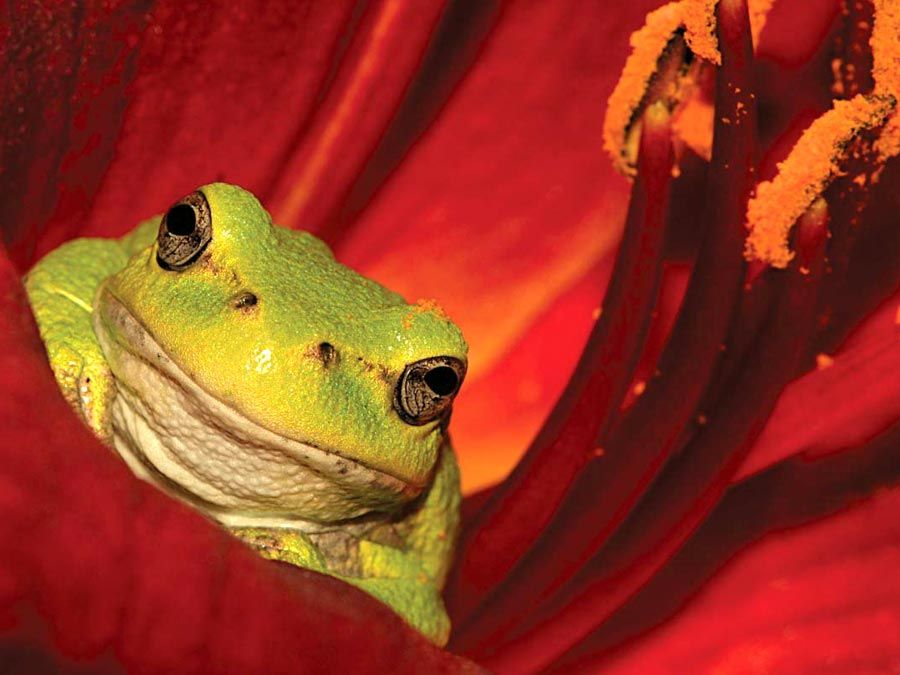
Tree frogs are found on every continent except Antarctica. While they are distributed globally, their presence and diversity vary by region:2
- The New World Tropics: This region is home to the greatest number of hylid, or “true,” tree frogs.2
- Other Regions: They are also present in Europe, Australia, and across much of nontropical Asia.2
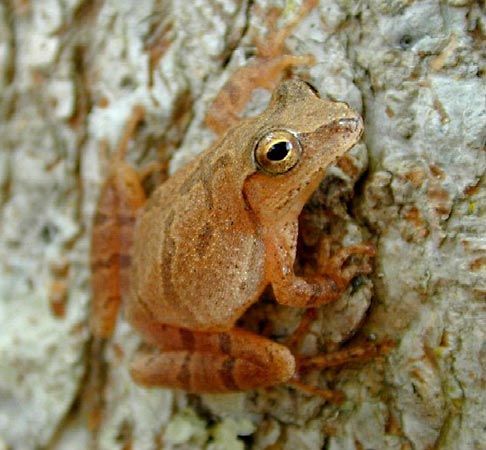
- North America: Various species, such as the Pacific tree frog and the spring peeper, are found throughout the United States and Canada.23
While many tree frogs are arboreal, some species are less adept at climbing and may inhabit water, land, or burrows. Their ability to thrive in diverse environments is supported by specialized physical adaptations, such as enlarged adhesive disks on their fingers and toes that assist in climbing.2
What is the life cycle of a typical tree frog?
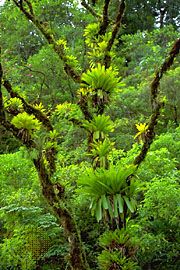
The life cycle of a typical tree frog begins with the deposition of eggs, which varies significantly by species. While many deposit eggs directly into water, several arboreal species place them on vegetation overhanging ponds or streams, or even in water-filled cavities like epiphytic bromeliads high in trees.4
Upon hatching, the larvae—known as tadpoles—enter an aquatic stage. These larvae possess a cartilaginous skeleton, thin skin, and a long, coiled intestine, but lack jaws, lungs, and eyelids. They feed on vegetation, algae, or, in some cases, insect larvae.4
The transition to adulthood occurs through metamorphosis, a complex process involving several key changes:
- Limb Development: Hind limb buds appear first, followed by the emergence of forelimbs.4
- Physical Transformation: The tail is absorbed by the body, the mouth develops jaws and teeth, and eyelids form.4
- Internal Changes: The digestive system differentiates, and the skeleton ossifies.4
Once these changes are complete, the frog leaves its aquatic environment to live as an adult.4
How do tree frogs differ from other frog species?
Tree frogs are distinguished from many other frog species primarily by their specialized adaptations for an arboreal (tree-dwelling) lifestyle. While most frogs move by leaping from the ground, tree frogs—particularly members of the families Hylidae, Rhacophoridae, and Centrolenidae—possess enlarged adhesive disks on the tips of their fingers and toes, which allow them to climb and move effectively between branches and leaves.78
Key differences include:
- Physical Morphology: Many tree frogs are slender, long-legged, and smaller than 10 cm (4 inches) in length. Some species exhibit unique structural modifications, such as bony casques on their heads used to plug tree holes or bromeliad cavities to conserve moisture during dry periods.84
- Locomotion: While most frogs rely on powerful hind limbs for ground-based leaping, some tree frogs, such as the subfamily Phyllomedusinae, have evolved opposable digits that allow them to walk slowly and grasp branches like tiny primates.7
- Reproductive Strategies: Unlike many frogs that congregate in large numbers at ground-level pools, many tree frogs have evolved to breed away from water. They often deposit eggs on vegetation overhanging streams or in water-filled cavities like epiphytic bromeliads high in trees.98
Sources
- 7 Awesome Frog Species of the Tropics — Encyclopædia Britannica
- tree frog — Encyclopædia Britannica
- frog and toad - Distribution and abundance — Encyclopædia Britannica
- frog and toad - From tadpole to adult — Encyclopædia Britannica
- amphibian - Distribution and abundance — Encyclopædia Britannica
- 7 Awesome Frog Species of Canada and the United States — Encyclopædia Britannica
- frog and toad - Size range and diversity of structure — Encyclopædia Britannica
- frog and toad - Breeding behaviour — Encyclopædia Britannica
- frog and toad - Structural modifications — Encyclopædia Britannica
Published on · 4 min read