Are Daddy Longlegs the Most Venomous Spiders?
The idea that daddy longlegs are the most venomous spiders is a popular urban legend that is scientifically inaccurate for several reasons.
Are daddy longlegs the most venomous spiders?
The idea that daddy longlegs are the most venomous spiders is a popular urban legend that is scientifically inaccurate for several reasons.1
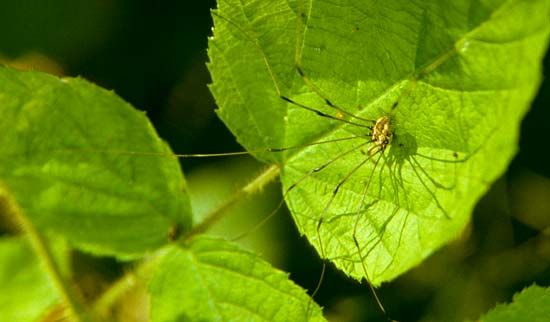
First, true daddy longlegs are arachnids belonging to the order Opiliones; they are not spiders at all and do not possess venom glands.1
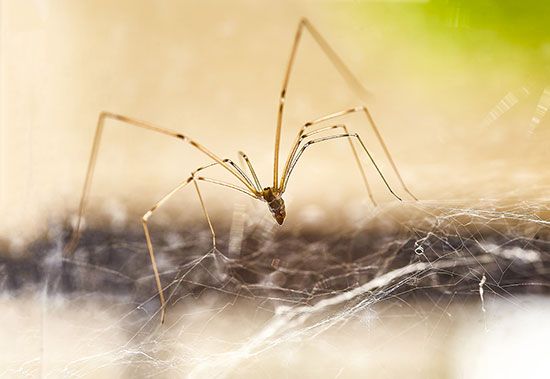
The myth often refers to the common cellar spider (Pholcus phalangioides), which is a true spider and does produce venom. However, the claim that these spiders have highly potent venom but fangs too short to bite humans is baseless. While cellar spiders can prey on other spiders, their venom is not particularly potent, and they are considered harmless to humans.1
In contrast, spiders such as the black widow and the Australian funnel-web spider possess venom that can be dangerous to people.23
What is the difference between venomous and poisonous animals?
The primary difference between venomous and poisonous animals lies in how their toxins are delivered to a victim.
Venomous Animals
The term venomous refers to organisms that actively inject toxins into a victim using a specialized apparatus, such as fangs, stings, or spines. These toxins, known as venoms, are typically produced in specialized glands and are often complex mixtures of proteins and enzymes.456
- Delivery: Toxins are introduced through a bite, sting, or puncture.45
- Examples: Snakes (such as cobras and vipers), spiders (such as the black widow), scorpions, bees, and stingrays.456
Poisonous Animals
The term poisonous applies to organisms that unload toxins when they are touched or consumed. These animals do not have a mechanism to inject their toxins; instead, the toxins are often stored in their skin or other tissues.56
- Delivery: Toxins are transferred through ingestion (eating the animal) or, in some cases, through contact with the skin.56
- Examples: Many amphibians (such as poison dart frogs), certain mollusks, and various fishes.56
While the terms are often used interchangeably in casual conversation, biologists maintain this strict distinction based on the method of toxin administration.5
How do spiders use their venom to digest prey?
Spiders utilize their venom as a critical tool for both subduing prey and initiating the digestive process. It is believed that venom glands originally evolved as accessory digestive glands, and in many species, their secretions still consist entirely of digestive enzymes.7
When a spider bites its prey, it injects these enzymes through ducts that open near the tips of its fangs. This process facilitates external digestion, or preoral digestion, where the internal tissues of the prey are liquefied by the enzymes. Once the tissues are broken down, the spider sucks up the resulting nutrient-rich liquid.78
While some spiders rely primarily on this external digestion, others may chew their prey while simultaneously covering it with additional digestive enzymes secreted by the digestive tract. In many species, the venom also serves the dual purpose of effectively paralyzing or subduing the prey to prevent escape during this slow feeding process.872
Which spiders are considered the most dangerous to humans?
While there are over 51,500 known spider species, fewer than 30 are considered dangerous to humans, and fatalities from spider bites are extremely rare due to the availability of modern medical treatment and antivenom. Most spider venom is evolved to target small prey, but certain species possess toxins that can cause significant medical issues in humans.210
Medically Significant Spiders
- Australian Funnel-web Spiders (Atrax and Hadronyche): Native to Australia, these spiders are among the most dangerous to humans. The Sydney funnel-web spider is particularly aggressive and has been responsible for several human deaths. Their venom contains potent toxins that can cause severe symptoms, including tachycardia, muscle spasms, and pulmonary edema, though effective antivenom is available.1112
- Black Widow Spiders (genus Latrodectus): Found globally, these spiders are characterized by a distinctive red hourglass mark on the abdomen. Their venom acts as a nerve toxin, causing severe pain—particularly in the abdominal region—but bites are generally not fatal.1110
- Brown Recluse (Loxosceles reclusa): Known for causing necrotic lesions, the bite of a brown recluse results in localized tissue death that heals slowly. Related species, such as the larger Loxosceles laeta in South America, can cause even more severe lesions.1110
- Sac Spiders (genus Cheiracanthium): Species such as the northern yellow sac spider can cause bites that occasionally lead to localized tissue death.1110
While tarantulas are often feared, their venom is generally mild, with pain comparable to a bee sting. Some species, however, defend themselves by throwing barbed abdominal hairs that cause itching and allergic reactions.1110
Sources
- Are daddy longlegs the most venomous spiders? — Encyclopædia Britannica
- spider - Venom — Encyclopædia Britannica
- black widow — Encyclopædia Britannica
- Venom — Encyclopædia Britannica
- What’s the Difference Between Venomous and Poisonous? — Encyclopædia Britannica
- poison - Animal poisons ( zootoxins ) — Encyclopædia Britannica
- spider - Digestion and excretion — Encyclopædia Britannica
- scorpion - Food and feeding — Encyclopædia Britannica
- arachnid - Glands and toxins — Encyclopædia Britannica
- Australian funnel-web spider — Encyclopædia Britannica
- 9 of the World’s Deadliest Spiders — Encyclopædia Britannica
- spider - Importance — Encyclopædia Britannica
Published on · 3 min read