Poison Ivy
Poison ivy, poison oak, and poison sumac are closely related plants in the cashew family (Anacardiaceae) that all contain urushiol, an oil that causes…
What are the differences between poison ivy, poison oak, and poison sumac?
Poison ivy, poison oak, and poison sumac are closely related plants in the cashew family (Anacardiaceae) that all contain urushiol, an oil that causes contact dermatitis. While they share this irritating chemical, they differ in appearance and habitat:123
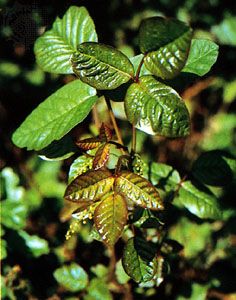
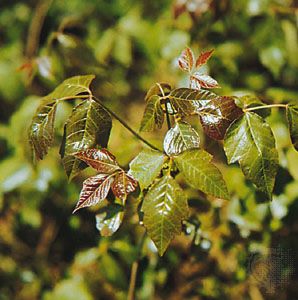
- Poison ivy: Famous for its “leaves of three,” this plant is common in eastern North America.2
- Poison oak: These are not true oaks. Pacific poison oak (T. diversilobum) grows as a shrub or vine with three or five lobed leaflets. Atlantic poison oak (T. pubescens) is a small shrub with three hairy, lobed leaflets that often resemble white oak leaves.3
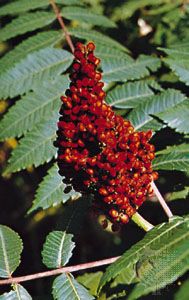
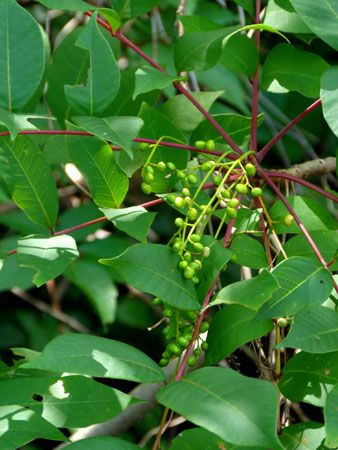
- Poison sumac: Considered the most allergenic of the three, this is a shrub or small tree found in swampy, acidic soils. Unlike the others, its compound leaves consist of 7–13 oval leaflets with smooth margins, and it produces drooping clusters of whitish, waxy drupes.1
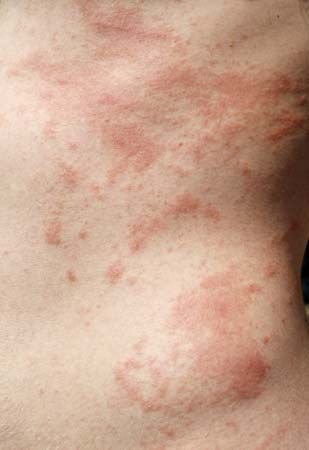
What are the common symptoms of poison ivy exposure, and how long do they typically last?
Exposure to poison ivy triggers a condition known as contact dermatitis, which is characterized by a severe, itchy, and painful inflammation of the skin.52
Regarding the duration of these symptoms, the rash typically lasts anywhere from less than one week to more than three weeks. While the reaction can be quite uncomfortable, it generally does not require medical treatment.2
It is important to note that the reaction is caused by urushiol, an oil found in the plant’s resin. Because this substance is nearly nonvolatile, it can persist on clothing, tools, or animal fur for long periods—sometimes up to a year—meaning you can develop symptoms even without direct contact with the plant itself.52
What are the key identifying characteristics of poison ivy plants?
To identify poison ivy (Toxicodendron radicans), look for these key characteristics:
- Leaf Structure: The most recognizable feature is the presence of three leaflets per leaf. These leaflets can be hairless and glossy or hairy, and their edges may be smooth, toothed, or lobed.56
- Growth Habit: The plant is highly variable, growing as either a climbing vine or a low-lying shrub.5
- Coloration: Young leaves are often tinged with red. As the season progresses, mature leaves turn vibrant shades of red, orange, or yellow in the autumn.5
- Flowers and Fruit: The plant produces small, yellow-to-green flowers. Female plants develop white or greenish drupes (berries), which serve as a food source for birds.56
Because the plant contains urushiol in nearly all its parts—including the leaves, stems, and roots—it is essential to avoid direct contact with any part of the plant to prevent contact dermatitis.5
Are there any look-alike plants that are often confused with poison ivy?
Several plants are frequently confused with poison ivy due to similarities in their appearance or growth habits. It is important to distinguish between them, as some look-alikes are harmless, while others share the same toxic properties.
Common Look-Alikes
- Virginia Creeper: This woody vine is often mistaken for poison ivy, but it is unrelated. A key identifying difference is its leaf structure: Virginia creeper has palmately compound leaves with five toothed leaflets, whereas poison ivy characteristically has three leaflets.7
- Poison Oak: Both Pacific poison oak and Atlantic poison oak are close relatives of poison ivy and also contain the toxic oil urushiol. Atlantic poison oak, in particular, is commonly confused with poison ivy; its leaves typically feature three lobed leaflets and often resemble those of a white oak.45
- Fragrant Sumac: While many sumacs have different leaf arrangements, the fragrant sumac (Rhus aromatica) has three-parted leaves that can look similar to poison ivy. However, it is generally distinguished by the fact that its leaves are scented when bruised.8
While some of these plants are harmless, others can cause severe skin reactions. When in doubt, it is best to avoid contact with any plant that resembles these descriptions.
Sources
- poison sumac — Encyclopædia Britannica
- 7 Dangerous Plants You Should Never Touch — Encyclopædia Britannica
- poison oak — Merriam-Webster
- poison oak — Encyclopædia Britannica
- poison ivy — Encyclopædia Britannica
- poison ivy — Merriam-Webster
- Virginia creeper — Encyclopædia Britannica
- sumac — Encyclopædia Britannica
- poison - Plant poisons (phytotoxins) — Encyclopædia Britannica
Published on · 3 min read