Population Growth
In population ecology, population growth refers to the change in the number of members of a specific plant or animal species within a particular location…
What is population growth in biology?
In population ecology, population growth refers to the change in the number of members of a specific plant or animal species within a particular location over a defined time period.1
Key Components
The growth of a population is determined by several fundamental demographic factors:12
- Fertility: The number of offspring produced by individuals.
- Mortality: The rate of death within the population.
- Migration: The movement of individuals into (immigration) or out of (emigration) a specific area.12
A positive growth rate indicates an increase in population size, while a negative rate signifies a decrease.1
Dynamics and Constraints
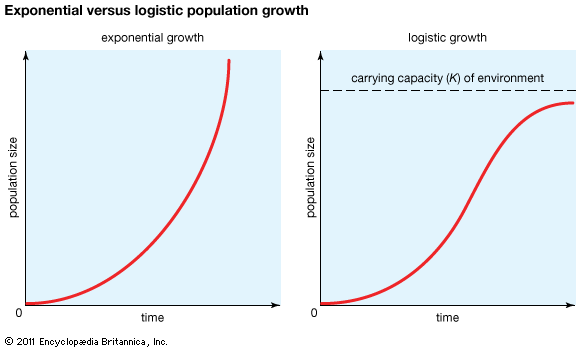
Populations are often limited by the environment’s carrying capacity—the maximum number of individuals an environment can support based on available resources like food, water, and shelter. Growth is frequently modeled using a logistic function, which produces an S-shaped curve representing an initial period of rapid growth that eventually levels off as resources become scarce and density-dependent factors, such as competition and disease, increase.3145
How do scientists measure population growth?
Scientists measure population growth by analyzing the fundamental components of demographic change: births, deaths, and migration. For a closed population, growth is calculated by adding births and subtracting deaths over a specific interval. For open populations, scientists also account for in-migration and out-migration.6
Key Metrics and Tools
- Crude Rates: Researchers often use crude birth rates and crude death rates, which represent the annual number of births or deaths per 1,000 individuals. The difference between these two is the rate of natural increase.78
- Life Tables: These are used to evaluate how population size changes over time by tracking the proportion of individuals surviving to each age (lxl_x) and the average number of offspring produced at each age (mxm_x).5
- Net Reproductive Rate (R0R_0): Calculated as R0=∑lxmxR_0 = \sum l_x m_x, this value indicates whether a population is replacing itself (R0=1.0R_0 = 1.0), increasing (>1.0> 1.0), or decreasing (<1.0< 1.0).5
- Intrinsic Rate of Increase (rr): Also known as the Malthusian parameter, this represents the growth rate for populations with non-overlapping generations, calculated using the net reproductive rate and mean generation time.5
Scientists also use the logistic function to model growth, which accounts for environmental constraints like carrying capacity.4
What factors can cause a population to increase or decrease?
A population’s size is dynamic, changing based on a balance of factors that either add to or subtract from the total number of individuals.
Primary Demographic Drivers
At the most basic level, population change is determined by four fundamental processes:1
- Additions: Population size increases through fertility (births) and immigration (individuals moving into an area).101
- Reductions: Population size decreases through mortality (deaths) and emigration (individuals moving out of an area).101
Ecological and Environmental Influences
Beyond these demographic rates, various ecological forces regulate population size, often in relation to the environment’s carrying capacity—the maximum number of individuals an environment can support given its available resources.310
- Resource Availability: Competition for food, water, and nesting sites limits growth. As a population nears its carrying capacity, competition intensifies, often slowing growth rates.310
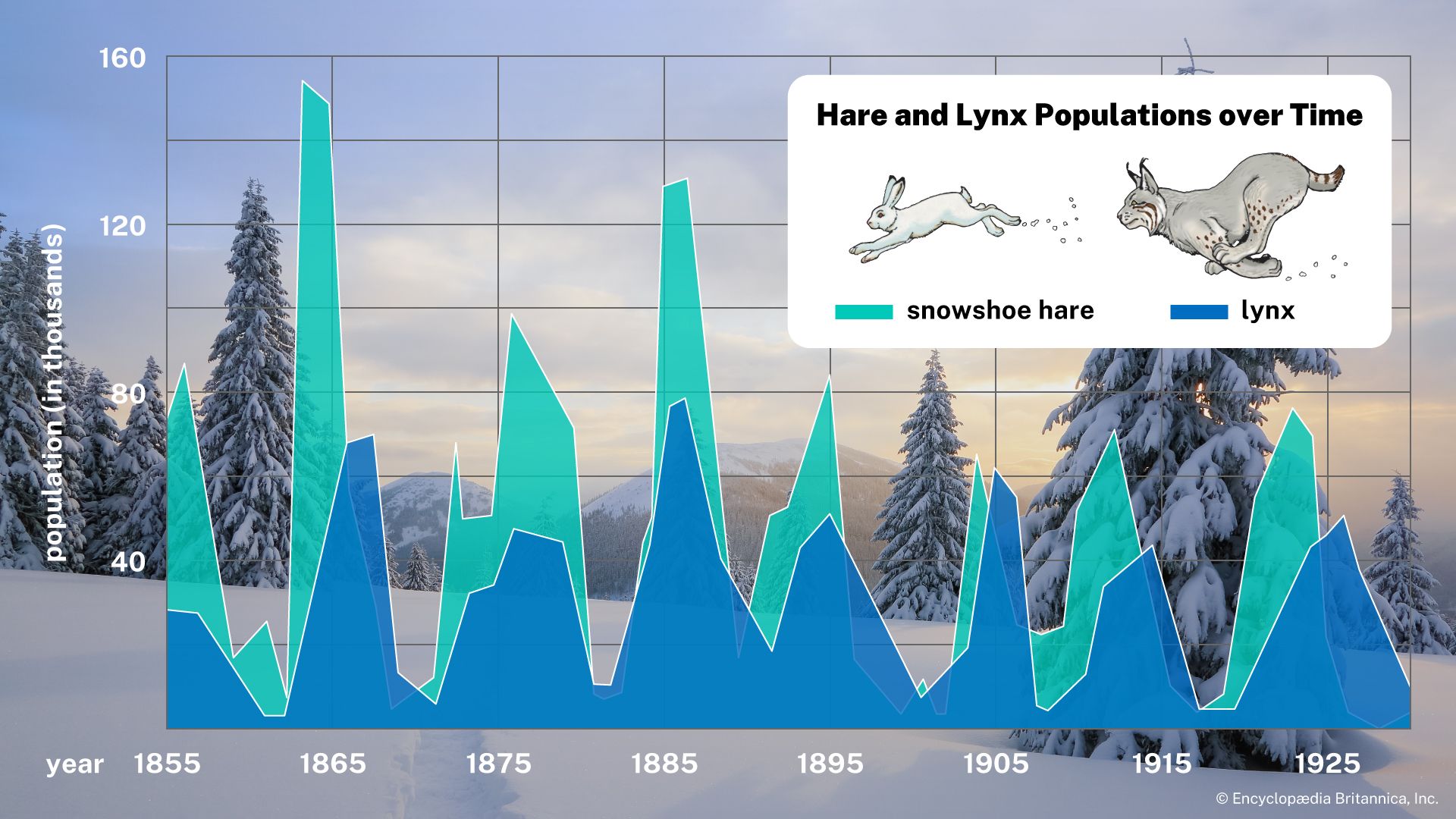
- Species Interactions: Predation and parasitism can significantly reduce population numbers. Conversely, the absence of natural enemies can lead to explosive, unchecked population growth.48
- Density-Dependent Factors: These are forces that affect a population differently based on its density. For example, diseases often spread more rapidly in crowded populations, increasing mortality rates.1110
- Environmental Stress: Factors such as pollution, natural disasters, and seasonal climate variations can cause sudden fluctuations in population size regardless of density.10
How do birth rate and death rate affect population growth?
Birth and death rates are the primary components of natural increase, which is the fundamental driver of population change. The rate of natural increase is calculated as the difference between the birth rate and the death rate.68
How They Influence Growth
- Natural Increase: When birth rates exceed death rates, a population experiences natural increase, leading to growth. Conversely, if death rates exceed birth rates, the population size decreases.68
- Population Stability: A population is considered stable when birth and death rates are balanced, resulting in a net growth rate of zero.13
- Demographic Transition: Historically, many societies have moved from a state of high birth and death rates—resulting in stable, low populations—to a period of rapid growth when death rates drop due to medical and public health improvements while birth rates remain high. Eventually, as societies industrialize and urbanize, birth rates often decline, causing population growth to level off.7
While these rates provide a summary of population dynamics, they are influenced by factors such as age composition, fertility trends, and health conditions.8
Sources
- density-dependent factor — Encyclopædia Britannica
- carrying capacity — Encyclopædia Britannica
- Population growth — Encyclopædia Britannica
- population - The basic components of population change — Encyclopædia Britannica
- logistic function — Encyclopædia Britannica
- population - Natural increase and population growth — Encyclopædia Britannica
- population ecology - Calculating population growth — Encyclopædia Britannica
- vital rates — Encyclopædia Britannica
- population - Population projections — Encyclopædia Britannica
- population ecology - Logistic population growth — Encyclopædia Britannica
- population ecology - Lotka-Volterra equations — Encyclopædia Britannica
- population ecology - Population cycles — Encyclopædia Britannica
- modernization - Population change — Encyclopædia Britannica
- population ecology - Life tables and the rate of population growth — Encyclopædia Britannica
Published on · 4 min read