Porpoise
Although porpoises and dolphins are both cetaceans, they possess distinct physical characteristics that allow them to be distinguished:
What are the key physical characteristics that distinguish porpoises from dolphins?
Although porpoises and dolphins are both cetaceans, they possess distinct physical characteristics that allow them to be distinguished:
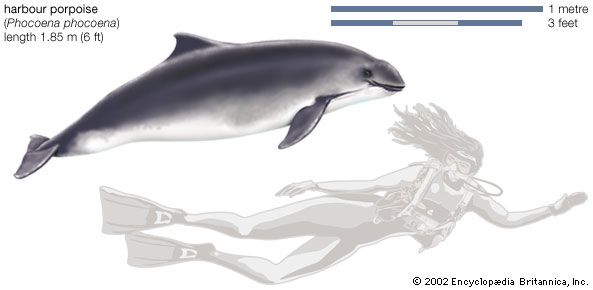
- Size and Build: Porpoises generally have a more compact build and are smaller than dolphins, typically reaching a maximum length of about 2 meters (6.6 feet).123
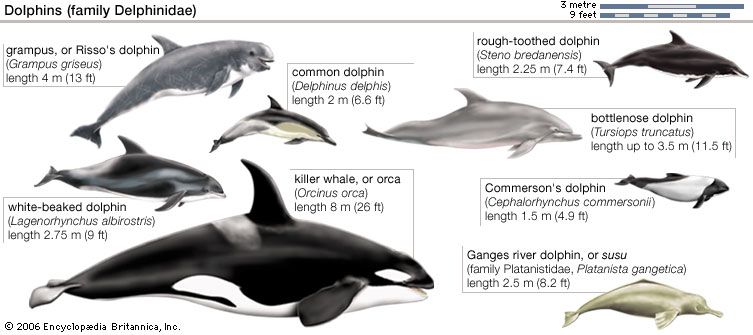
- Snout and Mouth: Dolphins are characterized by elongated beaks and larger mouths, whereas porpoises have a curved, blunt snout and lack a pronounced beak.123
- Teeth: A key diagnostic feature is tooth shape; dolphins have cone-shaped teeth, while porpoises have spade-shaped (spatulate) teeth.123
- Dorsal Fin: Most dolphins possess a hooked or curved dorsal fin. In contrast, most porpoises have a triangular dorsal fin, though some species, such as the finless porpoise, lack one entirely.123
While the terms are sometimes used interchangeably in casual conversation, marine biologists maintain a clear distinction between these two groups of toothed whales.23
How do porpoises communicate with each other?
As porpoises are members of the toothed whales (Odontoceti), they communicate and navigate using specialized sound production mechanisms. Unlike humans, they do not use vocal cords; instead, they primarily utilize their larynx and accessory air sacs to generate sound.4
Their acoustic activity is generally divided into two categories:
- Communication: Porpoises use sound signals to interact with others, which can include signaling their presence to other members of their group.4
- Echolocation: This process involves emitting high-frequency sound pulses and listening for the returning echoes to locate prey, avoid obstacles, and orient themselves in their environment.45
To produce these high-frequency sounds, toothed whales possess modified tissues near the blowhole, including a fatty structure known as the melon, which assists in sound emission. Because they rely on these sophisticated acoustic systems, they have evolved specialized biological adaptations, such as a mutated form of the protein prestin, to enhance their sensitivity to high-frequency echoes.45
How do porpoises use echolocation, and why is it important for their survival?
Porpoises, like other toothed whales, utilize echolocation as a sophisticated physiological process to navigate and interact with their environment.6
How Echolocation Works
Porpoises produce sound primarily through a complex system of passages connected to the blowhole and their larynx. These sounds consist of rapid series of clicks, with energy concentrated in high frequencies ranging from 50,000 to 200,000 hertz. Because sound travels faster in water than in air, these high frequencies are essential for effective object discrimination. To facilitate the detection of these returning echoes, porpoises have evolved a mutated form of the protein prestin, which significantly increases their sensitivity to high-frequency sounds.56
Importance for Survival
Echolocation is vital for several survival-critical tasks:
- Food Procurement: It allows porpoises to hunt effectively at night or in murky, low-visibility waters where vision is insufficient.56
- Orientation and Navigation: It assists in spatial awareness and obstacle avoidance.6
- Social Interaction: Echolocation pulses are also used for signaling and interacting with other members of their group.6
How do porpoises differ from other cetaceans like whales?
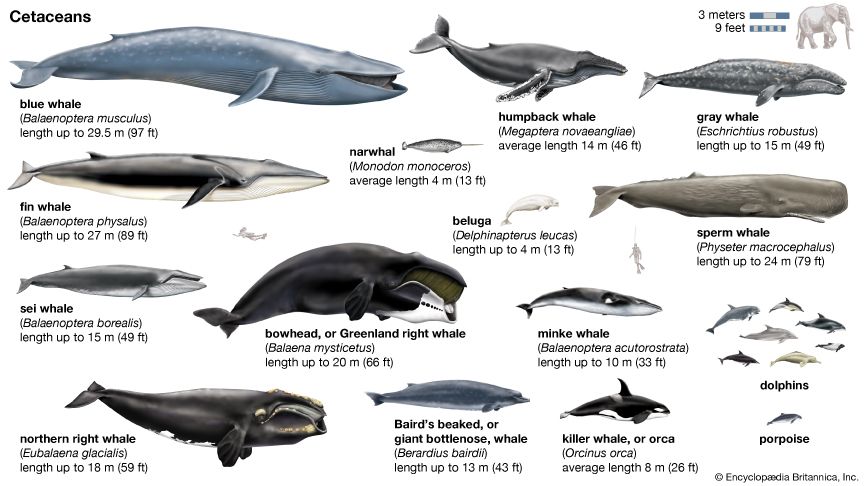
While porpoises and other cetaceans—such as dolphins and baleen whales—share the same scientific order, they exhibit distinct physical and biological differences.
Distinctions from Dolphins
Though often confused, porpoises and dolphins differ in several key physical traits:
- Body Shape: Porpoises are generally smaller and have a more compact, robust build compared to the sleeker, leaner bodies of dolphins.192
- Facial Features: Dolphins typically possess a pronounced, beak-like snout, whereas porpoises have a blunt, rounded snout.192
- Teeth: Porpoises have spade-shaped teeth, while dolphins have cone-shaped teeth.19
- Dorsal Fins: A dolphin’s dorsal fin is usually hooked or curved, while a porpoise’s fin is typically triangular.12
Distinctions from Baleen Whales
All porpoises are toothed whales (odontocetes), which fundamentally separates them from baleen whales (mysticetes):
Sources
- 14 Questions About Aquatic Animals Answered - What is the difference between a porpoise and a dolphin? — Encyclopædia Britannica
- porpoise — Encyclopædia Britannica
- 12 Pairs of Commonly Confused Animal Words | Dolphin/Porpoise — Merriam-Webster
- cetacean - Sound production and communication — Encyclopædia Britannica
- Echolocation — Encyclopædia Britannica
- sound reception - Echolocation in other mammals — Encyclopædia Britannica
- sound reception - Marine mammals — Encyclopædia Britannica
- Movement perception - Auditory — Encyclopædia Britannica
- Do whales have teeth? — Encyclopædia Britannica
- Sea Creature Words | Porpoise — Merriam-Webster
- Phocaenidae — Merriam-Webster
Published on · 3 min read