Primitive Weevil
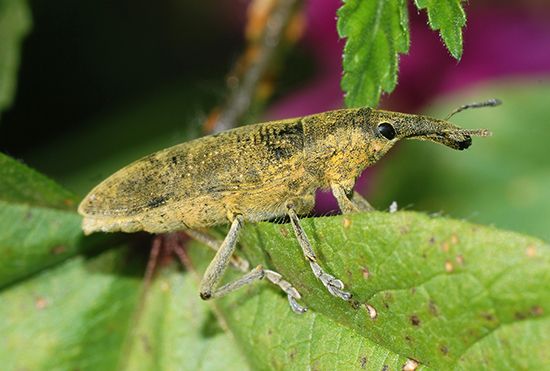
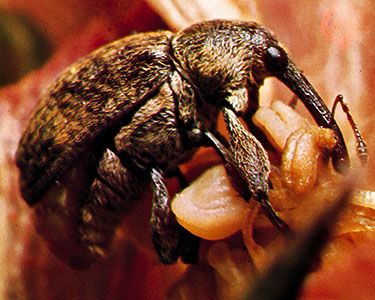
A primitive weevil is any of approximately 2,000 species of beetles belonging to the family Brentidae. While they are related to the true weevil family…
What is primitive weevil?
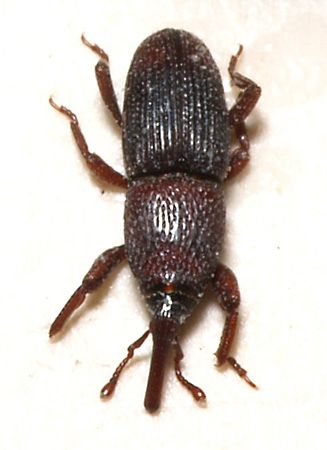
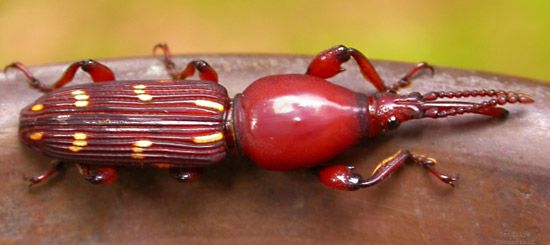
A primitive weevil is any of approximately 2,000 species of beetles belonging to the family Brentidae. While they are related to the true weevil family (Curculionidae), they are distinct in their physical characteristics and habits.12
These beetles are predominantly found in tropical regions, though some species inhabit temperate areas. They typically measure between 7 and 30 mm (0.3 to 1.2 inches) in length and are generally dark in color, often featuring orange markings on their wing covers (elytra). A notable feature of this family is the structural difference between the sexes: the female possesses a long, straight snout used to bore holes in trees for egg-laying, whereas the male has a short, broad, and flat snout.1
Adult primitive weevils live under the loose bark of dead trees, where they feed on fungi, sap, and other insects. In contrast, their larvae bore through wood and can cause significant damage to living trees.1
How do the snouts of male and female primitive weevils differ?
The snouts of male and female primitive weevils (family Brentidae) exhibit distinct structural differences:
- Female: Possesses a long, straight snout, which is utilized to bore holes into trees for the purpose of laying eggs.1
- Male: Features a snout that is short, broad, and flat.1
What are the main differences between primitive weevils and true weevils?
Primitive weevils (family Brentidae) and true weevils (family Curculionidae) are both members of the order Coleoptera, but they exhibit several distinct differences in their physical structure and biology:
- Antennae Structure: A primary diagnostic difference is the shape of the antennae. True weevils typically possess long, distinctly elbowed antennae that can often fold into specialized grooves on the snout. In contrast, primitive weevils have antennae that are not elbowed and typically project from the sides of the snout.156
- Body Shape: Primitive weevils are generally characterized by a long, slender body shape. True weevils are more diverse in form, ranging from slender to stout, and from elongated to egg-shaped.561
- Snout Characteristics: While both groups possess a snout, the snout of the primitive weevil is a defining feature that often varies significantly between sexes; for example, the female’s snout is long and straight, while the male’s is short, broad, and flat. In true weevils, the snout is used for feeding and boring, and its shape varies from short and stout to long and slender, sometimes exceeding the length of the rest of the body.361
- Habitat and Habits: Primitive weevils (brenthids) primarily develop in dead trunks and stumps. True weevils are highly diverse in their feeding habits, with many species feeding on specific plant parts like seeds, stems, or roots, and some are significant agricultural pests.71
Why are some weevils considered major agricultural pests?
Weevils are considered major agricultural pests primarily because of their specialized feeding habits and the development of the snout, which allows them to penetrate plant tissues to feed and deposit eggs.3
Their status as destructive pests stems from several factors:
- Targeted Destruction: The larvae of most species are legless and feed exclusively on specific, vital parts of plants, such as seeds, flower heads, stems, or roots. For example, the boll weevil destroys cotton seeds and fibres from within the boll, making them difficult to reach with insecticides.39
- Storage Infestation: Certain species, such as the grain weevil and rice weevil, are notorious for infesting stored cereals. They act as endosperm borers, causing significant loss in food value, weight, and milling quality.10
- Economic Impact: Infestations can lead to massive crop losses—sometimes reaching 30 to 50 percent in affected areas—which historically forced farmers to adopt crop rotation and diversification to survive.9
- Resilience: Because many weevils develop inside the plant structure, they are shielded from external control methods, necessitating complex integrated pest management strategies.119
Sources
- primitive weevil — Encyclopædia Britannica
- Coleoptera - Annotated classification — Encyclopædia Britannica
- weevil — Encyclopædia Britannica
- List of insects - beetles and weevils (order Coleoptera) — Encyclopædia Britannica
- Brentidae — Merriam-Webster
- Coleoptera - Size range and diversity of structure — Encyclopædia Britannica
- Coleoptera - Feeding habits and habitats — Encyclopædia Britannica
- Coleoptera - Larvae — Encyclopædia Britannica
- Coleoptera - As plant feeders — Encyclopædia Britannica
- Cereal farming - Storage — Encyclopædia Britannica
- cotton - Pests and diseases — Encyclopædia Britannica
- Agricultural technology - Biological controls — Encyclopædia Britannica
- Boll weevil — Encyclopædia Britannica
Published on · 3 min read