Grain Weevil
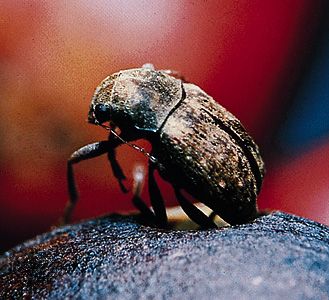
The grain weevil (Sitophilus granarius) is a small, brown insect belonging to the family Curculionidae, typically measuring 3 to 4 mm (0.1 inch) in length.…
What is Grain weevil?
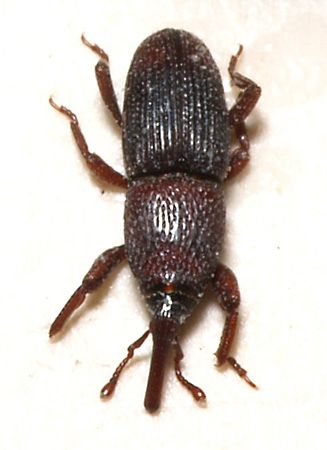
The grain weevil (Sitophilus granarius) is a small, brown insect belonging to the family Curculionidae, typically measuring 3 to 4 mm (0.1 inch) in length. It is a well-known pest that infests stored grain, such as wheat, corn (maize), and oats.12
The life cycle of the grain weevil is uniquely adapted to its food source: the female bores a hole into an individual cereal kernel to deposit an egg. The resulting larva feeds and pupates entirely within the grain hull. Both the larvae and the adults consume the cereal, making them a significant concern in cereal farming and storage, where they thrive in environments with higher temperatures. When threatened, these insects are known to feign death. Effective management of these pests often requires rigorous sanitation of storage facilities, such as cleaning sacks and using specialized fumigation or insecticides.123
How do grain weevils differ from other common pantry pests?
Grain weevils (Sitophilus granarius) are distinguished from other common pantry pests primarily by their life cycle and feeding behavior as endosperm borers. Unlike many other insects that may feed on the surface of stored goods, the female grain weevil uses its snout to bore a hole directly into an individual cereal kernel, where it deposits an egg. The larva then develops and pupates entirely within the grain hull, effectively hiding its presence until the adult emerges.12
In contrast, other pantry pests are categorized by different feeding habits:
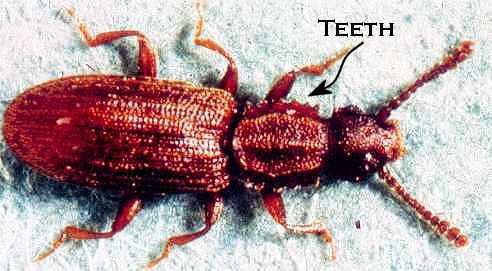
- Grain Germ Eaters: Species such as the saw-toothed grain beetle and the khapra beetle specifically target the germ of the grain rather than boring into the endosperm.2
- Secondary Pests: Insects like the confused flour beetle and the Mediterranean flour moth are often considered secondary pests, as they frequently infest products that have already been damaged or processed.24
- Web-Spinning Pests: Moths such as the Indian meal moth are characterized by the silken webs they spin through infested food, which often contain excrement and foul the product, a behavior not associated with the grain weevil.4
What methods are used to prevent insect infestations in food storage?
Preventing insect infestations in food storage requires a combination of environmental management, sanitation, and targeted control measures. Because insects thrive in warm, humid conditions, maintaining proper storage environments is critical.
Environmental and Physical Controls
- Moisture and Temperature Management: Keeping grain moisture content low (10–12%) prevents heat buildup from respiration. Regularly turning over stocks helps ventilate the grain and dissipate heat, which otherwise creates a favorable environment for pests.2
- Atmospheric Modification: Altering the proportions of oxygen, nitrogen, and carbon dioxide in storage facilities can effectively control insect populations.7
- Physical Energy: Research into nonchemical methods includes using sound waves to disrupt reproduction, as well as the application of light waves, high-frequency electric fields, and gamma radiation to eliminate pests.7
Sanitation and Chemical Measures
- Good Housekeeping: Regular cleaning and disinfecting of storage areas, particularly sacks and bags, are essential for preventing infestations.2
- Chemical Interventions: When necessary, the use of inert insecticidal dusts, contact insecticides, or professional fumigation may be required to manage severe outbreaks.2
Why is moisture control important for keeping grain safe from pests?
Moisture control is essential for grain safety because it directly regulates the temperature within stored bulk. When grain has a high moisture content (exceeding 16 percent), the grain’s natural respiration generates heat that cannot be easily dissipated. This rise in temperature creates a favorable environment for various pests, including the grain weevil and other weevils, which thrive in warmer conditions.2
By maintaining moisture levels between 10 and 12 percent, the rate of respiration remains low, preventing the heat buildup that attracts and supports insect infestations. In addition to temperature management, regular ventilation—often achieved by turning over cereal stocks—is necessary to keep the grain cool and protect its milling and nutritional value.2
Sources
- Grain weevil — Encyclopædia Britannica
- Cereal farming - Storage — Encyclopædia Britannica
- granary weevil — Merriam-Webster
- weevil — Encyclopædia Britannica
- pyralid moth — Encyclopædia Britannica
- List of insects - beetles and weevils (order Coleoptera) — Encyclopædia Britannica
- food preservation - Control of microbial contamination — Encyclopædia Britannica
- Agricultural technology - Mechanical and cultural controls — Encyclopædia Britannica
Published on · 3 min read