protactinium-231–thorium-230 Dating
Protactinium-231–thorium-230 dating is a method of geochronology used to determine the age of marine sediments by measuring the quantities of specific…
What is protactinium-231–thorium-230 dating?
Protactinium-231–thorium-230 dating is a method of geochronology used to determine the age of marine sediments by measuring the quantities of specific protactinium and thorium isotopes present within them.1
Because these two elements share very similar chemical properties, they precipitate into marine sediments at the same rates. The isotopes used, protactinium-231 and thorium-230, are radioactive and decay with half-lives of 32,500 years and 80,000 years, respectively.1
Using the ratio of these two isotopes is considered a superior geochronometer compared to measuring them individually. This is because the method does not require a uniform rate of sedimentation over time; it only requires that the isotopes be precipitated in a consistent proportion, a condition that typically holds even when sedimentation rates fluctuate. This technique allows researchers to date sediments as old as 175,000 years.1
What is the difference between radioactive decay and half-life?
Radioactive decay and half-life are distinct but related concepts in nuclear physics:
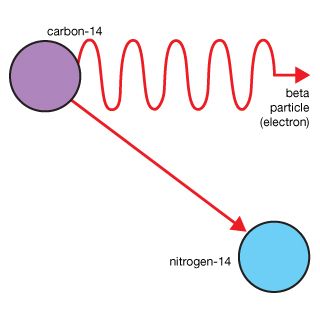
- Radioactive decay is the spontaneous process by which an unstable atomic nucleus decomposes into a more stable configuration. During this process, the nucleus emits energy or subatomic particles—such as alpha particles, beta particles, or gamma rays—often resulting in the transformation of the original atom into a different chemical element. This decay occurs at an unpredictable rate for individual nuclei, but follows statistical patterns for large collections of atoms.456
- Half-life is a specific measurement used to describe the rate of this decay. It is defined as the time interval required for one-half of the atomic nuclei in a radioactive sample to decay. While radioactive decay is the physical event of transformation, the half-life is a characteristic property of a specific radioactive isotope, providing a predictable timeline for how quickly a substance will lose its radioactivity.465
How do scientists collect samples from deep-sea sediments?
Scientists employ a variety of specialized equipment to collect samples from deep-sea sediments, depending on the depth and the nature of the material required. These methods generally fall into three categories:
- Grabbing devices: Often called snappers, these are used to retrieve small samples of superficial sediment layers. Examples include the clamshell snapper, which uses spring-actuated jaws to trap bottom material, and the orange peel bucket sampler, which is designed to collect samples in shallower waters.8
- Dredges: These are sturdy, steel-constructed devices dragged along the seafloor. They are particularly effective for collecting rock samples, though they can be fitted with screens to retain finer materials.8
- Coring devices: These tools are used to obtain vertical samples of sediment layers. They typically consist of core tubes, lead weights, and a tailfin for stability. While lightweight corers like the Phleger corer sample the top metre of sediment, deeper samples are retrieved using piston corers. The piston creates suction to overcome friction, allowing for the collection of cores up to 20 metres long. Advanced hydraulic piston corers, used by research vessels like the JOIDES Resolution, can retrieve undisturbed cores up to 200 metres in length.98
What are some other methods used to date ancient geological materials?
Scientists use several methods to determine the age of geological materials, primarily relying on radiometric dating, which measures the decay of radioactive isotopes into stable daughter products at constant, known rates.101112
Major Isotopic Dating Methods
- Uranium–Lead Method: Considered superior for providing precise ages with minimal assumptions, this method is widely used on minerals like zircon, baddeleyite, and monazite found in igneous and metamorphic rocks.1314
- Potassium-Argon Dating: This method measures the ratio of radioactive argon to potassium in rocks. It is effective for dating a wide range of materials, from meteorites billions of years old to volcanic rocks as young as 20,000 years.1514
- Rubidium-Strontium and Samarium-Neodymium: These schemes often utilize isochron methods to date series of rocks or minerals that share the same age and initial isotopic ratios.1114
Other Specialized Techniques
- Fission-Track Dating: This technique identifies the age of a sample by counting the microscopic damage, or “fission tracks,” caused by the spontaneous fission of uranium-238 within minerals and glasses.2
- Uranium-Series Disequilibrium: Useful for more recent geological events, this approach uses intermediate isotopes in the uranium or thorium decay chains, such as lead-210, to date materials like glacial ice and recent sediments.1614
- Cosmogenic Isotope Dating: Isotopes like carbon-14 and beryllium-10, produced by cosmic-ray bombardment, are used to date near-surface processes, including marine sediments and glacial ice.14
Sources
- protactinium-231–thorium-230 dating — Encyclopædia Britannica
- dating - Origin of radioactive elements used — Encyclopædia Britannica
- dating - Uranium-series disequilibrium dating — Encyclopædia Britannica
- half-life — Encyclopædia Britannica
- radioactivity — Encyclopædia Britannica
- atom - Radioactive decay — Encyclopædia Britannica
- radioactivity - Measurement of half-life — Encyclopædia Britannica
- ocean basin - Deep-sea sediments — Encyclopædia Britannica
- undersea exploration - Exploration of the seafloor and the Earth’s crust — Encyclopædia Britannica
- potassium-argon dating — Encyclopædia Britannica
- dating: Top Questions — Encyclopædia Britannica
- fission-track dating — Encyclopædia Britannica
- dating - Lead-210 dating — Encyclopædia Britannica
- dating - Uranium–lead method — Encyclopædia Britannica
- dating - Principles of isotopic dating — Encyclopædia Britannica
- geochronology — Encyclopædia Britannica
Published on · 3 min read