Queen Charlotte Sound
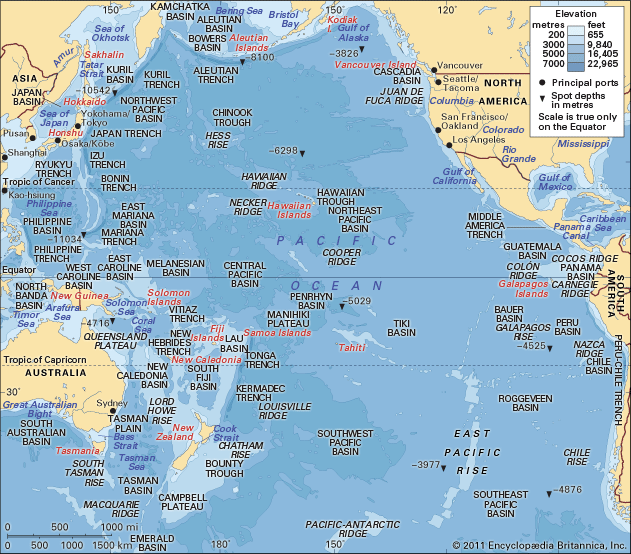
Queen Charlotte Sound is a broad, deep inlet of the eastern North Pacific Ocean located off the coast of west-central British Columbia, Canada.
What is Queen Charlotte Sound?
Queen Charlotte Sound is a broad, deep inlet of the eastern North Pacific Ocean located off the coast of west-central British Columbia, Canada.12
The sound is situated south of Haida Gwaii and north of Vancouver Island. To the south, it narrows into the Queen Charlotte Strait, which connects to the Strait of Georgia and Puget Sound. These interconnected waterways form part of the Inside Passage, a critical maritime route stretching from Washington state to Alaska.com/place/Washington-state) state to Alaska. While the sound is exposed to the open ocean on its western side, its eastern boundary is characterized by a complex network of fjords, inlets, and islands.1
What is the Inside Passage and why is it important?
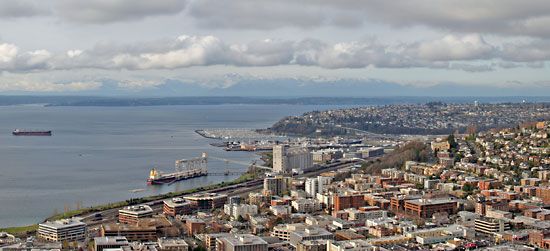
The Inside Passage is a natural, sheltered sea route extending more than 1,000 miles (1,600 km) from Seattle, Washington, to Skagway, Alaska. It consists of a series of channels and straits situated between the mainland and coastal islands, such as Vancouver Island and the Alexander Archipelago.34
The passage is highly important for several reasons:
- Navigation and Safety: By utilizing these protected channels, vessels are shielded from the rough conditions of the open Pacific Ocean. The route is well-surveyed, offers ample depth for ships, and provides numerous anchorages.3
- Commerce and Transport: It serves as the primary route for coastal shipping to Alaska, facilitating trade and transport between major towns like Juneau, Ketchikan, and Prince Rupert3.
- Tourism and Scenery: The route is widely favored for its dependable smoothness and exceptional scenic beauty, making it a popular corridor for maritime travel.3
How do glaciers shape coastal inlets like sounds and fjords?
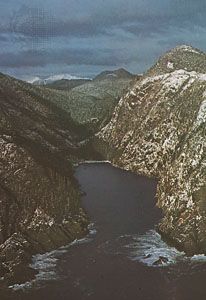
Glaciers play a primary role in sculpting coastal inlets, particularly fjords, through intense glacial erosion. These long, narrow, and deep inlets are formed when massive, thick glaciers carve deep U-shaped valleys into the landscape, often extending far below current sea level.67
The process involves several key mechanisms:
- Deep Excavation: As glaciers move through mountain valleys toward the sea, their immense weight and thickness allow them to erode bedrock far below the ocean’s surface. This erosive power is typically greatest in the middle and upper reaches of the valley, where the ice flow is most active.67
- Marine Inundation: Once the glaciers melt or retreat, the sea invades these deep, scoured troughs, creating the characteristic inlet.67
- Structural Features: Glacial erosion creates steep, vertical walls and deep basins. Because glaciers can erode below sea level, the resulting fjords are often much deeper than the open ocean at their mouths, where a shallow rock “threshold” often remains.67
While fjords are specifically defined by this glacial origin, other coastal inlets may be shaped by a combination of tectonic activity and pre-existing river valleys that were later modified by ice.67
What is the difference between a sound, a strait, and an inlet?
While these terms are often used interchangeably in casual conversation, they describe distinct geographical features:
- Inlet: A general term for any part of a body of water that extends beyond the general shoreline into the land. It acts as an umbrella term that can include bays, coves, fjords, and estuaries.1314
- Strait: A narrow, natural passage of water that connects two larger bodies of water or separates two landmasses.1516
- Sound: A specific type of inlet that is typically long, broad, and often runs parallel to the coast. It can also refer to a passage connecting two larger bodies of water or separating an island from the mainland. Because of these characteristics, a sound is often considered a type of strait or a large, sheltered inlet.1716
In essence, an inlet is the broadest category, while straits and sounds are more specific classifications based on their shape, size, and function as connectors between larger water bodies.131517
Sources
- Queen Charlotte Sound — Encyclopædia Britannica
- Queen Charlotte Sound — Merriam-Webster
- Inside Passage — Encyclopædia Britannica
- Inside Passage — Merriam-Webster
- Puget Sound — Encyclopædia Britannica
- fjord — Encyclopædia Britannica
- glacial landform - Erosional landforms of continental glaciers — Encyclopædia Britannica
- erosion — Encyclopædia Britannica
- fjord — Merriam-Webster
- fjord — Merriam-Webster
- Quaternary - Landforms — Encyclopædia Britannica
- glacier - Tidewater glaciers — Encyclopædia Britannica
- inlet — Merriam-Webster
- strait — Merriam-Webster
- inlets — Merriam-Webster
- sound — Merriam-Webster
- Long Island Sound — Encyclopædia Britannica
- sound — Merriam-Webster
Published on · 3 min read