Quetzalcoatlus
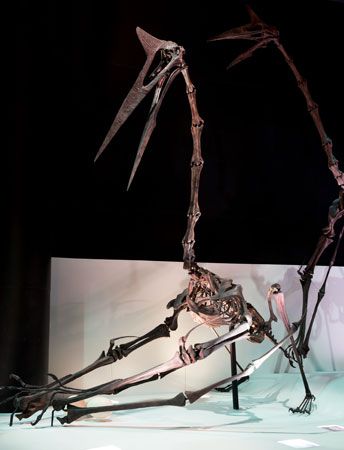
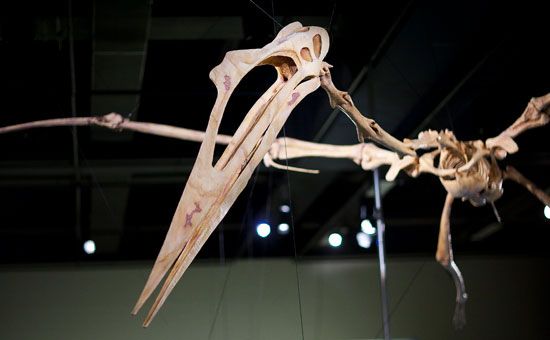
Quetzalcoatlus is a genus of giant pterosaurs belonging to the family Azhdarchidae, which includes some of the largest flying animals in history. These…
What is Quetzalcoatlus?
Quetzalcoatlus is a genus of giant pterosaurs belonging to the family Azhdarchidae, which includes some of the largest flying animals in history. These creatures lived during the Cretaceous Period and are named after the Aztec deity Quetzalcóatl1.1
The genus consists of two species:
- Q. northropi: Widely considered the largest flying creature to ever live, it stood about 5 meters (16 feet) tall with a wingspan of up to 11 meters (36 feet).1
- Q. lawsoni: A smaller species with a wingspan of approximately 4.5–6 meters (15–20 feet).1
Quetzalcoatlus had long, toothless jaws, suggesting it likely probed for food in marshy environments rather than hunting dinosaurs. Despite their massive size, evidence indicates that Q. northropi was capable of flight, likely taking off by leaping into the air before soaring.12
How do pterosaurs differ from birds?
While both pterosaurs and birds evolved the ability to fly, they are distinct groups with different evolutionary histories and anatomical structures.
Evolutionary Origins
- Pterosaurs: These were the first vertebrates to achieve flight, appearing in the Late Triassic Epoch. Although they are often confused with dinosaurs, they are a separate group of archosaurs.45
- Birds: Birds are descendants of small theropod dinosaurs4. Ornithologists classify birds as a branch of dinosaurs themselves, meaning they are technically living dinosaurs.5
Anatomical Differences
- Wing Structure: The most significant difference lies in the wing. Bird wings are supported by feathers and the structure of the arm. In contrast, pterosaur wings consisted of a skin membrane attached to an elongated fourth finger, with no fifth finger present.4
- Feathers vs. Membranes: Birds are defined by the presence of feathers, which evolved for insulation or display long before they were adapted for flight. Pterosaurs lacked feathers; instead, their wings were strengthened by a system of fine, parallel keratinous fibers.654
- Skeletal Features: While both groups possess hollow, lightweight bones to facilitate flight, their skeletal arrangements differ significantly, particularly in the hand and wrist joints used to support their respective wing types.45
What other giant creatures lived during the Cretaceous Period?
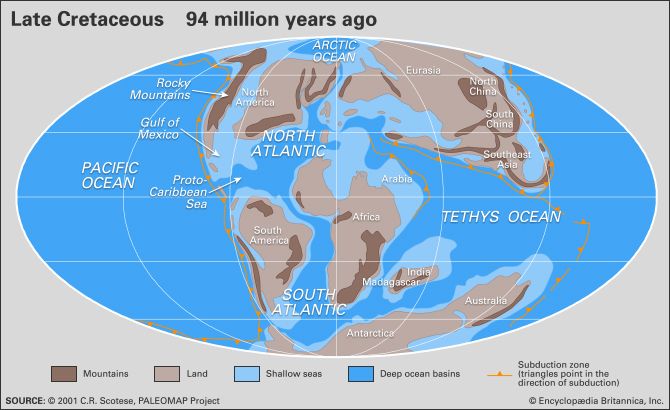
The Cretaceous Period was home to a variety of massive creatures that dominated land, sea, and air.
Terrestrial Giants
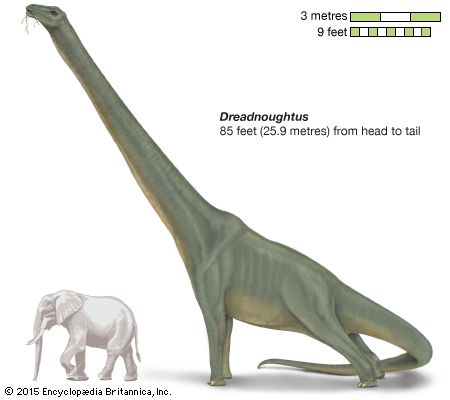
- Titanosaurs: These sauropods emerged during the second half of the Cretaceous and represent the largest land animals to ever live. Notable examples include Argentinosaurus and Dreadnoughtus, the latter of which reached lengths of 26 meters (85 feet) and weighed approximately 59 metric tons.78
- Hadrosaurs: Known as “duck-billed” dinosaurs, these herbivores were dominant in the Late Cretaceous. Large forms like Shantungosaurus were among the most prominent plant-eaters of the era.910
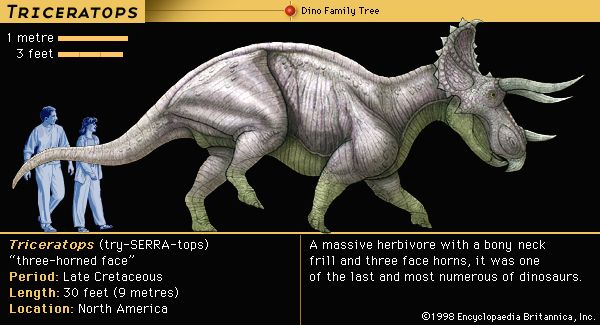
- Ceratopsians: These horned dinosaurs, such as the well-known Triceratops, inhabited western North America during the Maastrichtian Age and were characterized by their specialized shearing teeth.89
- Theropods: The carnivorous Tyrannosaurus remains one of the most iconic and massive predators of the Late Cretaceous.8
Marine and Aerial Giants
- Marine Reptiles: The seas were populated by giant reptiles, including mosasaurs, plesiosaurs, and ichthyosaurs.10
- Pterosaurs: These flying reptiles dominated the skies, with the giant Quetzalcoatlus reaching a wingspan of approximately 15 meters (49 feet).810
How do paleontologists determine the weight of extinct animals?
Paleontologists use several methods to estimate the body mass of extinct animals, primarily by analyzing skeletal remains. Because soft tissues do not typically fossilize, researchers rely on the following techniques:
- Limb Bone Measurements: The diameter of weight-bearing bones, such as the femur, is a common metric for estimating mass. By comparing these dimensions to those of living animals, scientists can calculate a probable weight. However, this method can be complicated by anatomical factors, such as an unusual distribution of weight between forelimbs and hind limbs, which may lead to over- or underestimations.11
- Dental Analysis: In some cases, the size of an animal’s teeth is used to infer body mass. This approach is often less reliable than limb bone analysis, particularly for species with highly specialized dentition that does not follow standard scaling patterns.11
- Skeletal Reconstruction: Researchers may create mechanical or digital reconstructions of an animal’s skeleton to model its physical proportions and potential mass.12
These estimates are inherently subject to uncertainty, and paleontologists often compare results from different skeletal elements to refine their findings.
Sources
- Quetzalcoatlus — Encyclopædia Britannica
- Quetzalcoatlus: Top Questions — Encyclopædia Britannica
- Quetzalcóatl — Encyclopædia Britannica
- dinosaur - Dinosaur descendants — Encyclopædia Britannica
- pterosaur — Encyclopædia Britannica
- Origins of Birds — Encyclopædia Britannica
- sauropod — Encyclopædia Britannica
- Cretaceous Period - Terrestrial life — Encyclopædia Britannica
- dinosaur - The plant eaters — Encyclopædia Britannica
- Cretaceous Period — Encyclopædia Britannica
- Phoberomys — Encyclopædia Britannica
- tyrannosaur - Other skeletal features — Encyclopædia Britannica
- human evolution - Increasing brain size — Encyclopædia Britannica
Published on · 3 min read