Ramapithecus
The discovery of Ramapithecus initially led anthropologists to believe it was the earliest direct ancestor of modern humans. In the 1960s, researcher Elwyn…
How did the discovery of Ramapithecus impact theories of human origins?
The discovery of Ramapithecus initially led anthropologists to believe it was the earliest direct ancestor of modern humans. In the 1960s, researcher Elwyn Simons argued that the shape of its jaw and teeth represented a transitional stage between apes and humans, suggesting the evolutionary split occurred at least 15 million years ago.1
This theory was later challenged by molecular studies of blood proteins, which indicated a much more recent divergence. The hypothesis was ultimately overturned in the 1970s when a complete jaw fossil revealed a V-shaped structure inconsistent with the human lineage. It is now understood that Ramapithecus is not a human ancestor but is instead closely related to—or a member of—the genus Sivapithecus, which is ancestral to the orangutan.1
What other fossil primate genera are closely related to Ramapithecus?
The fossil primate genus most closely related to Ramapithecus is Sivapithecus. In fact, because their fossil remains are often recovered from the same deposits in the Siwālik Hills of northern Pakistan and India, many authorities consider them to be the same species, with Ramapithecus likely being a junior synonym that should be included within the Sivapithecus genus.21
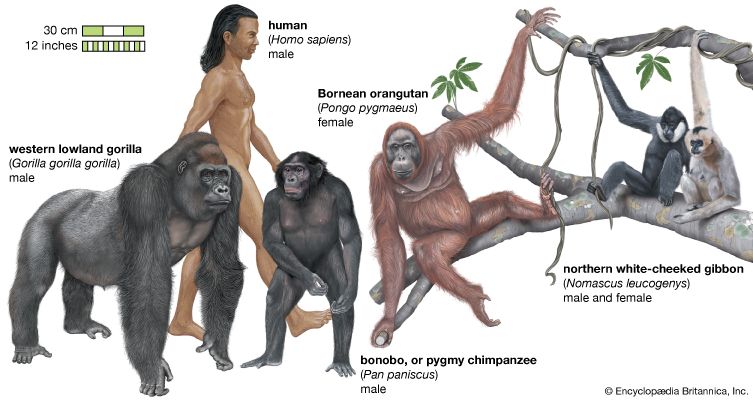
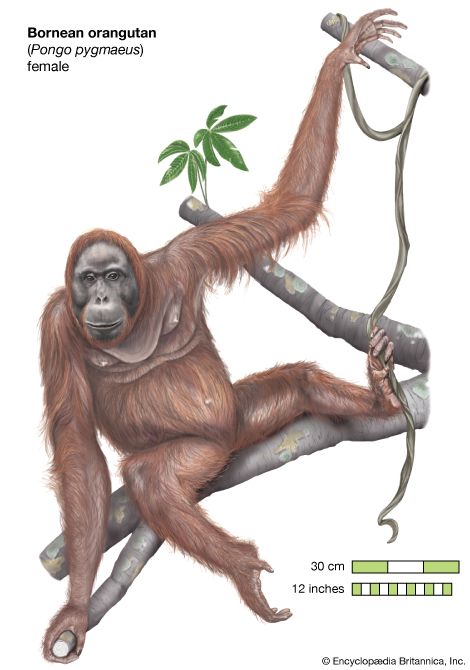
Beyond this primary association, Sivapithecus—and by extension the group containing Ramapithecus—is also considered related to Dryopithecus4. While Ramapithecus was once mistakenly identified as a direct human ancestor, it is now understood to be part of a lineage ancestral to the modern orangutan, sharing specialized facial features such as a concave face and narrowly set eyes.21
How do paleontologists study and reconstruct information about extinct primates like Ramapithecus?
Paleontologists reconstruct the history of extinct primates like Ramapithecus by integrating diverse scientific disciplines to interpret the fossil record. This process has evolved significantly since the 1950s, moving away from simple morphological descriptions toward a more rigorous, evidence-based approach.6
Key methods used in these reconstructions include:
- Comparative Anatomy: Researchers study body structures to identify homologous traits—features shared by different species due to common ancestry—which helps clarify evolutionary relationships.7
- Geologic and Environmental Analysis: Techniques such as palynology (the study of fossil pollen) and paleoclimatology allow scientists to reconstruct the ancient environments in which these primates lived.6
- Taphonomy: This involves the interpretation of fossil sites to understand how remains were deposited and preserved, helping to distinguish between genuine biological evidence and recent intrusions or fraudulent finds.6
- Molecular Genetics: Advances in molecular biology have provided a critical check on fossil interpretations, helping to resolve debates about the timing of evolutionary splits and the classification of various taxa.6
- Cladistic Methodology: Most modern paleontologists now use cladistics to ensure that taxonomic groups are monophyletic, meaning they include all descendants of a common ancestor8.
What is the current understanding of Ramapithecus’ relationship to human evolution?
The long-held theory that Ramapithecus was a direct ancestor of modern humans is now considered incorrect. During the 1960s and 1970s, researchers hypothesized that its jaw and tooth morphology represented the initial evolutionary divergence of the human lineage from common hominoid stock.1
However, this view was challenged by molecular studies of blood proteins, which indicated that the split between humans and apes occurred much later than the age of Ramapithecus fossils. By the early 1980s, the discovery of a complete, V-shaped jaw—distinct from the parabolic shape characteristic of the human lineage—led scientists to abandon the theory.1
Current scientific consensus identifies Ramapithecus as a member of the genus Sivapithecus, which is now recognized as an ancestor of the modern orangutan. The genus shares specialized facial features with orangutans, such as a concave face and narrowly set eyes, confirming its place in the evolutionary history of great apes rather than humans.12
Sources
- Ramapithecus — Encyclopædia Britannica
- Sivapithecus — Encyclopædia Britannica
- list of primates — Encyclopædia Britannica
- Sivapithecus — Merriam-Webster
- primate - Miocene — Encyclopædia Britannica
- primate - Paleocene — Encyclopædia Britannica
- primate - Eocene — Encyclopædia Britannica
- primate - Renewed interest in primate origins — Encyclopædia Britannica
- primate - Pliocene — Encyclopædia Britannica
- primate - Cretaceous — Encyclopædia Britannica
- Comparative anatomy — Encyclopædia Britannica
Published on · 3 min read