Sivapithecus
The provided search results do not list specific species within the Sivapithecus genus. While the genus is identified as a fossil primate from the Miocene…
What species are included in the Sivapithecus genus?
The provided search results do not list specific species within the Sivapithecus genus. While the genus is identified as a fossil primate from the Miocene Epoch and is considered a likely ancestor of the modern orangutan, the available information does not enumerate the individual species classified under it.12
Some authorities have noted that Sivapithecus and the related genus Ramapithecus may actually represent the same species, but a comprehensive list of species within the Sivapithecus genus is not provided in the current knowledge base.1
What is Sivapithecus and when did it live?
Sivapithecus is a genus of fossil primates that lived during the Miocene Epoch, approximately 17 million to 8 million years ago.1
Once mistakenly considered a potential early ancestor of humans, Sivapithecus is now widely recognized by scientists as the direct ancestor of the modern orangutan. This conclusion is supported by shared specialized facial features, such as a concave face, narrowly set eyes, and specific dental characteristics.1
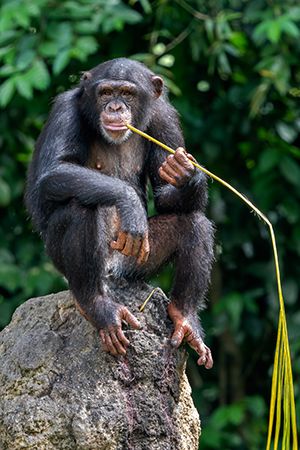
Fossil remains have been discovered across a wide geographic range, including sites in Pakistan, Turkey, China, Greece, and Kenya. While it was a small-to-medium-sized ape—roughly the size of a modern chimpanzee—it is closely related to the genus Ramapithecus, with some researchers suggesting the two may represent the same species.1
What are some of the challenges in studying and interpreting Sivapithecus fossils?
Studying and interpreting Sivapithecus fossils has historically presented significant challenges, primarily due to the difficulty of accurately placing the genus within the primate evolutionary tree.
- Misinterpretation of Evolutionary Status: For decades, Sivapithecus (along with the related genus Ramapithecus) was incorrectly identified as an early human ancestor. Researchers initially interpreted its dental and jaw morphology as transitional between apes and humans, a theory that gained wide acceptance in the 1960s and 1970s.15
- Conflict with Molecular Evidence: The initial interpretation was challenged by biochemical studies of blood proteins, which suggested that the divergence between humans and apes occurred much later than the age of the Sivapithecus fossils. These findings were initially dismissed by anthropologists before eventually being confirmed by further fossil discoveries.5
- Taxonomic Ambiguity: There has been ongoing debate regarding the relationship between Sivapithecus and Ramapithecus. Some authorities have argued that they are the same species, leading to complications in classification and the interpretation of their respective fossil remains.15
- Re-evaluation of Morphology: It was not until the 1980s, following the discovery of more complete specimens—such as a complete Ramapithecus jaw—that scientists reclassified Sivapithecus as an ancestor of the modern orangutan rather than a human ancestor.15
How is Sivapithecus related to modern great apes and humans?
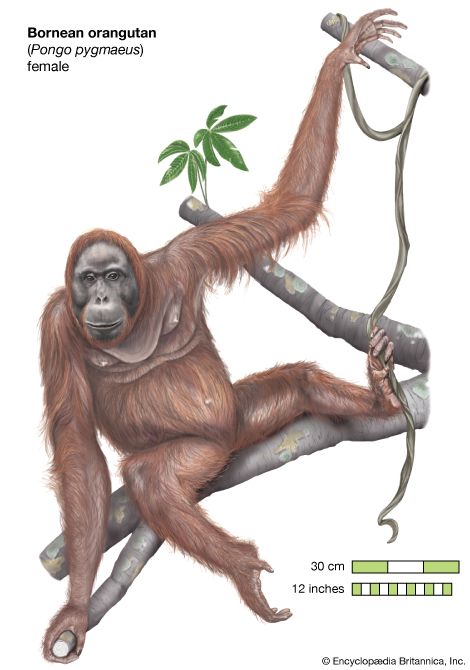
Sivapithecus is a genus of fossil primates from the Miocene Epoch that is widely recognized today as the direct ancestor of the modern orangutan.110
Relationship to Great Apes and Humans
For many years, Sivapithecus was incorrectly interpreted as an early human ancestor due to its mix of apelike and humanlike features. However, research in the 1980s—supported by the discovery of more complete facial skeletons—confirmed that the genus shares specialized facial characteristics with orangutans, such as a concave face, narrowly set eyes, and enlarged central incisors.1710
Because Sivapithecus is identified as part of the orangutan lineage, it is considered to have diverged from the common ancestor shared by humans, chimpanzees, and gorillas more than 13 million years ago. While Sivapithecus was once grouped with the genus Ramapithecus as a potential human ancestor, scientists now generally view Ramapithecus as either a close relative or the same species as Sivapithecus, placing both firmly within the orangutan evolutionary line rather than the human lineage.17
Sources
- Sivapithecus — Encyclopædia Britannica
- Sivapithecus — Merriam-Webster
- list of primates — Encyclopædia Britannica
- human evolution - Background and beginnings in the Miocene — Encyclopædia Britannica
- Ramapithecus — Encyclopædia Britannica
- primate - Paleocene — Encyclopædia Britannica
- primate - Pliocene — Encyclopædia Britannica
- primate - Eocene — Encyclopædia Britannica
- Miocene Epoch — Encyclopædia Britannica
- primate - Miocene — Encyclopædia Britannica
Published on · 3 min read