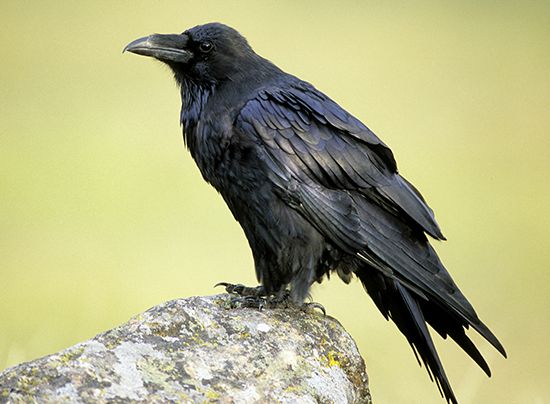
Raven
Ravens have long held significant roles in global mythology and culture, often serving as complex symbols that bridge the gap between the natural and…
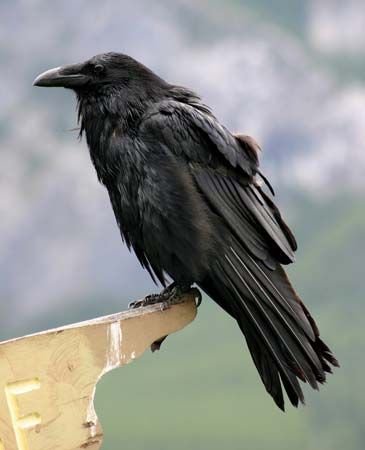
What role do ravens play in various mythologies and cultures around the world?
Ravens have long held significant roles in global mythology and culture, often serving as complex symbols that bridge the gap between the natural and supernatural worlds.
- Norse Mythology: In the traditions of the Norse, the raven was sacred to Odin, the principal god. Alongside the wolf, the raven was dedicated to him, reflecting his role as a god of war and wisdom.1
- Northwest Pacific Coast: Among Native American cultures of the Northwest Pacific, the Raven cycle features the bird as a central culture hero and trickster-transformer. These stories describe Raven as a clever, often greedy figure whose actions—sometimes born of deception or bungling—precipitate chaos and ultimately lead to the creation of the world as humans know it, including the formation of rivers, lakes, and mountains.2
- Universal Symbolism: More broadly, the common raven has been viewed as a near-universal symbol of dark prophecy, associated with death and disease. However, its high intelligence and fearless nature have also earned it a place in heraldry and earned it admiration for its perceived nobility and ability to plan for the future.3
Where are ravens typically found, and what habitats do they prefer?
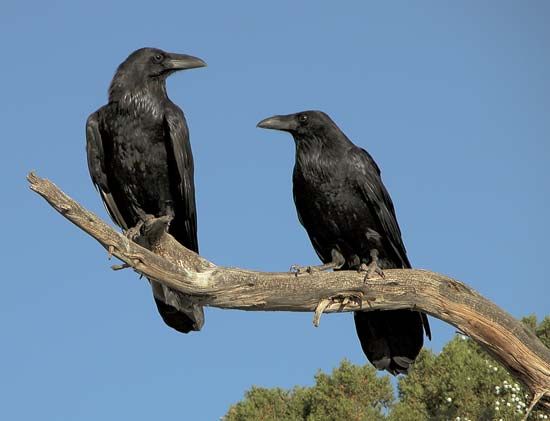
Common ravens (Corvus corax) are widely distributed throughout the Northern Hemisphere, inhabiting North America, Europe, Asia, and North Africa. While they are highly adaptable, they are most commonly found in wilder, undisturbed regions.51
These birds thrive in a diverse array of environments, including:
- Forests: Both coniferous and broadleaf forests, as well as boreal forestsleaf forests, as well as boreal forests.51
- Open and Barren Landscapes: Tundra, deserts, and steppes.51
- Rugged Terrain: Mountains and coastal areas featuring high cliffs.51
While they are occasionally spotted in large cities, they do not typically reside in urban areas. Common ravens are generally year-round residents of their chosen habitats, though some northern populations may shift southward during the winter. They are known to build their nests in elevated, secure locations such as cliffs, large trees, and occasionally human-made structures like utility poles or bridges.51
What are the physical characteristics that distinguish ravens from other birds?
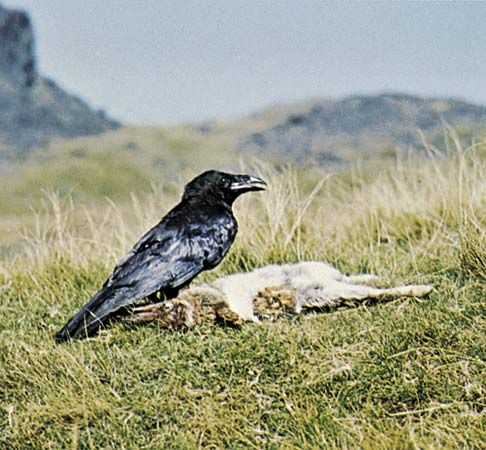
Ravens are large, highly intelligent birds belonging to the Corvidae family. They are physically distinguished from their close relatives, the crows, by several key characteristics:
- Size and Build: Ravens are significantly larger than crows, with a thicker neck and a more robust, heavier bill.651
- Plumage: While both birds are black, ravens possess shaggier throat feathers and their glossy black plumage often displays a distinct blue or purple iridescence.51
- Tail Shape: When in flight, a raven’s tail appears wedge- or diamond-shaped, whereas a crow’s tail is more rounded or fan-shaped.65
- Flight Behavior: Ravens are frequently observed soaring with outstretched wings, while crows tend to flap their wings more consistently during flight.5
- Vocalizations: Ravens are known for a low-toned, guttural “croaking” sound, which differs from the typical “caw” of a crow.651
While most ravens are entirely black, some species, such as the white-necked raven, feature distinct white or brown markings on their feathers.1
How do ravens communicate with each other, and what types of vocalizations do they use?
Ravens are exceptionally skilled communicators, employing a sophisticated repertoire of more than 30 distinct vocalizations to interact with one another. Their communication is characterized by a variety of sounds, including low-toned, guttural “croaking,” gurglings, and a sharp, metallic “tok” sound.57
Beyond their natural calls, ravens demonstrate remarkable vocal flexibility. They are capable of mimicking the sounds of other bird species, and individuals kept in captivity can even learn to imitate human speech and other environmental noises.57
This vocal complexity is a key component of their highly intelligent social structure. Ravens use these sounds to recognize individual ravens and humans, and they engage in playful interactions with both their own kind and other animals. Their ability to communicate effectively supports their complex social lives, which often involve living in pairs, defending territories, and coordinating during foraging activities.571
Sources
- Raven — Encyclopædia Britannica
- Raven cycle — Encyclopædia Britannica
- The Story of 'Ravenous' and 'Ravishing' — Merriam-Webster
- Odin — Encyclopædia Britannica
- Common raven — Encyclopædia Britannica
- What's the difference between ravens and crows? — Merriam-Webster
- 15 Bird Sounds and the Birds Who Make Them | Croak — Merriam-Webster
Published on · 3 min read