Red Tide
A red tide is a phenomenon characterized by the discoloration of sea water, typically caused by periodic population explosions, or "blooms," of…
What is a red tide and what causes it?
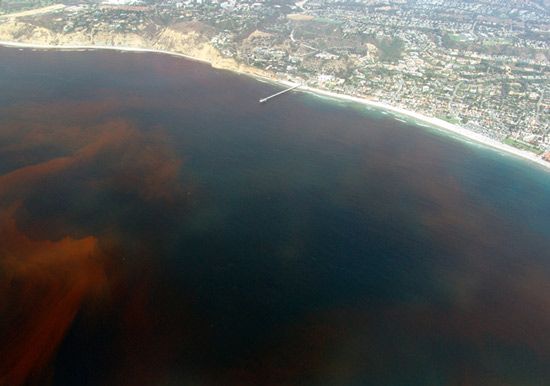
A red tide is a phenomenon characterized by the discoloration of sea water, typically caused by periodic population explosions, or “blooms,” of dinoflagellates. These organisms release toxic substances that can be lethal to fish, birds, and other marine life. Furthermore, these toxins can become a public health concern when breaking waves release them into the air, causing respiratory irritation in humans.1
The exact causes of red tides remain a subject of scientific study. While researchers are not entirely certain about the triggers, some evidence suggests that human activity can act as a catalyst. Specifically, the discharge of nutrient-rich agricultural runoff into coastal waters can augment or trigger these toxic algal blooms. Because these events can severely damage ecosystems and local economies, understanding the link between environmental pollution and these blooms is a critical area of ongoing research.23
How do red tides differ from other types of harmful algal blooms?
“Red tide” is a specific term for a type of harmful algal bloom that causes a visible discoloration of seawater, typically turning it shades of red, amber, or yellow due to the high concentration of dinoflagellates. While all red tides are harmful algal blooms, not all harmful blooms are red tides.14
The primary differences lie in the organisms involved and the environmental impacts:
- Organisms: Red tides are specifically associated with dinoflagellates. Other harmful blooms can be caused by a wider variety of phytoplankton, including diatoms and cyanobacteria.135
- Airborne Toxicity: A unique characteristic of many red tides is the release of wind-sprayed toxic cells. When these blooms are near the shore, breaking waves can aerosolize the toxins, causing respiratory and skin irritation in humans and other air-breathing animals.163
- Mechanism of Harm: While many harmful blooms kill fish by depleting oxygen levels or physically clogging gills, red tides are particularly noted for the potent neurotoxins they release directly into the water, which can lead to mass mortality events in marine life and render shellfish poisonous to humans.165
What are some of the most notable red tide events in history?
Several notable red tide events have been documented throughout history, often resulting in significant ecological damage and public health concerns:
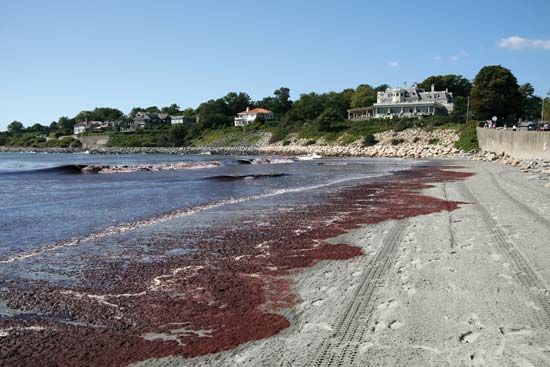
- Florida Coast (1947): A massive bloom of the species Gymnodinium brevis occurred off the coast of Florida. The concentration reached up to 50 million cells per liter, causing the water to shift in color from green to yellow and finally to amber. This event resulted in the death of thousands of fish.1
- Northumberland Coast, England (1968): A significant red tide event in this region led to the widespread death of many sea birds.1
- California and Portugal: These regions have experienced recurring red tides caused by the dinoflagellate Gonyaulax polyedra, which are known for their impact on local marine environments.1
- Eastern United States: Increased nutrient enrichment has led to more frequent toxic blooms of Pfiesteria piscicida. This dinoflagellate is particularly noted for its ability to kill fish and cause skin rashes and other health issues in humans.3
- The Red Sea: Historically, the Red Sea is believed to have been named for the occasional blooms of the alga Trichodesmium erythraeum, which can discolor the water.2
How do red tides affect marine ecosystems and wildlife?
Red tides, which are periodic blooms of dinoflagellates, significantly disrupt marine ecosystems and wildlife through several mechanisms.12
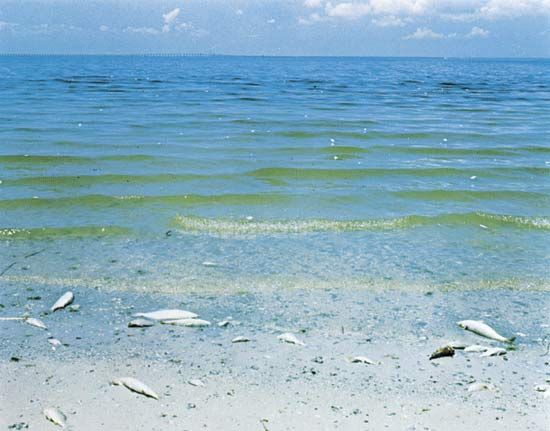
- Toxin Release: These organisms release potent toxins into the water that can be lethal to fish, marine mammals, and birds. For example, neurotoxins produced by species like Gymnodinium breve are notorious for causing mass fish kills.152
- Bioaccumulation: Toxins can accumulate in shellfish, rendering them poisonous to the predators that consume them, including humans and other marine animals.12
- Physical and Environmental Stress: Dense blooms can block sunlight, hindering the growth of underwater plants. Furthermore, as these massive populations of algae die and decompose, they consume vast amounts of dissolved oxygen, creating hypoxic conditions that suffocate bottom-dwelling organisms like crabs, shrimp, and marine worms.53
- Airborne Impacts: When red tides occur near the shore, breaking waves can aerosolize toxic cells. This creates health hazards not only for marine life but also for air-breathing animals and humans, causing respiratory and skin irritation.12
Sources
- Red tide — Encyclopædia Britannica
- conservation - Pollution — Encyclopædia Britannica
- water pollution: Top Questions — Encyclopædia Britannica
- Algae - Toxicity — Encyclopædia Britannica
- Harmful Algal Blooms — Encyclopædia Britannica
- Water bloom — Encyclopædia Britannica
- Algae: Top Questions — Encyclopædia Britannica
Published on · 3 min read