Trigonia
The term Trigonia refers to two distinct biological genera:
What is Trigonia?
The term Trigonia refers to two distinct biological genera:
- Mollusks: Trigonia is a genus of bivalve mollusks that first appeared during the Jurassic Period. These organisms are characterized by their triangular shells, which feature distinctive concentric ridges and nodular outgrowths. While many forms are extinct and serve as important markers for Mesozoic rock strata, a few living species still survive along the coast of Australia.12
- Plants: The name also applies to a genus of tropical American shrubs belonging to the family Trigoniaceae. These plants are typically climbing shrubs, and the name is derived from the often triangular shape of their fruit.2
What are bivalve mollusks?
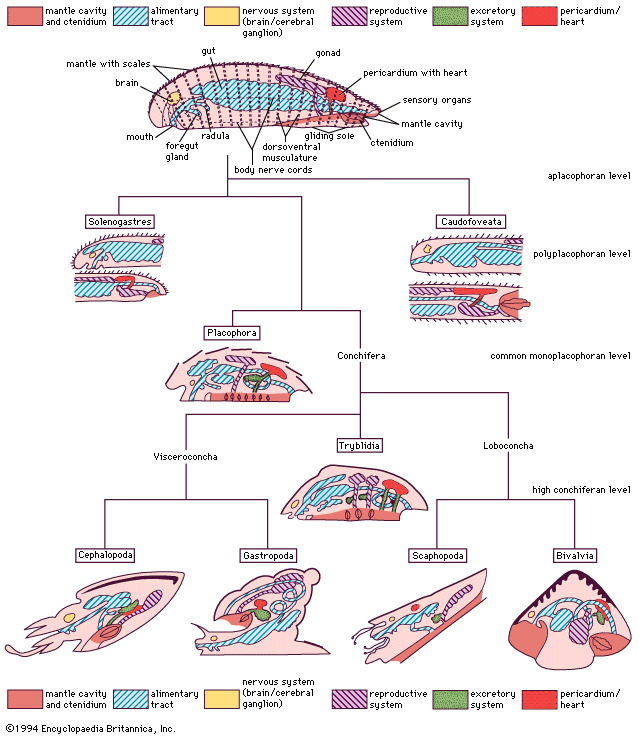
Bivalve mollusks (class Bivalvia) comprise more than 15,000 species, including clams, oysters, mussels, and scallops. They are defined by a shell divided into left and right valves connected by a hinge. Unlike most other mollusks, bivalves lack a head and a radula, having adapted to a largely sedentary, filter-feeding lifestyle.3
Key Characteristics
- Anatomy: In most species, respiratory gills have evolved into specialized filtration organs called ctenidia. Many species utilize siphons to breathe and feed while buried in sediment.345
- Adaptations: Bivalves exhibit diverse body forms suited to their habitats. Some use a muscular foot for digging, while others use proteinaceous byssal threads to anchor themselves to hard surfaces.45
- Diversity: They range in size from one millimeter to the giant clam, which can exceed 137 centimeters in length.4
Economic and Ecological Importance
Bivalves are a major global food source, with millions of metric tons harvested annually. Beyond their role in human nutrition, they are significant in bioerosion and pearl production. However, they can also concentrate toxins from red tides and cause economic damage by clogging industrial water systems.6
Why are fossils important for dating geological periods?
Fossils are essential for dating geological periods because they provide a reliable, predictable record of Earth’s history through the law of faunal succession. This principle observes that fossilized plants and animals succeed one another in a specific, orderly manner over time, allowing geologists to correlate rock strata across different geographic regions.7
The utility of fossils in this process relies on several key factors:
- Index Fossils: Certain organisms, known as index fossils, are particularly valuable because they were abundant, widely distributed, and existed for only a short span of geologic time. Their presence in a rock layer acts as a “marker” for a specific interval of time.8
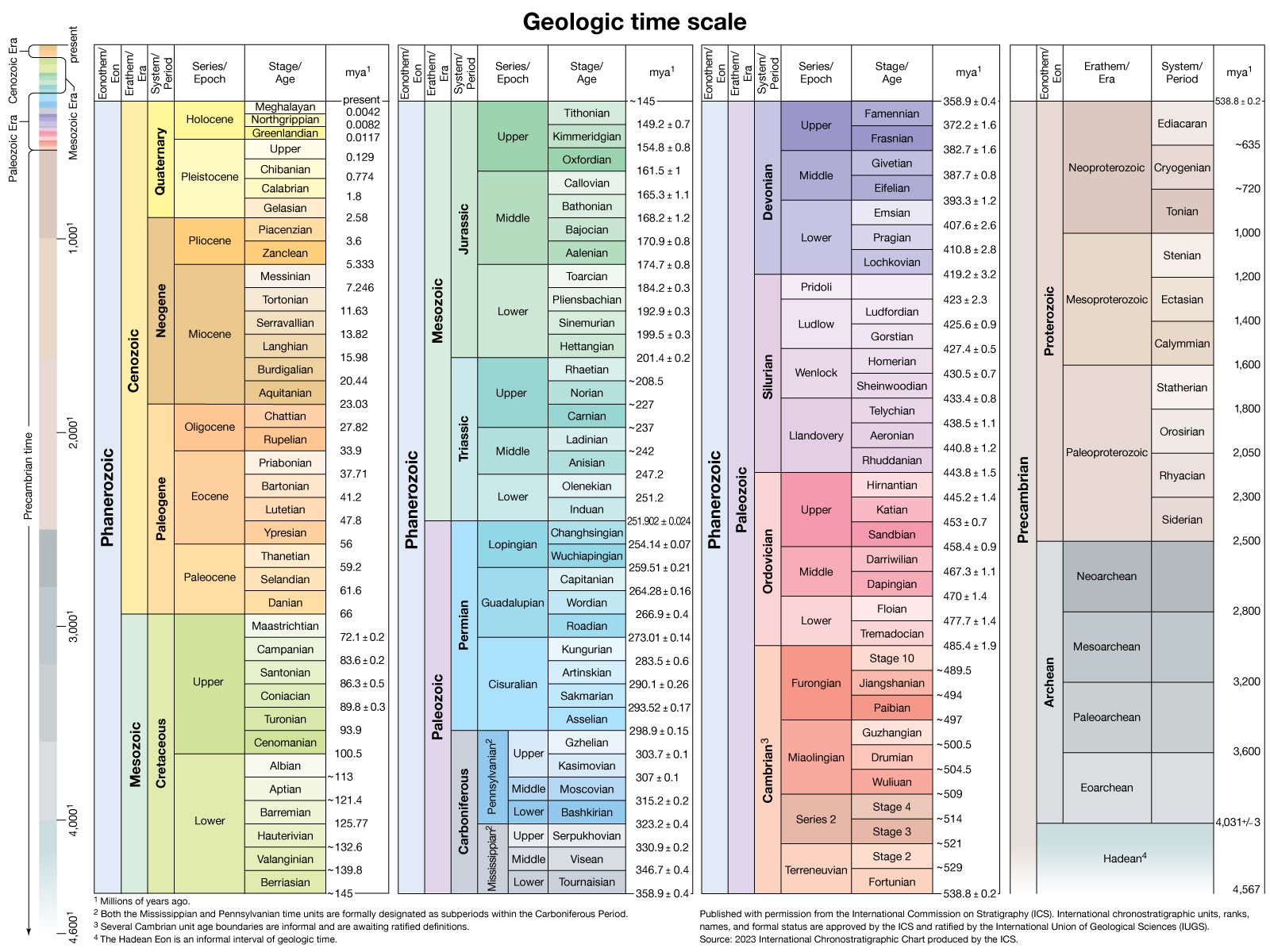
- Evolutionary Change: Because life forms have evolved over time, the emergence and disappearance of specific species in the fossil record serve as the primary basis for delineating the boundaries of geologic ages, epochs, and periods.910
- Correlation: By comparing overlapping sequences of fossils found in different locations, scientists can build a continuous, global timeline of Earth’s history.10
While fossils provide the relative framework for this “calendar,” modern geochronology often integrates these findings with absolute dating methods, such as isotopic analysis, to calibrate the fossil record and achieve precise numerical ages.911
What makes the Mesozoic Era significant in Earth’s history?
The Mesozoic Era (252.2 to 66 million years ago) is a pivotal period in Earth’s history, often referred to as the “age of reptiles” due to the dominance of dinosaurs on land. It serves as a bridge between the Paleozoic and Cenozoic eras, characterized by profound biological and geological transformations.1314
Biological Significance
The era saw a “modernization” of life following the massive extinction at the end of the Paleozoic. Key evolutionary milestones include:13
- Diversification: The emergence of the first true mammals, birds, and angiosperms (flowering plants).15
- Marine Revolution: The “Mesozoic Marine Revolution” saw marine organisms evolve complex defenses and predatory behaviors in response to increasing ecological pressures.15
- Extinction Events: The era is framed by three of Earth’s five largest mass extinctions, including the K-Pg event that ended the era and led to the demise of the dinosaurs.1315
Geological Significance
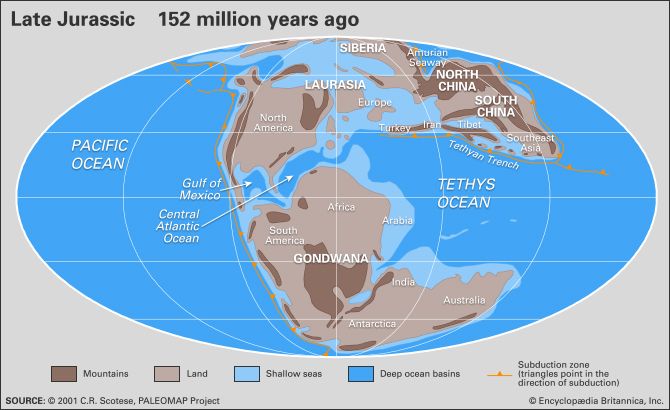
The Mesozoic was defined by the breakup of the supercontinent Pangeascience/supercontinent) Pangea. As continents drifted toward their modern configurations, significant mountain building occurred, including the formation of the Rocky Mountains. Additionally, global sea levels rose significantly, flooding continental interiors and creating vast, shallow seas.16
Sources
- Trigonia — Encyclopædia Britannica
- Trigonia — Merriam-Webster
- bivalve — Encyclopædia Britannica
- bivalve - Size range and diversity of structure — Encyclopædia Britannica
- bivalve - Importance — Encyclopædia Britannica
- bivalve - Internal features — Encyclopædia Britannica
- index fossil — Encyclopædia Britannica
- law of faunal succession — Encyclopædia Britannica
- geologic time — Encyclopædia Britannica
- dating - Distinctions between relative-age and absolute-age measurements — Encyclopædia Britannica
- fossil record — Encyclopædia Britannica
- Tertiary Period - Correlation of Tertiary strata — Encyclopædia Britannica
- Mesozoic Era — Encyclopædia Britannica
- Mesozoic Era - Mesozoic life — Encyclopædia Britannica
- reptilian age — Merriam-Webster
- Mesozoic Era - Mesozoic geology — Encyclopædia Britannica
Published on · 3 min read