Redshank
The term "redshank" refers to two species of shorebirds in the family Scolopacidae, specifically the common redshank and the spotted redshank, both…
How have redshanks been portrayed in literature, art, or folklore?
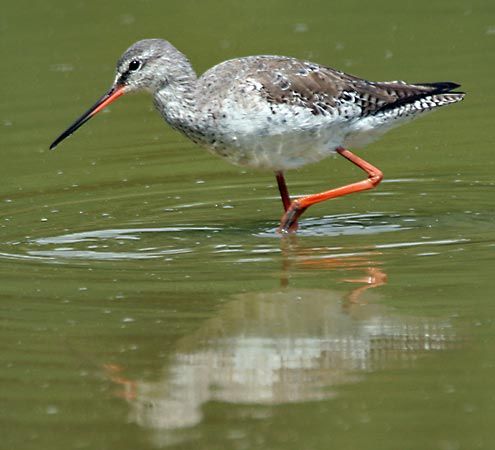
The term “redshank” refers to two species of shorebirds in the family Scolopacidae, specifically the common redshank and the spotted redshank, both characterized by their distinctive reddish legs.1
While these birds have been recognized in the English language since at least 1525, the provided information does not contain details regarding their specific portrayals in literature, art, or folklore. Consequently, I cannot provide an account of their cultural or symbolic significance in those fields based on the available data.2
What are the breeding habits and nesting behaviors of redshanks?
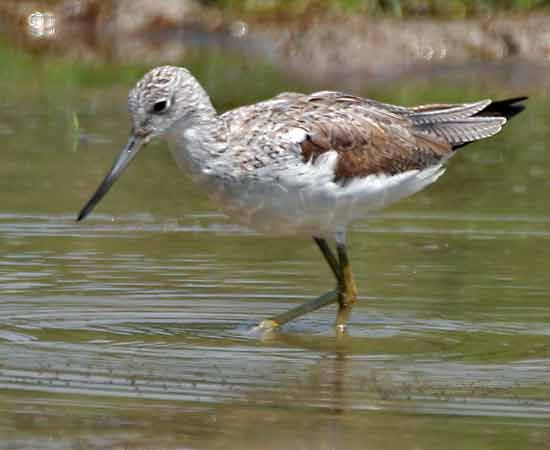
Redshanks, which include the common redshank and the spotted redshank, are shorebirds belonging to the family Scolopacidae. While specific breeding details for these two species are not provided in the search results, the subfamily Tringinae—to which they belong—exhibits behaviors common to many shorebirds, as illustrated by the greenshank.13
General breeding and nesting behaviors for this group include:
- Territory and Nesting: Birds often return to the same breeding territory and mate annually. Nests are typically constructed as scrapes on the ground, often near landmarks like trees, stumps, or boulders, and may be reused over several years.3
- Courtship: Males often perform elaborate flight songs to attract mates and defend territory. Aggressive displays between males can involve fanned tails, bill-to-bill posturing, and flutter-leaping.3
- Incubation and Care: Both parents typically develop incubation patches and share the responsibility of sitting on the eggs, which usually number four. Males often take the night shift.3
- Chicks: Downy young are precocial, meaning they leave the nest within their first day of life. Parents protect them through alarm calls, and the chicks are brooded during storms or at night until they are sufficiently feathered and able to fly.3
Are there different species of redshanks, and if so, how do they differ?
Yes, there are two distinct species of Old World shorebirds known as redshanks, both belonging to the family Scolopacidae and characterized by their long, reddish legs.1
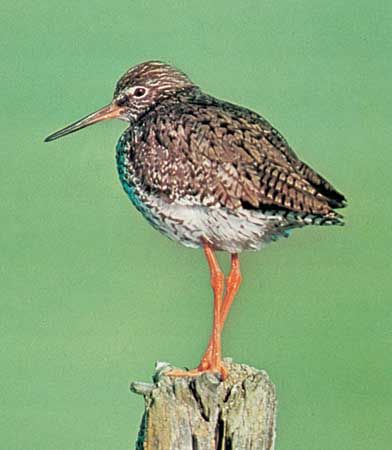
Common Redshank (Tringa totanus)
The common redshank is approximately 30 cm (12 inches) long. Its physical features include:
- Legs: Orange-red in color.1
- Plumage: Brownish or gray upper parts, with white visible on the rump and the hind edge of the wing.1
- Bill: Reddish with a black tip, and notably upturned.1
- Range: It nests in wet meadows across Europe, Britain, Iceland, the Middle East, and temperate Asia, wintering as far as Africa and the Philippines.1
Spotted Redshank (T. erythropus)
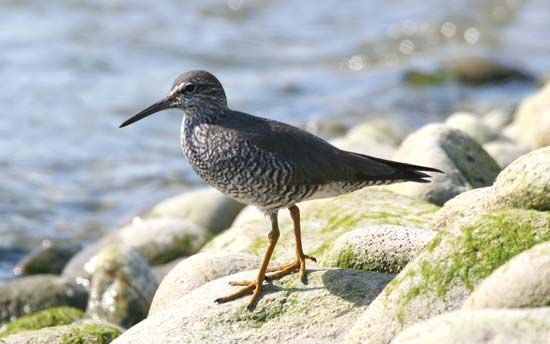
The spotted redshank, also known as the dusky or black redshank, is slightly larger than the common redshank.15
- Legs: Reddish-brown.1
- Plumage: Displays seasonal variation; it is black during the breeding season and gray in the winter.1
- Bill: Straight, red with a brown tip.1
- Range: It breeds across sub-Arctic Eurasia and winters from the Mediterranean region into southern Asia.1
Where are redshanks typically found in their natural habitat?
Redshanks are found across a wide range of environments, primarily depending on whether they are in their breeding or wintering phases.
Common Redshank (Tringa totanus)
The common redshank typically nests in wet meadows. Its breeding range is extensive, spanning from Iceland, Britain, and much of continental Europe to the Middle East and temperate Asia. Notably, they can be found at high altitudes, reaching up to 4,500 meters (about 15,000 feet) in the Himalayas. During the winter, they migrate to warmer regions, ranging from Africa to the Philippines.1
Spotted Redshank (T. erythropus)
The spotted redshank, or dusky redshank, occupies more northern latitudes during the breeding season, nesting across sub-Arctic Eurasia. In the winter, they move to milder climates, typically found from the Mediterranean region into southern Asia.1
Sources
- Redshank — Encyclopædia Britannica
- redshank — Merriam-Webster
- Charadriiform - Shorebirds (suborder Charadrii) — Encyclopædia Britannica
- Animal social behavior - Social interactions involving the costs and benefits of parental care — Encyclopædia Britannica
- spotted redshank — Merriam-Webster
Published on · 3 min read