Rhododendron
A rhododendron is a diverse genus of approximately 1,000 species of woody flowering plants belonging to the heath family (Ericaceae). The name, which…

What is a rhododendron?
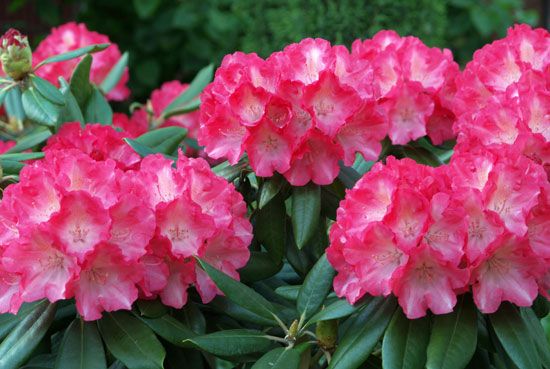
A rhododendron is a diverse genus of approximately 1,000 species of woody flowering plants belonging to the heath family (Ericaceae). The name, which translates to “red (or rose) tree,” reflects the vibrant colors and woody growth of many species, though they range in habit from low-growing, matlike shrubs to tall trees exceeding 12 meters.1
These plants are primarily native to the north temperate zone, particularly in the moist, acidic soils of the Himalayas and across Southeast Asia. While most rhododendrons are evergreen with thick, leathery leaves, some species—specifically those known as azaleas—are deciduous. Their flowers are typically tubular or funnel-shaped and appear in a wide spectrum of colors, including white, yellow, pink, scarlet, purple, and blue. Many varieties are widely cultivated as ornamental plants for their attractive foliage and showy blooms.12
What do rhododendron plants look like?
Rhododendron plants exhibit a wide range of physical forms, varying from low-growing, matlike ground covers only 10 cm (4 inches) high to tall trees that can exceed 12 meters (40 feet) in height.1
Key physical characteristics include:
- Growth Habit: They are woody plants that can be either evergreen or deciduous. Most species are evergreen with thick, leathery leaves, while those classified as azaleas are typically deciduous.13
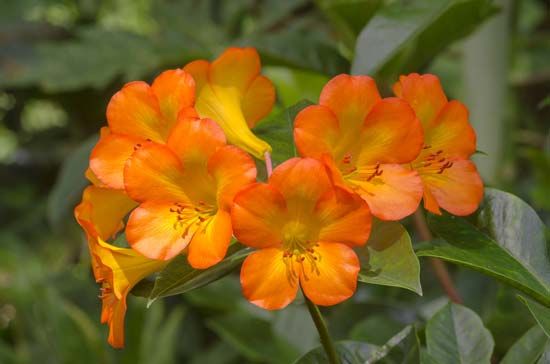
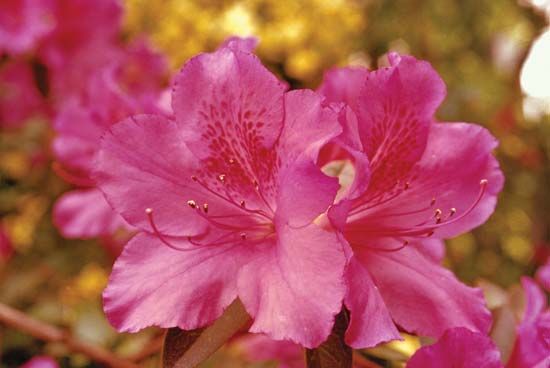
- Flowers: The blooms are a primary feature, often described as showy and ranging in color from white and yellow to pink, scarlet, purple, and blue. While shapes vary, rhododendron flowers are generally bell-shaped, whereas azalea flowers are typically funnel-shaped and often two-lipped. Additionally, rhododendrons usually possess 10 or more stamens, while azaleas typically have only five.13
- Variability: Because the genus includes approximately 1,000 species, appearances differ significantly. For example, the rhodora is a small shrub with rosy-purple flowers that appear before its leaves, while the tree rhododendron can grow into a substantial tree.12
Where are rhododendrons commonly found?
Rhododendrons are primarily native to the north temperate zone, with the greatest concentration of species found in the moist, acidic soils of the Himalayas. Their natural range extends across Southeast Asia and into the mountains of New Guinea.1
In North America, various species are also well-established:
- Southeastern United States: The catawba rhododendron (R. catawbiense) is notably abundant in the Great Smoky Mountains National Park, while the great laurel rhododendron (R. maximum) has a more northeasterly range.1
- Northeastern North America: The rhodora (R. canadense) is commonly found in swampy regions.13
- Northern Regions: Species such as the bog, marsh, and western Labrador tea are native to North American habitats.1
Additionally, some species have been introduced to other parts of the world. For instance, the common rhododendron (R. ponticum), originally from Spain, Portugal, and Turkey, has become an invasive species in the British Isles.1
How are rhododendrons important to wildlife and people?
Rhododendrons play a significant role for both people and the environment, though their impact is multifaceted and sometimes problematic.
Importance to People
- Ornamental Use: Many species are widely cultivated as ornamental plants in temperate regions due to their attractive flowers and handsome foliage.
- Traditional Uses: Certain species, specifically those known as Labrador tea (R. groenlandicum, R. tomentosum, and R. columbianum), have been used by native peoples to prepare tea beverages.
- Tourism: Plentiful populations, such as the catawba rhododendron in the Great Smoky Mountains National Park, serve as major seasonal attractions for visitors.
Impact on Wildlife and Ecosystems
- Ecological Challenges: In the British Isles, the common rhododendron (R. ponticum) has become an invasive species. It forms dense, impenetrable thickets that can suppress the growth of other native vegetation, negatively affecting local biodiversity.
- Toxicity: It is important to note that many plants in the heath family, to which rhododendrons belong, can contain toxic compounds. While the provided data does not list rhododendrons among the most dangerous poisonous plants, caution is always advised regarding the ingestion of wild plants, as many species in the region contain substances that can be harmful to humans and animals.
Sources
Published on · 3 min read