River Bann
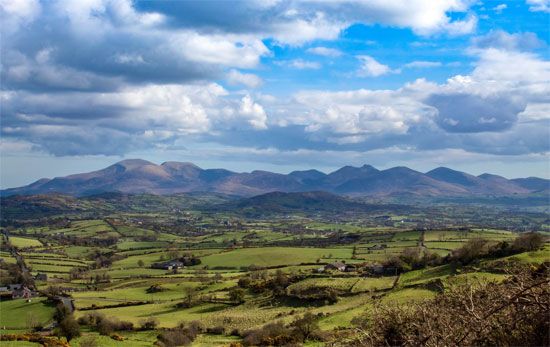
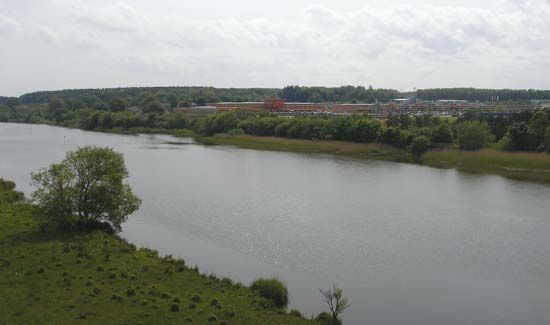
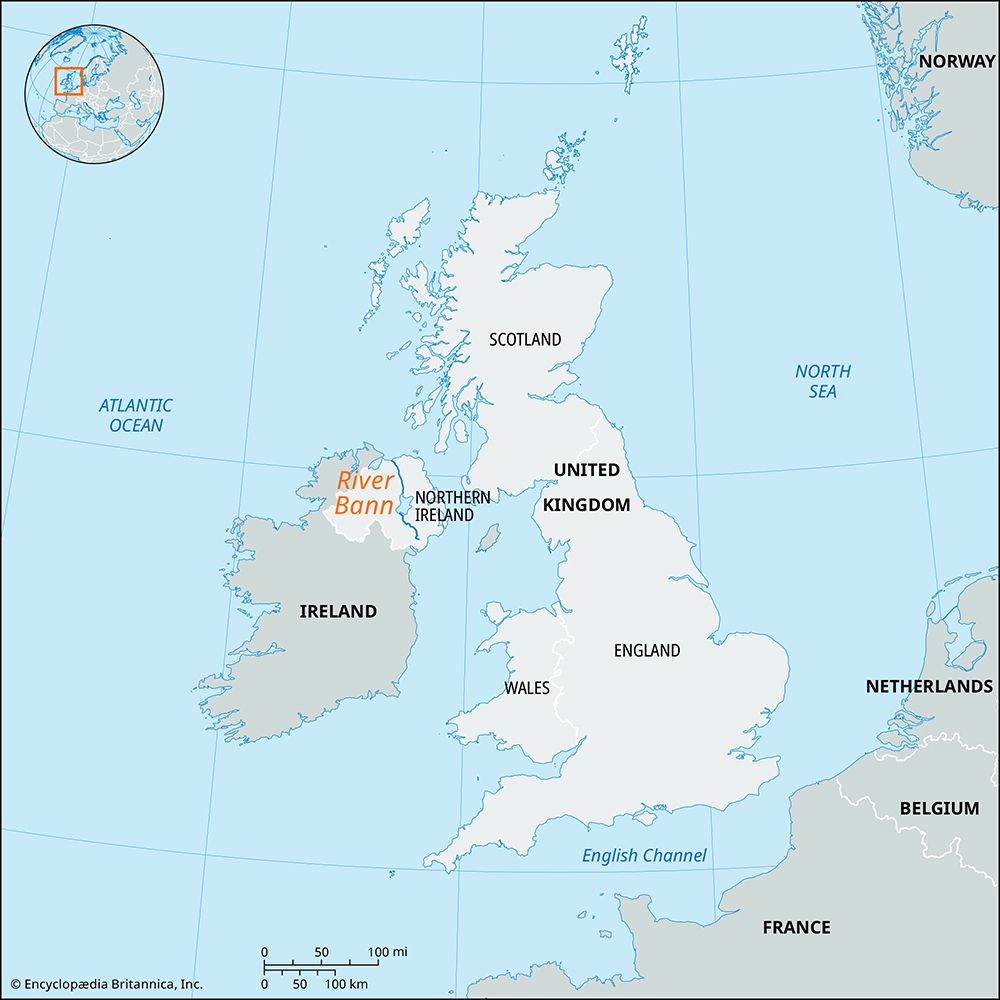
The River Bann is the longest river in Northern Ireland, spanning 80 miles (129 km). It is divided into two distinct sections:
What is River Bann?
The River Bann is the longest river in Northern Ireland, spanning 80 miles (129 km). It is divided into two distinct sections:1
- Upper Bann: Originating in the Mourne Mountains, it flows northwest into Lough Neagh. Portadown is the primary town along this stretch.1
- Lower Bann: This section carries water from Lough Neagh northward through Lough Beg, eventually reaching the sea near Coleraine.1
Historically, the river’s waterpower was essential to the development of the Ulster linen industry. Today, the river remains significant for its valuable salmon and eel fisheries, and its valley is noted for containing prehistoric remains from the Mesolithic and Neolithic periods. The river also flows through towns such as Banbridge, which developed around a stone bridge built across the water in 1712.12
How did the linen industry shape Northern Ireland’s economy?
The linen industry was a cornerstone of Northern Ireland’s economic development, serving as a primary driver of its 19th-century industrialization. The industry’s foundations were laid in the late 17th century when Huguenot refugees settled in areas like Lisburn, introducing advanced techniques such as Dutch looms.34
The industry significantly shaped the region in several ways:
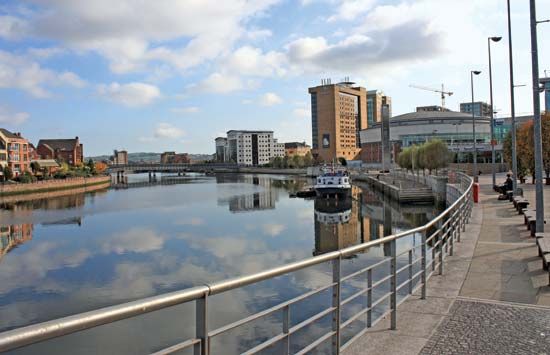
- Urban Growth: Belfast emerged as the market center for the trade, eventually becoming one of the world’s greatest linen production hubs following the mechanization of spinning and weaving.5
- Infrastructure and Power: The waterpower provided by rivers, such as the River Lagan and the River Bann, was essential for powering mills and supporting the manufacturing process.14
- Economic Identity: Along with shipbuilding, linen manufacture gave Ulster an industrial economy that contrasted sharply with the rural, agricultural south, helping to define the region’s distinct cultural and economic character.3
However, by the 1970s, the industry began a long decline as global production shifted to low-wage economies, contributing to Northern Ireland’s transition into a postindustrial society.65
What are the unique features of Lough Neagh?
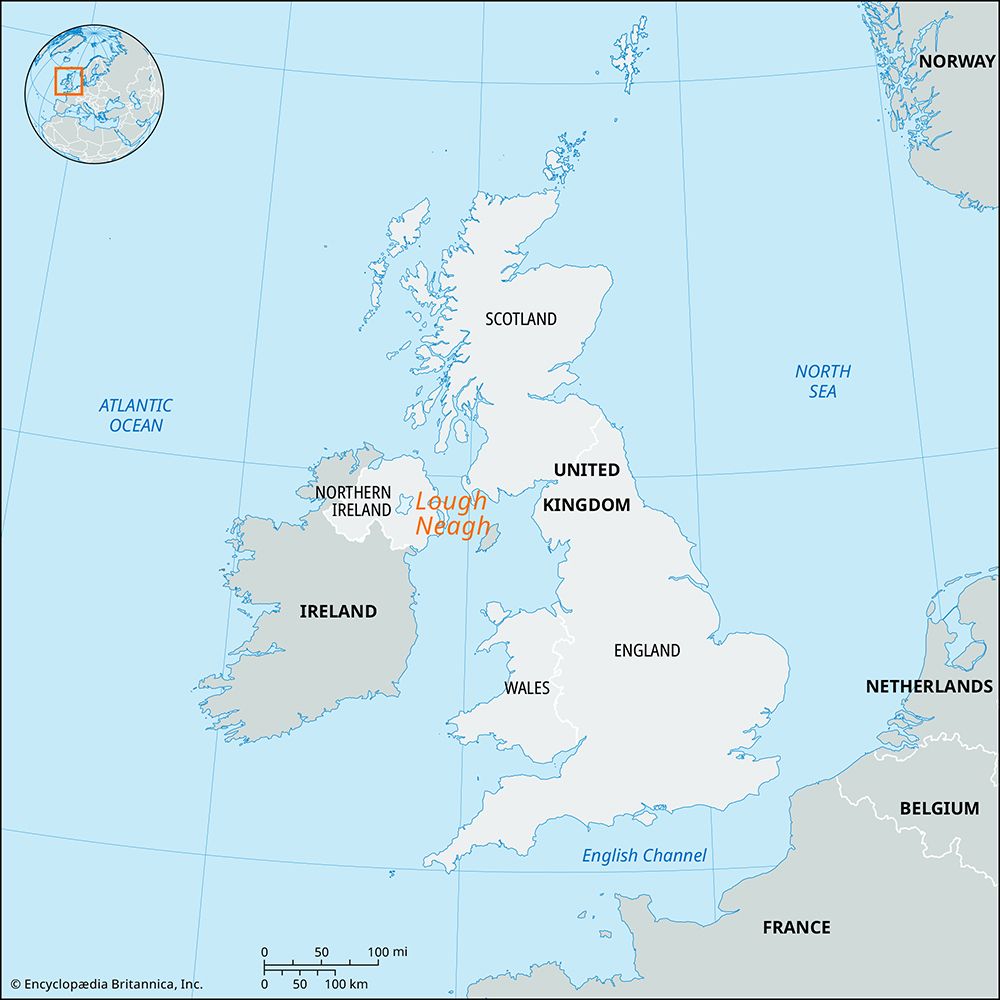
Lough Neagh is a significant geographical feature in east-central Northern Ireland with several unique characteristics:
- Scale: It is the largest lake in the British Isles, covering an area of 153 square miles (396 square km).78
- Dimensions and Depth: Despite its large surface area, the lake is relatively shallow, averaging only 40 feet (12 meters) in depth. It measures approximately 18 miles (29 km) long and 15 miles (24 km) wide.7
- Archaeological Significance: The area around the lake is historically rich. Toome Bay, located on the northwestern shore, has yielded the oldest-recorded human artifacts in Ireland. Additionally, archaeological remains have been discovered on Coney Island.7
- Hydrology: The lake serves as a major drainage hub, fed by the Upper River Bann, the River Blackwater, and the River Main, while being drained northward by the Lower Bann.7
- Economic Context: The surrounding landscape includes rich orchard country to the south, and the lake is a traditional site for eel fishing, particularly where the River Bann exits the lough.9
What kind of prehistoric artifacts have been found in the Bann valley?
The River Bann valley is a significant site for prehistoric archaeology, containing evidence from both the Mesolithic and Neolithic periods.11
Key findings and interpretations include:
- Flintwork: Archaeological finds along the river show a tradition comparable to the “Larnian” industry—a style of flintwork originally associated with early hunter-fisher groups.1
- Woodworking and Flint: Excavations at Toome Bay, located north of Lough Neagh, have uncovered evidence of woodworking and flint tools.1
- Chronological Debate: While a single carbon-14 date of 5725 ± 110 bce from Toome Bay has been cited to support the existence of a Mesolithic phase in Ireland, researchers remain cautious about its reliability. Modern archaeological perspectives suggest that some artifacts previously labeled as Mesolithic may actually be contemporary with Neolithic farming groups, potentially representing a specialized aspect of that culture rather than a distinct, earlier period.1
Sources
- River Bann — Encyclopædia Britannica
- Banbridge — Encyclopædia Britannica
- Northern Ireland - Manufacturing — Encyclopædia Britannica
- Northern Ireland - Ulster in the 18th century — Encyclopædia Britannica
- Belfast — Encyclopædia Britannica
- Lisburn — Encyclopædia Britannica
- Lough Neagh — Encyclopædia Britannica
- Neagh, Lough — Merriam-Webster
- Northern Ireland - Agriculture, forestry, and fishing — Encyclopædia Britannica
- Larne River — Encyclopædia Britannica
- Ireland - Early Ireland — Encyclopædia Britannica
Published on · 3 min read