River Wensum
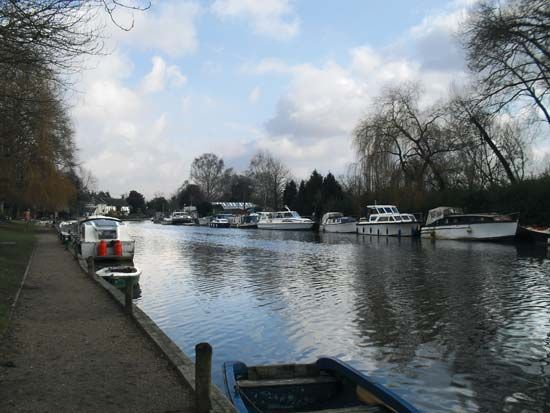
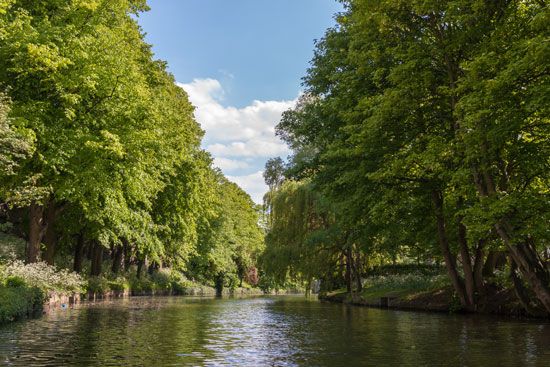
The River Wensum is a river located in the county of Norfolk, England. It rises west of the village of Fakenham and flows southeast for 30 miles (50 km)…
What is River Wensum?
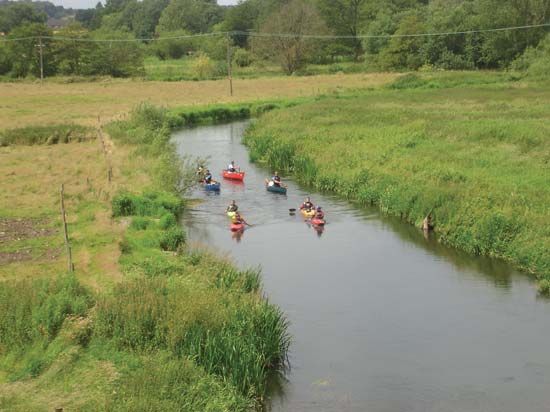
The River Wensum is a river located in the county of Norfolk, England. It rises west of the village of Fakenham and flows southeast for 30 miles (50 km) until it joins the River Yare at the city of Norwich.12
The river’s upper reaches pass through fertile agricultural land, while its lower sections are part of The Broads, a network of inland waterways known for their recreational significance. Historically, the city of Norwich originated as a Saxon settlement called Northwic, established on the gravel terraces overlooking the Wensum.1
What are the Norfolk Broads?
The Broads are a system of inland waterways located in the English counties of Norfolk and Suffolk. These shallow lakes were formed during the Middle Ages through the excavation of peat diggings, which subsequently flooded due to changes in sea level.312
The system consists of approximately 40 waterways, including expansions of the Rivers Bure, Yare, and Wensum. While they vary significantly in size, only 16 are currently available for public navigation; the remainder are either too shallow or inaccessible, serving instead as vital sanctuaries for wildlife.312
Surrounded by marshes and fens, the area supports a diverse range of rare birds, insects, and plants. Today, the Broads are primarily utilized for recreational activities such as sailing, fishing, and bird-watching, making them a significant destination for tourism in the region.312
How do rivers contribute to the formation of cities like Norwich?
Rivers have historically been fundamental to the formation and growth of cities like Norwich by providing essential resources, transportation, and strategic advantages.
- Strategic Location: Cities often originated on elevated ground near rivers to balance access to water with protection from flooding. For example, Norwich was founded as the Saxon settlement of Northwic on gravel terraces overlooking the River Wensum, which provided a secure, elevated site near a vital waterway.15
- Economic Hubs: Rivers served as the primary means of communication and trade for explorers, traders, and settlers. In medieval Europe, control of river crossing points often led to the rise of “bridge towns,” which became centers for commerce and industry. Norwich’s prosperity, particularly in the wool trade, was linked to its position on the river, which facilitated the movement of goods and supported the city’s growth as a major market center.65
- Resource Management: Beyond transport, rivers provided water for consumption, waste disposal, and power for early manufacturing processes.6
While the specific influence of rivers varies, they have consistently acted as catalysts for urban development by connecting communities and sustaining local economies.67
What is the difference between a river and a tributary?
A river is a large natural stream of water that flows in a channel to the sea, a lake, or another such stream. In contrast, a tributary is a smaller stream or river that flows into a larger body of water, such as a main trunk stream.11121314
Essentially, the relationship is hierarchical: a river system is composed of a main trunk stream and its various tributaries, which together form a drainage basin. While a river acts as the primary passageway for water within a system, tributaries function as feeders that contribute their own discharge to the main channel, increasing its overall power and volume. Over time, these networks can change through processes like stream capture, where a more powerful stream diverts the flow of a weaker one.131215
Sources
- River Wensum — Encyclopædia Britannica
- River Yare — Encyclopædia Britannica
- the Broads — Encyclopædia Britannica
- Norfolk — Encyclopædia Britannica
- river - Significance in early human settlements — Encyclopædia Britannica
- Norwich — Encyclopædia Britannica
- city - The medieval city, from fortress to emporium — Encyclopædia Britannica
- Norwich — Encyclopædia Britannica
- River Thames - Economic factors — Encyclopædia Britannica
- London - The Thames — Encyclopædia Britannica
- tributary — Merriam-Webster
- river — Merriam-Webster
- tributaries — Merriam-Webster
- river - Drainage diversion by stream capture — Encyclopædia Britannica
- drainage basin — Encyclopædia Britannica
Published on · 3 min read