Fin Whale
The fin whale (Balaenoptera physalus) is a slender baleen whale that is primarily distinguished by its unique asymmetrical coloration. While the body is…
What are the physical characteristics that distinguish fin whales from other whale species?
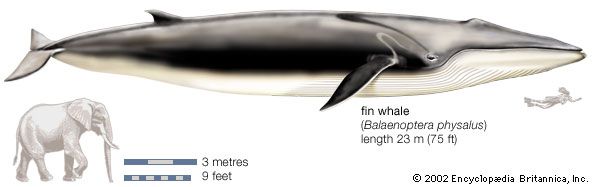
The fin whale (Balaenoptera physalus) is a slender baleen whale that is primarily distinguished by its unique asymmetrical coloration. While the body is generally gray with a white underside, the right side of the head features a light gray area, a white lower jaw, and white baleen at the front of the mouth.1
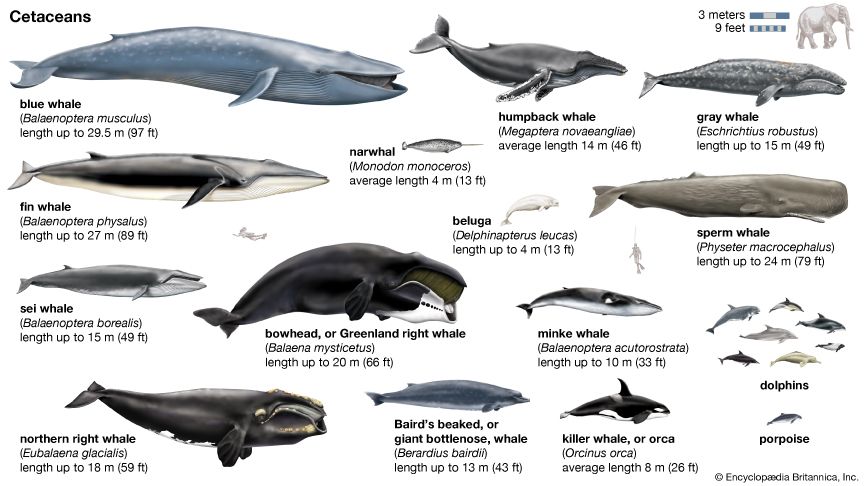
Physically, the fin whale reaches lengths of 18–27 metres (59–89 feet) and possesses 56–100 grooves along its throat and chest. These ventral grooves are a characteristic feature of rorquals, allowing the mouth cavity to expand for efficient gulp-feeding. Compared to other baleen whales, the fin whale has relatively short baleen plates. As the second-largest whale species, it is closely related to the blue whale, though its distinct color pattern and size profile help set it apart within the family Balaenopteridae.12
How do fin whales feed, and what is their primary diet?
As a baleen whale and a member of the rorqual family, the fin whale utilizes a specialized method known as gulp feeding to procure its food. During this process, the whale opens its mouth to engulf a massive volume of water containing its prey. It then closes its mouth and uses its baleen plates—comb-like structures made of keratin—to strain the water out while trapping the organisms inside. The fin whale’s throat and chest feature 56–100 ventral grooves that expand significantly, allowing the oral cavity to enlarge and accommodate these large mouthfuls of water and prey.516
The diet of the fin whale is notably diverse for a cetacean. While many baleen whales focus primarily on small crustaceans, the fin whale consumes a varied range of prey, including:
What is the evolutionary history of fin whales and their relationship to other baleen whales?
The evolutionary history of the fin whale (Balaenoptera physalus) is rooted in the broader development of cetaceans, which are distant descendants of early mammals known as condylarths. While the exact ancestral lineage remains a subject of scientific study, it is believed that both modern suborders of cetaceans—baleen whales (Mysticeti) and toothed whales—diverged from the Dorudontinae subfamily during the Late Oligocene Epoch.1
Early baleen whales were transitional creatures that possessed both teeth and early forms of baleen on their palates. By the middle of the Miocene Epoch (approximately 16 to 11 million years ago), distinct families such as the rorquals (family Balaenopteridae) and right whales had emerged. This period was critical, as shifts in ocean circulation created productive feeding grounds that supported the evolution of large, migratory whales.31
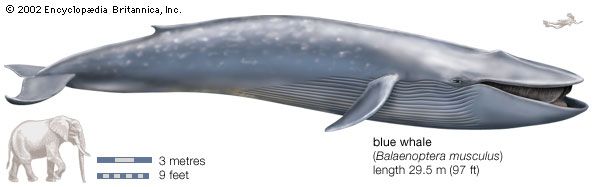
Within the family Balaenopteridae, the fin whale is closely related to other rorquals, including the blue whale. Rorquals are distinguished from other baleen whales by their ventral grooves, which allow for the expansion of the throat during gulp-feeding, a specialized adaptation that sets them apart from other members of the Mysticeti suborder.423
What are some interesting adaptations that help fin whales survive in their marine environment?
Fin whales (Balaenoptera physalus) have evolved several remarkable adaptations that allow them to thrive in diverse marine environments across the globe:
Physical and Locomotor Adaptations
- Streamlined Movement: Fin whales possess a fusiform body shape that facilitates efficient swimming. Unlike fish, which use lateral undulations, fin whales utilize powerful dorsoventral (top-to-bottom) strokes of their horizontal flukes to propel themselves through the water.110
- Ventral Grooves: These whales feature 56–100 grooves along their throat and chest, which allow the oral cavity to expand significantly during gulp-feeding, enabling them to engulf large volumes of water and prey.11
- Thermoregulation: To survive in cold ocean waters, fin whales utilize a thick layer of blubber—a fat-rich skin layer that provides insulation. They also employ countercurrent blood exchange, a mechanism that allows them to conserve or dissipate heat by adjusting blood flow between their core and the skin surface.12
Sensory and Physiological Adaptations
- Subsonic Communication: Fin whales are capable of producing extremely loud, low-frequency sounds around 10 hertz. These subsonic vocalizations allow them to communicate over vast distances in the ocean.13
- Diving Efficiency: They possess a specialized network of blood vessels known as the rete mirabile. This system acts as an oxygen reservoir, allowing the whale to isolate circulation to skeletal muscles during deep dives while prioritizing oxygen delivery to the heart and brain.12
Migratory Behavior
Fin whales exhibit extensive migratory patterns, often moving between temperate feeding grounds in the summer and warmer breeding waters in the winter. These movements are essential for accessing food-rich areas and optimizing reproductive success.1114
Sources
- fin whale — Encyclopædia Britannica
- fin whale — Merriam-Webster
- rorqual — Encyclopædia Britannica
- baleen whale — Encyclopædia Britannica
- What do whales eat? — Encyclopædia Britannica
- cetacean - Feeding — Encyclopædia Britannica
- Filter feeding — Encyclopædia Britannica
- cetacean - Paleontology — Encyclopædia Britannica
- Balaenopteridae — Merriam-Webster
- cetacean - Locomotor adaptations — Encyclopædia Britannica
- cetacean - Circulation and thermoregulation — Encyclopædia Britannica
- cetacean - Hearing — Encyclopædia Britannica
- Migration - Marine mammals — Encyclopædia Britannica
- Locomotion - Carangiform and ostraciiform locomotion — Encyclopædia Britannica
- Marine ecosystem - Migrations of marine organisms — Encyclopædia Britannica
Published on · 3 min read