Ryukyu Islands
Tourism has become a major component of the economy in the Ryukyu Islands, particularly within the Okinawa prefecture. While the archipelago remains…
How has tourism impacted the Ryukyu Islands, particularly Okinawa?
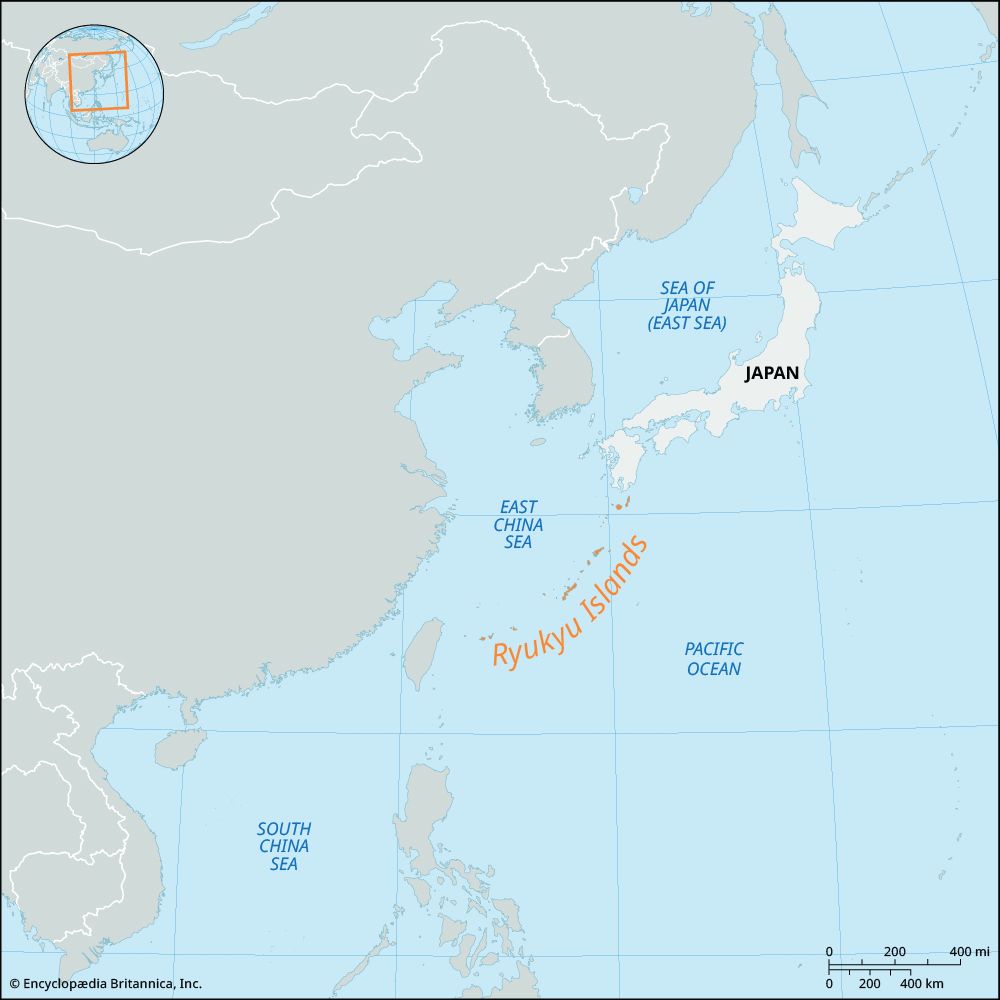
Tourism has become a major component of the economy in the Ryukyu Islands, particularly within the Okinawa prefecture. While the archipelago remains primarily rural with a focus on agriculture—producing staples like sweet potatoes and rice—the shift toward a service-oriented economy has been significant.1
Beyond its economic impact, the region is characterized by its unique cultural heritage, which has been shaped by both Japanese and Chinese influences, alongside indigenous traditions such as local textile crafts and musical forms. The islands also host several educational institutions, including the University of the Ryukyus, which contribute to the social landscape of Okinawa.1
How did the Ryukyu Islands become part of Japan, and when did this occur?
The Ryukyu Islands were once an independent kingdom that faced centuries of external pressure from both China and Japan. Their formal integration into the Japanese state occurred in 1879.13
The path to this incorporation involved several key stages:
- Feudal Influence: In 1609, the Japanese feudal domain of Satsuma conquered the islands. Throughout the Tokugawa period, the islands remained under Satsuma’s influence, serving as a unique conduit for trade while the rest of Japan remained largely isolated.4
- Asserting Sovereignty: During the Meiji period, Japan sought to solidify its territorial claims. In 1874, an expedition to Taiwan was launched to punish the killing of Ryukyuan fishermen, a move that bolstered Japan’s argument for sovereignty over the archipelago.3
- Formal Incorporation: Despite protests from China, the islands were officially incorporated as an integral part of Japan in 1879.13
Following World War II, the islands were administered by the United States until they were returned to Japanese sovereignty in stages, with the final return occurring in 1972.1
What is the historical significance of the Ryukyu Kingdom, and how did it relate to Japan and China?
The Ryukyu Kingdom held significant historical importance as an independent maritime power that served as a vital cultural and commercial bridge between China and Japan.
Relationship with China and Japan
For centuries, the kingdom navigated a complex geopolitical landscape, balancing influences from its two powerful neighbors:
- Tributary Relations: The Ryukyu Kingdom participated in the tributary system, a ritualized diplomatic and trade framework centered on the Chinese emperor. This relationship provided the islands with legitimacy, protection, and access to lucrative trade networks, with Quanzhou serving as a key port for these exchanges.15
- Japanese Influence: While maintaining its own identity, the archipelago was subject to increasing Japanese pressure. In 1609, the Satsuma domain of Japan conquered the islands, establishing a long-standing influence that persisted even as the kingdom continued its tributary ties with China.15
Decline and Integration
The kingdom’s autonomy eroded during the 19th century as Japan modernized following the Meiji Restoration. By 1872, the Japanese government designated the last king, Shō Tai, as a vassal, and by 1879, the islands were formally incorporated as an integral part of Japan, effectively ending the kingdom’s independence despite protests from the Qing dynasty.167
How were the Ryukyu Islands affected by World War II, and what was their postwar status?
During World War II, the Ryukyu Islands became the site of the largest amphibious landing of the Pacific War when U.S. forces invaded Okinawa on April 1, 1945. The campaign was one of the bloodiest of the war, characterized by intense fighting, the heavy use of kamikaze suicide attacks against the U.S. fleet, and significant civilian casualties, with an estimated 100,000 Okinawan men, women, and children perishing.1910
Following Japan’s defeat in 1945, the islands entered a long period of postwar transition:
- U.S. Administration: The United States assumed control of the archipelago, establishing a military government that was later replaced by a civil administration.1
- Sovereignty and Return: While the 1952 treaty ending the war recognized Japan’s residual sovereignty, the U.S. maintained direct control for decades. The Amami island chain was returned to Japan in 1953, and the remaining islands, including Okinawa, were returned in 1972.110
- Military Presence: Even after the 1972 handover, the U.S. has continued to maintain extensive military installations and thousands of troops on Okinawa, which remains a subject of significant local opposition.1105
Sources
- Ryukyu Islands — Encyclopædia Britannica
- Cabo Verde - Services — Encyclopædia Britannica
- Empire of Japan - Foreign affairs — Encyclopædia Britannica
- Satsuma — Encyclopædia Britannica
- history of China - Japan and the Ryukyu Islands — Encyclopædia Britannica
- tributary system — Encyclopædia Britannica
- China - Japan and the Ryukyu Islands — Encyclopædia Britannica
- Japan - Trade between China and Japan — Encyclopædia Britannica
- Pacific War - Okinawa — Encyclopædia Britannica
- Battle of Okinawa - Casualties and legacy — Encyclopædia Britannica
- occupation of Japan - Treaty of San Francisco and the end of occupation — Encyclopædia Britannica
- Okinawa — Encyclopædia Britannica
Published on · 3 min read