Samoa
Samoa operates as a parliamentary democracy that uniquely blends Western-style governance with traditional Samoan customs. Since gaining independence in…

What is the current political system in Samoa, and how does it blend traditional and modern governance?
Samoa operates as a parliamentary democracy that uniquely blends Western-style governance with traditional Samoan customs. Since gaining independence in 1962, the nation has maintained a constitutional framework that integrates these two influences.123
The central government consists of a Legislative Assembly (Fono Aoao Faitulafono) where members are directly elected to five-year terms. A key traditional requirement is that all members of the assembly must be matai (chiefs). The prime minister is elected by the assembly and appoints a cabinet from its ranks.1
This blend of tradition and modernity extends to local governance, where more than 360 villages across 11 administrative districts manage local affairs. In this system, each aiga (extended family) designates at least one matai to represent them, and these chiefs form village councils to administer local matters. While the country adopted universal suffrage in 1990, the matai system remains a foundational element of both national and local political life, ensuring that traditional leadership structures continue to shape the country’s modern democratic processes.4135
What is the official language of Samoa, and are there other languages spoken on the islands?
The official language of Samoa is Samoan. It is one of the oldest Polynesian languages, sharing close linguistic ties with Maori, Tahitian, Hawaiian, and Tongan.267
While Samoan is the primary national language, English is widely spoken as a second language. Furthermore, the constitution requires that legislative activity be conducted in both Samoan and English. It is important to distinguish this from American Samoa, where both English and Samoan serve as official languages.68
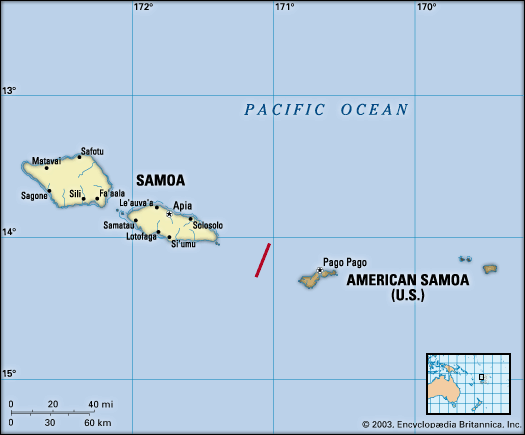
What are the main economic activities and industries in Samoa?
Samoa’s economy is a blend of traditional agriculture, a growing service sector, and light manufacturing.
Agriculture, Forestry, and Fishing
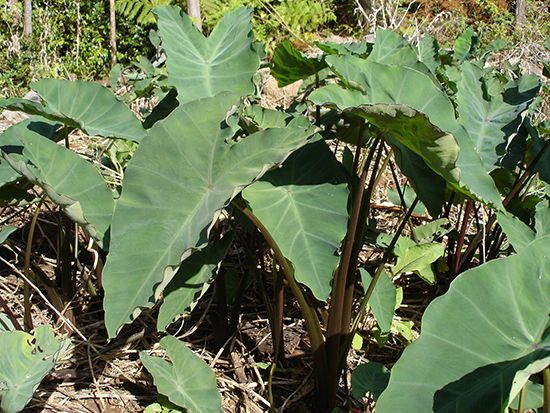
Agriculture remains the backbone of the economy, accounting for two-fifths of the gross domestic product and employing nearly two-thirds of the workforce. Key crops include coconuts, taro, pineapples, and mangoes, while livestock such as cattle, pigs, and poultry are raised for local consumption. Forestry has seen increased investment, though the fishing industry remains small-scale.10
Services and Manufacturing
The service sector is anchored by government operations and tourism, which is a vital source of foreign exchange. Manufacturing is primarily focused on light goods for local markets, including beer, soap, and coconut products. Notably, a Japanese-owned electric assembly plant serves as the nation’s largest employer after the government.111213
Trade and External Capital
Samoa maintains a negative balance of trade, relying on imports of food, machinery, and petroleum. Significant capital also flows into the country through remittances from Samoans living abroad and international grants.1415
How does Samoa’s traditional culture and social structure influence modern life on the islands?
Samoa’s modern life is deeply rooted in fa‘a Samoa (the “Samoan way of life”), a cultural framework that has been carefully preserved despite centuries of external influence.316
Social Structure and Governance
The foundation of Samoan society is the aiga (extended family), which serves as the primary unit of social organization. Each aiga selects a matai—a chief who holds a hereditary title—to represent the family’s interests. These matai form village councils that administer local affairs, maintaining a system of autonomous governance that persists across more than 360 villages. This traditional leadership structure remains central to the nation’s political and social stability.171819416
Daily Life and Traditions
Many aspects of rural life remain virtually unchanged, centered around the village green and the fale (traditional open-sided houses). While modern construction materials like concrete and timber are now common, the communal nature of village life endures. Social customs, such as the formal preparation and consumption of kava by matai during events, continue to reinforce hierarchy and community bonds. Despite the integration of imported goods and modern technology, these traditions provide a vital sense of identity and continuity for the Samoan people.3202116
Sources
- Samoa - Constitutional framework — Encyclopædia Britannica
- Samoa: Country Facts — Encyclopædia Britannica
- Samoa - Local government — Encyclopædia Britannica
- history of Samoa — Encyclopædia Britannica
- Samoa - Independence — Encyclopædia Britannica
- Samoa - Languages — Encyclopædia Britannica
- American Samoa: Country Facts — Encyclopædia Britannica
- Polynesian languages — Encyclopædia Britannica
- American Samoa - People — Encyclopædia Britannica
- Samoa - Agriculture, forestry, and fishing — Encyclopædia Britannica
- Samoa - Trade — Encyclopædia Britannica
- Samoa - Manufacturing — Encyclopædia Britannica
- Samoa - Economy — Encyclopædia Britannica
- Samoa - Services — Encyclopædia Britannica
- Samoa - Labour and taxation — Encyclopædia Britannica
- Samoa - Cultural life — Encyclopædia Britannica
- Samoa - Daily life and social customs — Encyclopædia Britannica
- matai — Merriam-Webster
- American Samoa - Cultural life — Encyclopædia Britannica
- aiga — Merriam-Webster
- American Samoa - Local government — Encyclopædia Britannica
Published on · 3 min read