Midway Islands
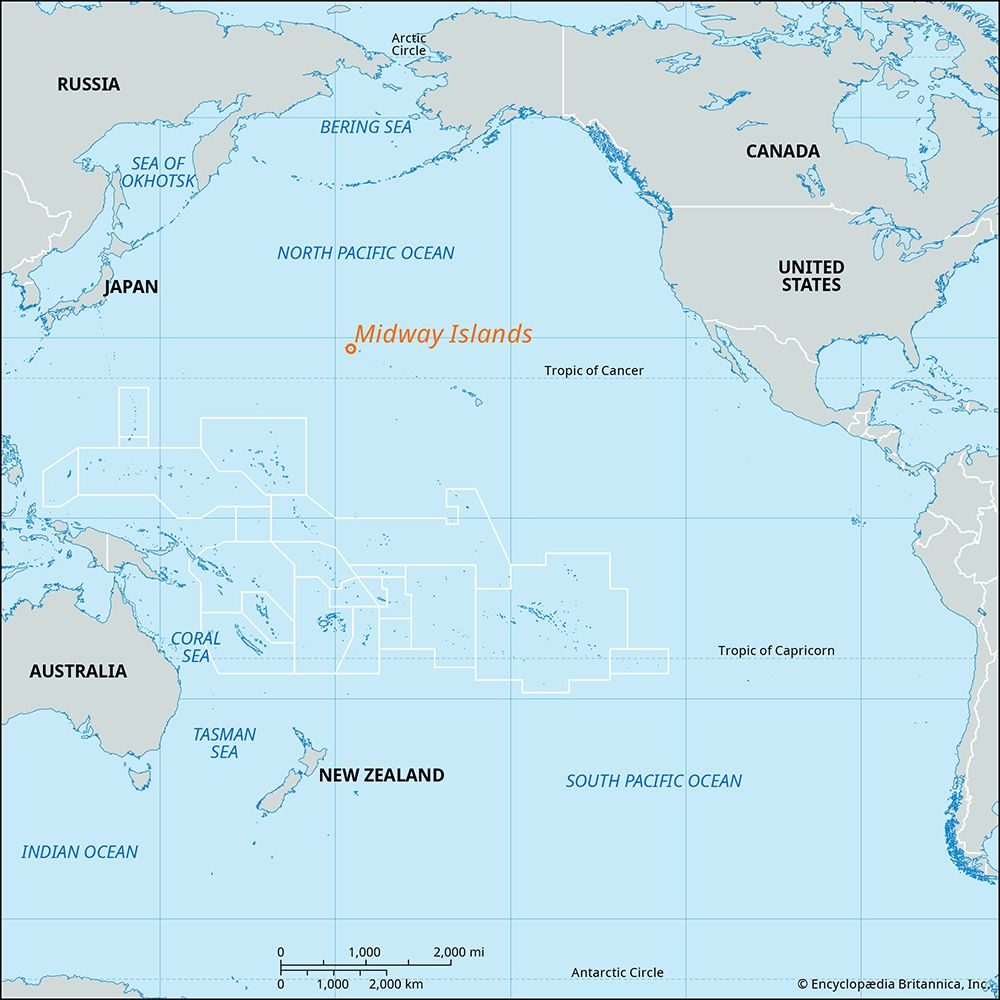
The Midway Islands have served as a vital strategic asset for the United States in the Pacific since their annexation in 1867. Initially valued for their…
How do the Midway Islands fit into the larger context of U.S. interests in the Pacific region?
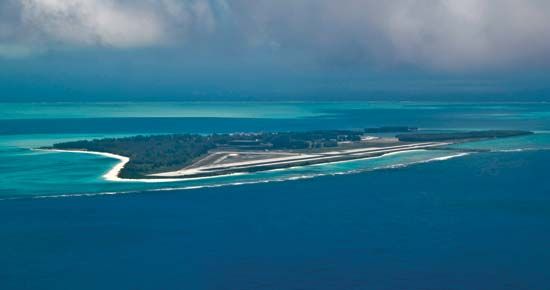
The Midway Islands have served as a vital strategic asset for the United States in the Pacific since their annexation in 1867. Initially valued for their potential as a coaling station, their importance grew significantly with the development of transpacific infrastructure. In 1903, they became a crucial link for the first transpacific submarine cable, and by 1935, they functioned as a regular stopover for transpacific aviation.12
During World War II, Midway’s strategic value was cemented when the U.S. Navy established a major air and submarine base there. The Battle of Midway in 1942 proved to be a decisive turning point, as the U.S. successfully defended the atoll against Japanese forces, thereby protecting Hawaii and maintaining critical supply lines to Australia.12
Following the war, the islands remained a significant naval facility throughout the Korean War, the Vietnam War, and the Cold War. Military operations ceased in 1993, and the islands were later designated as the Midway Atoll National Wildlife Refuge.1
What was the role of Midway Islands during World War II, particularly in the Battle of Midway?
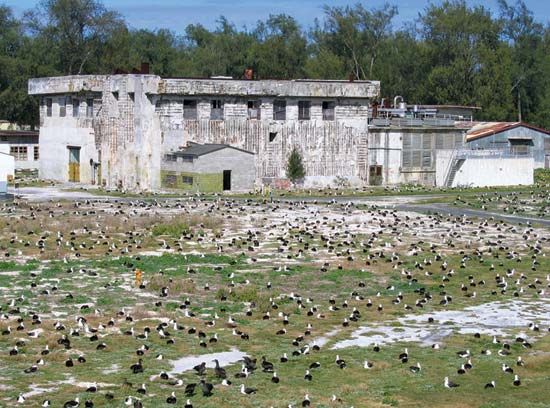
During World War II, the Midway Islands served as a critical strategic outpost for the United States. By 1940, the U.S. Navy had developed the atoll into a major air and submarine base, featuring runways and facilities for seaplanes. Japan recognized that capturing Midway would threaten Hawaii and sever vital supply lines to Australia, potentially crippling the Allied war effort.4
In the Battle of Midway (June 3–6, 1942), the islands functioned as a key defensive platform. While the U.S. Pacific Fleet engaged the Japanese carrier force at sea, land-based aircraft from Midway provided essential air support. The battle was a “victory of intelligence,” as American cryptanalysts broke Japanese codes to anticipate the attack.52
The U.S. victory resulted in the destruction of four Japanese carriers and the loss of their best-trained pilots, marking a decisive turning point in the Pacific War. Following this defeat, Japan was forced to cancel planned invasions of Fiji and Samoa, effectively ending their strategic initiative in the region.26
How do the Midway Islands contribute to scientific research and conservation efforts in the Pacific?
The Midway Islands play a significant role in Pacific scientific research and conservation, primarily as a protected sanctuary for diverse marine and avian life. Since 1996, the islands have been designated as the Midway Atoll National Wildlife Refuge, which is now part of the expansive Papahānaumokuākea Marine National Monument.
Conservation and Biodiversity
The region is a critical habitat for millions of birds, including large populations of albatrosses. Conservation efforts focus on managing these populations and mitigating threats such as plastic pollution, which requires periodic debris removal to protect the ecosystem. Historically, the islands have also served as a site for studying human-wildlife interactions; for instance, researchers discovered that modifying landforms near runways could significantly reduce bird-aircraft collisions, a finding that helped protect both the Laysan albatross and aviation operations.178
Scientific Research
Ongoing research at the monument includes:
- Biodiversity Surveys: Monitoring the health and abundance of coral reefs and marine species to inform long-term management plans.7
- Cultural and Maritime Studies: Investigating archaeological remains and historical artifacts, including those from the Battle of Midway and 19th-century whaling shipwrecks.7
What unique wildlife and ecosystems can be found on the Midway Islands?
The Midway Islands, which comprise a coral atoll in the central Pacific Ocean, host a unique blend of indigenous and introduced species within the Midway Atoll National Wildlife Refuge.
Flora and Fauna
The islands’ indigenous vegetation includes plants such as bunchgrass and beach morning glory. However, much of the current landscape is shaped by introduced species, including the invasive ironwood tree (Casuarina equisetifolia), as well as non-native birds like canaries and mynahs.1
The atoll is most renowned for its abundant birdlife, serving as a vital nesting ground for millions of seabirds. Among the most prominent are albatrosses, including the Laysan albatross, as well as various species of shearwaters and terns. Historically, the islands have been a site of significant ecological study, particularly regarding the management of bird populations in relation to human activity, such as the successful efforts to reduce bird-aircraft collisions by modifying local sand dunes.17
As part of the Papahānaumokuākea Marine National Monument, the surrounding waters and reefs support a vast array of marine life, including apex predators like sharks, jacks, and groupers.8
Sources
- Midway Islands — Encyclopædia Britannica
- Battle of Midway - The importance of Midway in the Pacific War — Encyclopædia Britannica
- Territories of the United States — Encyclopædia Britannica
- Battle of Midway - Casualties and significance — Encyclopædia Britannica
- Battle of Midway — Encyclopædia Britannica
- Battle of Midway - Disposition of forces — Encyclopædia Britannica
- Papahānaumokuākea Marine National Monument — Encyclopædia Britannica
- Procellariiform - Importance to humans — Encyclopædia Britannica
- conservation - Removing invasive species — Encyclopædia Britannica
Published on · 3 min read