Sand Flea
It is important to clarify that the term "sand flea" is often used to describe two very different organisms: true insects (common fleas that breed in soil)…
What are the key characteristics that distinguish sand fleas from other crustaceans?
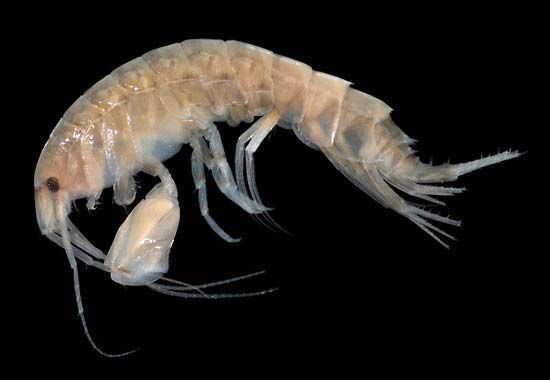
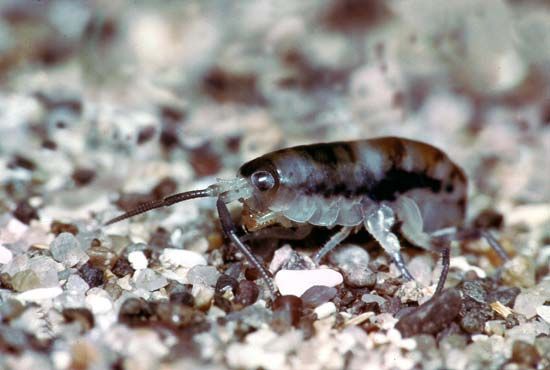
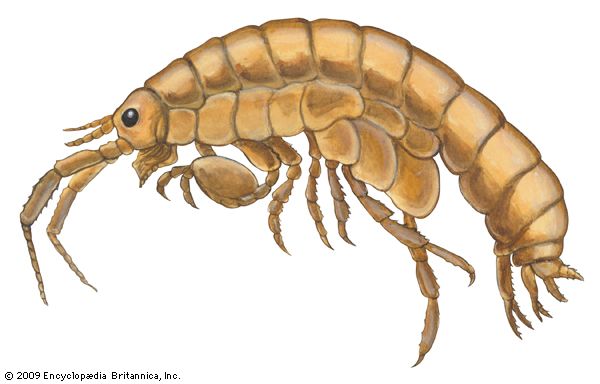
It is important to clarify that the term “sand flea” is often used to describe two very different organisms: true insects (common fleas that breed in soil) and amphipod crustaceans of the family Talitridae. When referring to the crustacean variety, they are distinguished from other crustaceans by several key characteristics:12
- Locomotion: They are notable for their ability to leap, which is why they are frequently called “beach hoppers”.31
- Habitat and Behavior: These crustaceans are terrestrial, typically living on ocean beaches near the high-tide mark. They exhibit a distinct cycle of burrowing into damp sand during the day to hide and emerging at night to forage.13
- Diet: They function as scavengers, feeding primarily on decaying organic matter and debris found along the shoreline.31
- Physical Traits: Depending on the species, they may possess specific features like long antennae—sometimes as long as their own bodies—and can range in color from waxy white to dark brown or gray.1
How do sand fleas move and what special adaptations do they have for jumping?
It is important to distinguish between the two organisms commonly called “sand fleas.” While the term is sometimes used for parasitic insects, the sand flea (family Talitridae) is a terrestrial crustacean belonging to the order Amphipoda.14
Movement and Jumping Adaptations
Unlike the parasitic insect flea, which utilizes a specialized resilin-based hinge mechanism to achieve high-acceleration jumps, the movement of the crustacean sand flea is characterized primarily by its ability to hop.231
- Hopping Ability: These crustaceans are frequently referred to as “beach hoppers” due to their capacity to leap across the sand.34
- Behavioral Context: Their movement is closely tied to their habitat. They typically remain buried in damp sand during the day to avoid desiccation or predators and emerge at night to forage for decaying organic matter.31
- Distinction from Insects: While parasitic fleas have evolved to jump distances 200 times their body length using a complex muscle-controlled catch mechanism, the hopping of the talitrid crustacean is a functional adaptation for navigating the shoreline environment and escaping threats on the beach.231
Are sand fleas harmful to humans, and if so, how?
To address your question accurately, it is essential to distinguish between the two organisms commonly called “sand fleas,” as their potential for harm to humans differs significantly.
The Parasitic “Sand Flea”
The term “sand flea” is often used to refer to certain parasitic insects, such as the chigoe flea. These insects can be harmful to humans. The female chigoe flea burrows into the skin—most commonly on the feet—to feed and lay eggs. This can cause a condition known as tungiasis, which leads to inflammation, intense itching, pain, and, if left untreated, potential secondary infections.
The Crustacean “Sand Flea”
Conversely, the amphipod crustaceans (family Talitridae) found on ocean beaches are generally harmless to humans. These creatures are scavengers that feed on decaying organic matter and do not burrow into human skin or transmit diseases. While their presence on a beach might be startling due to their jumping behavior, they pose no direct threat to human health.
It is vital to recognize that only the parasitic insect variety presents a medical concern.
What do sand fleas eat and how do they obtain their food?
To clarify, the term “sand flea” refers to two distinct types of organisms: parasitic insects and amphipod crustaceans (family Talitridae). The following details focus on the crustacean variety, often called beach hoppers, which are the organisms commonly found on ocean beaches.321
Diet and Foraging
Sand fleas (family Talitridae) are primarily scavengers that play a vital role in the coastal ecosystem by consuming decaying organic matter.321
- Food Sources: Their diet consists of organic debris that washes ashore, such as seaweed, algae, and other plant or animal matter deposited by the tides.2
- Foraging Behavior: These crustaceans are nocturnal foragers. During the day, they remain buried in damp sand to avoid predators and desiccation. They emerge at night to actively search for and consume the organic material accumulated along the high-tide mark.2
By breaking down this debris, they contribute to the nutrient cycling of the beach environment.31
Sources
- beach flea — Merriam-Webster
- sand flea — Encyclopædia Britannica
- sand flea — Merriam-Webster
- flea - Form and function — Encyclopædia Britannica
Published on · 3 min read