Skeleton Shrimp
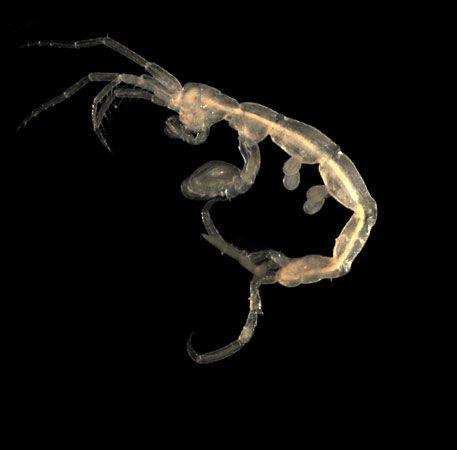
Skeleton shrimp are marine crustaceans belonging to the family Caprellidae within the order Amphipoda and the class Malacostraca.
How are skeleton shrimp related to other crustaceans?
Skeleton shrimp are marine crustaceans belonging to the family Caprellidae within the order Amphipoda and the class Malacostraca.12
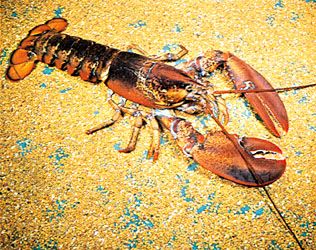
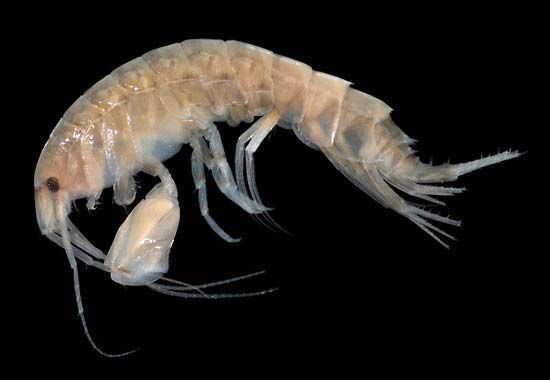
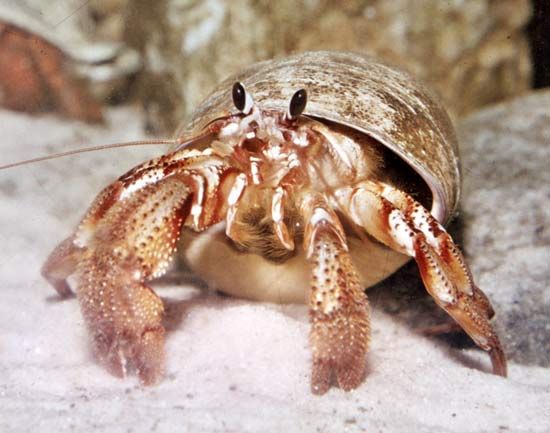
Their relationship to other crustaceans is defined by their classification within the subphylum Crustacea, which includes a vast array of arthropods such as crabs, lobsters, and various types of shrimp. As amphipods, skeleton shrimp share a common ancestry with other members of the order, including gammarids, sand fleas, and whale lice.23
While they are often mistaken for tiny shrimp due to their appearance, they are distinct from true shrimp (order Decapoda). Unlike many other crustaceans, such as crabs, amphipods possess compound eyes that are sessile, meaning they are never located on stalks. Skeleton shrimp are specifically characterized by their slender body structure, which distinguishes them from the more laterally compressed bodies typical of many other amphipods.231
What are skeleton shrimp and why are they called that?
Skeleton shrimp are marine crustaceans that belong to the family Caprellidae within the order Amphipoda.14
They are primarily represented by genera such as Caprella and Aeginella. The common name “skeleton shrimp” is derived from their notably slender, elongated body structure.14
These creatures are typically found in environments like eelgrass, sponges, and wharf pilings, where they often move with a high-arching motion reminiscent of a measuring worm. While most species are predators that feed on other small animals, some are known to consume organic debris or organic matter found on other organisms, such as the mucus secreted by starfish.1
How do skeleton shrimp feed and what is their role in the marine ecosystem?
Skeleton shrimp, members of the family Caprellidae, exhibit diverse feeding strategies that allow them to thrive in various marine environments. Most species function as predators, actively hunting other small animals found within their habitats, such as eelgrass, sponges, and wharf pilings.1
Beyond predation, some skeleton shrimp utilize alternative food sources. For instance, certain species consume organic debris found in their surroundings. A notable example of specialized feeding is Caprella grahami, which lives among the tube feet of the common starfish (Asterias forbesi). This species feeds on organic matter that adheres to the mucus secreted by the starfish, demonstrating an intimate association with other marine organisms.1
While specific details regarding their broader ecological impact are limited, their presence among sponges and other substrates highlights their role as part of the complex communities that inhabit or associate with these organisms. By occupying niches on sponges and other structures, they contribute to the intricate web of life where various crustaceans, worms, and mollusks interact through predation, shelter-seeking, or commensal relationships.15
Are there any threats to skeleton shrimp populations, and are they of conservation concern?
While specific conservation status data for skeleton shrimp (family Caprellidae) is not explicitly detailed in current records, these crustaceans face broader environmental threats common to many marine organisms.
The primary concern for marine life, including various crustaceans, is ocean acidification. As the oceans absorb increasing amounts of carbon dioxide from the atmosphere, the resulting decline in seawater pH reduces the availability of carbonate ions. This process poses significant physiological challenges to marine calcifiers—organisms that rely on calcium carbonate to build and maintain their shells and skeletons. While skeleton shrimp are not always classified as primary calcifiers in the same manner as corals or shellfish, the widespread disruption of marine food chains caused by acidification can threaten the stability of the habitats they depend on, such as sponges and eelgrass beds.16
Scientists are concerned that if the pace of acidification continues, many marine species may lack the time necessary to adapt to these rapid chemical changes, potentially leading to population declines or broader ecological instability.6
Sources
- skeleton shrimp — Encyclopædia Britannica
- List of crustaceans — Encyclopædia Britannica
- amphipod — Encyclopædia Britannica
- skeleton shrimp — Merriam-Webster
- sponge - Associations with other organisms — Encyclopædia Britannica
- ocean acidification — Encyclopædia Britannica
Published on · 3 min read